All posts for
Hvac

Sunday, February 15, 2026
By Prathamesh Rathod
Discover HVAC Hub - Streamline HVAC selection, improve decision accuracy, and move from manual searching to intelligent, efficient system design workflows.
Thursday, January 29, 2026
By Aaditya Ruikar
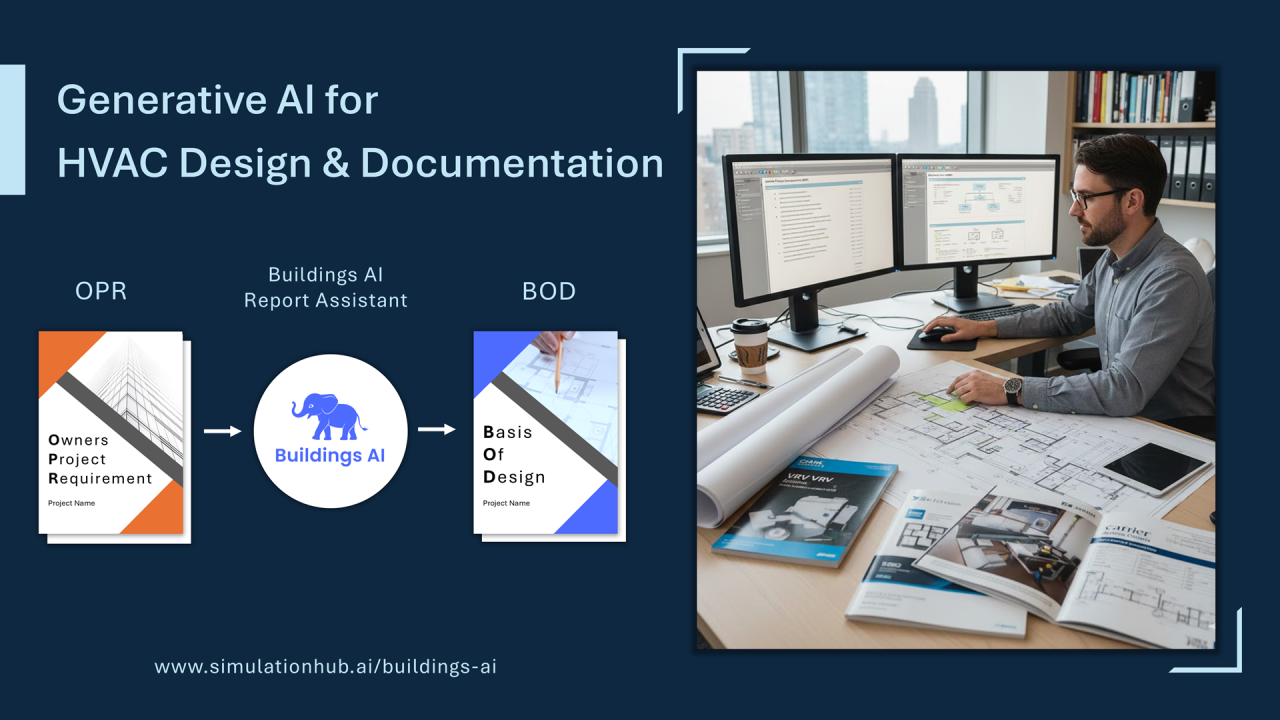
Explore key insights from a webinar on Generative AI in HVAC design and documentation. Learn how AI-driven approaches are transforming workflows, improving efficiency, and enabling smarter decision-making across modern building design processes.
Thursday, November 13, 2025
By Praveen Kumar
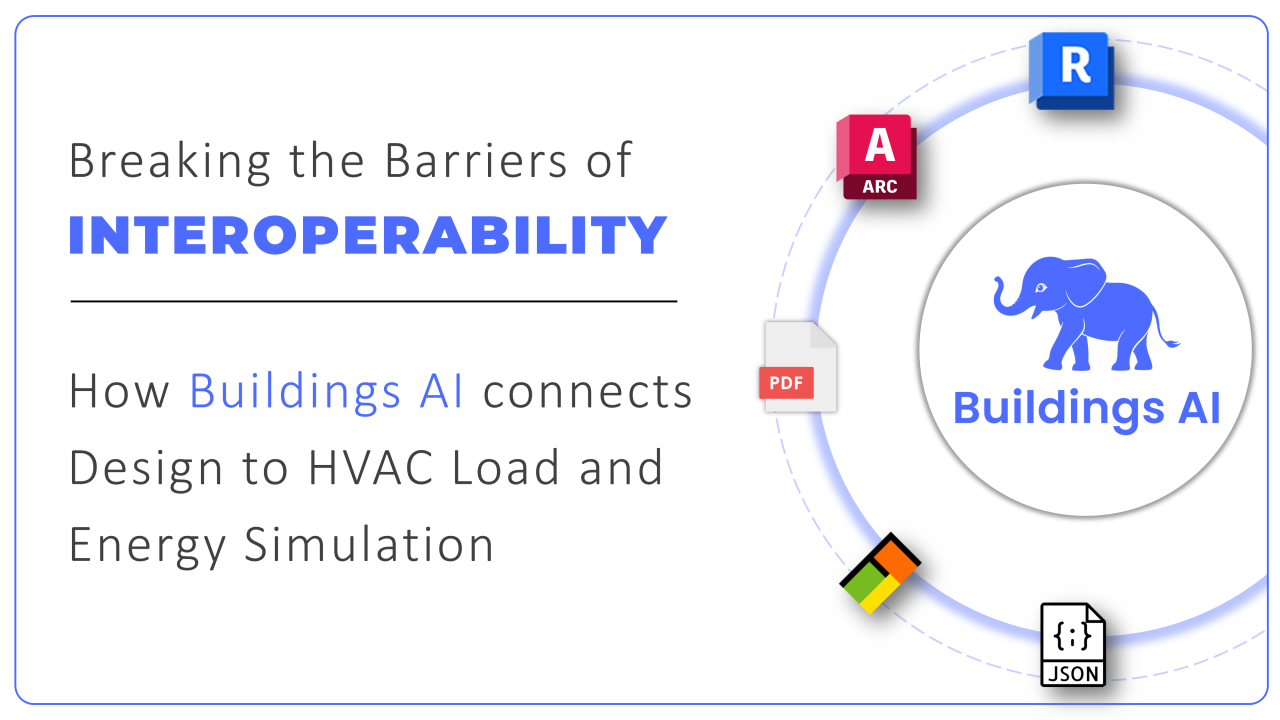
Buildings AI eliminates long-standing interoperability challenges by unifying design files from Revit, AutoCAD, PDFs, and FloorSpaceJS into accurate, simulation-ready building energy models. Through AI-driven automation, PDF2BIM, and seamless BIM integration, it streamlines geometry preparation, reduces errors, and accelerates HVAC load and energy simulation workflows for architects and engineers.

Thursday, October 16, 2025
By Aaditya Ruikar
Agentic AI and digital twins are revolutionizing smart buildings and HVAC systems by enabling predictive control, autonomous energy optimization, and data-driven operational intelligence. This piece highlights how AI-powered HVAC, simulation-driven digital twins, and adaptive building analytics will enhance efficiency, thermal comfort, and net-zero performance—shaping the future of intelligent, sustainable building design.

Friday, March 21, 2025
By Rohit Chavan
Are you an HVAC professional looking for a game-changing tool to elevate your projects? Do you want to be at the forefront of the latest innovation in heat load calculation software? Well, the opportunity to shape the future of HVAC design is here — but it’s only available to a select few.

Saturday, August 26, 2023
By ganesh gund
Dive into the pivotal role of the Air Diffusion Performance Index (ADPI) in HVAC design. Explore ADPI's factors, formulation, and its limitations in evaluating individual air terminal devices. Discover how Autonomous HVAC CFD (AHC) transforms ADPI assessment with innovative approaches, ensuring precise ratings by considering room geometry, product types, HVAC systems, and more. Elevate your HVAC design understanding with our expert insights, optimizing air distribution for ultimate comfort and efficiency
Recent posts