Written by Aaditya Ruiker
Thursday, January 29, 2026
Generative AI for HVAC Design & Documentation in Modern Engineering Workflows
By
Aaditya Ruikar
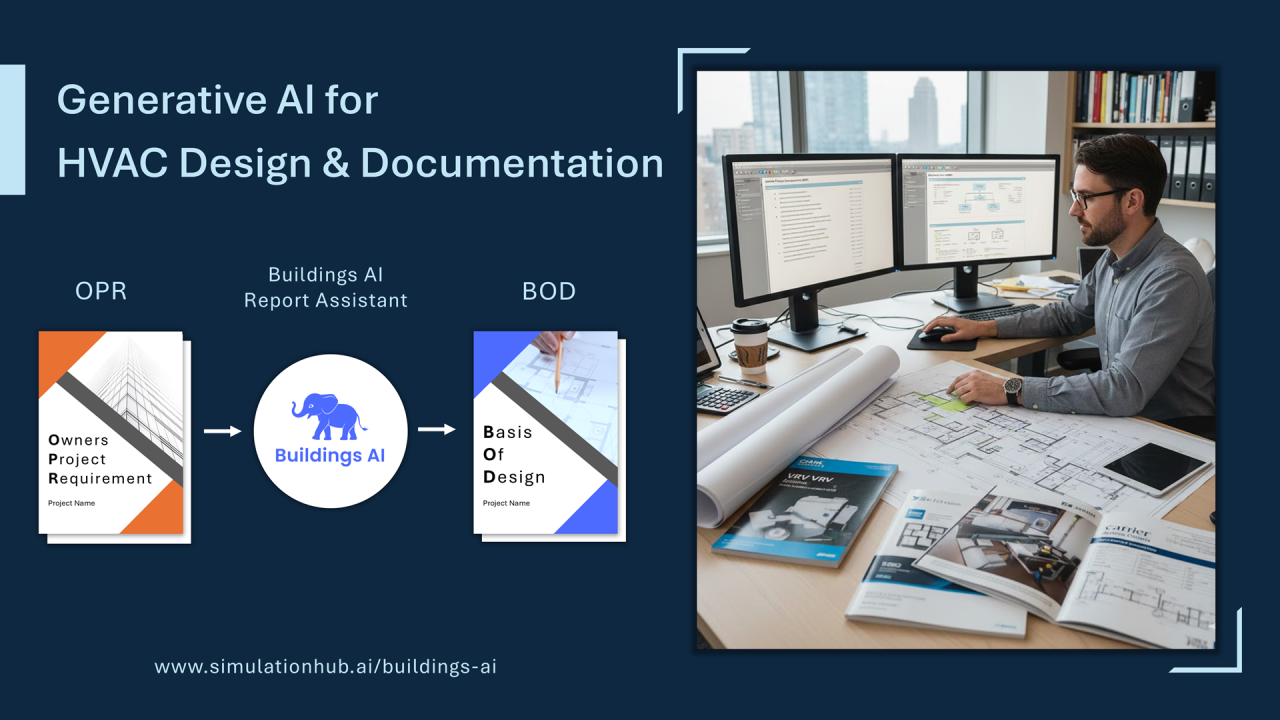

The central argument is that Generative AI, specifically through agentic workflows, can serve as a design co-pilot to alleviate significant documentation burdens on HVAC engineers, enhancing productivity and efficiency.
The Modern HVAC Engineer Wears More Hats Than You Think
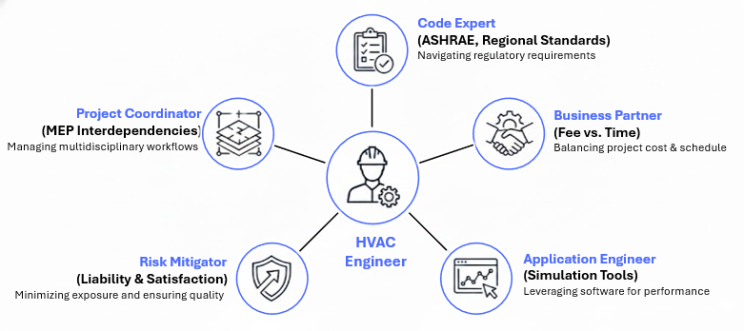
The role of a modern HVAC design engineer has quietly become one of the most demanding in the built environment. The title HVAC Design Engineer barely scratches the surface of the job's true responsibilities. It's a job that extends far beyond heat load calculations and system schematics, encompassing project management, legal compliance, and business strategy. This multifaceted role is exciting but demanding.
This growing complexity creates significant challenges, particularly when it comes to the critical, time-consuming process of documentation. Into this high-pressure environment steps a powerful new ally: Generative AI. This technology isn't here to replace the expert engineer, but to serve as a powerful co-pilot, poised to untangle the documentation bottleneck that throttles modern engineering projects and unlock new levels of efficiency.
The Documentation Bottleneck
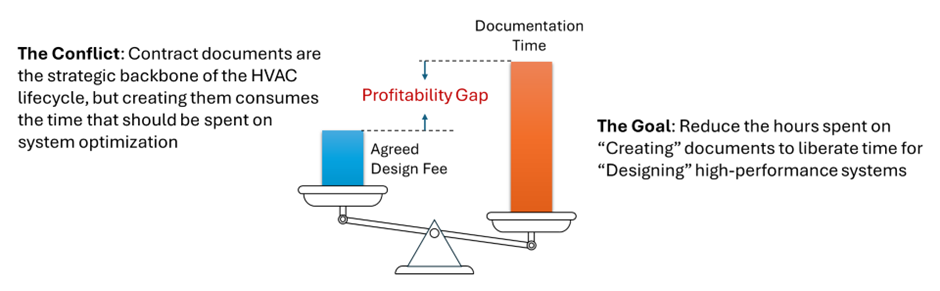
Contract documents are not mere paperwork but the strategic backbone of the entire HVAC design life cycle. This foundational documentation serves as a critical guide for the client, the design team, and the commissioning agents who will ultimately validate the project's success. However, designers must constantly balance the agreed-upon design fee against the substantial time and expertise required to produce high-quality, detailed documentation.
Challenges in Crafting the Basis of Design
Generating high-quality documentation, particularly the initial Basis of Design (BoD), is filled with challenges that create significant bottlenecks.
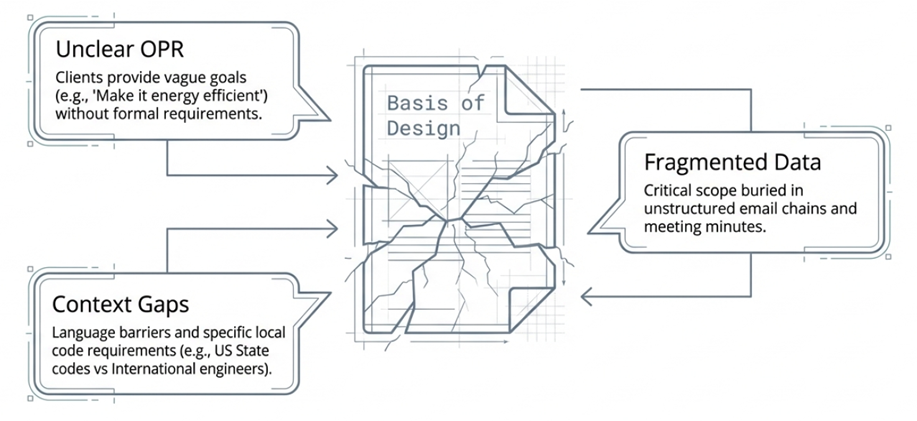
Ambiguous Project Requirements: A common and significant hurdle is the informal or incomplete nature of the client's initial input. Often, engineers receive an Owner's Project Requirement (OPR) document that is vague, unclear, or communicated informally through conversations and emails. On international projects, this ambiguity can be compounded by language barriers, creating a poor and unstable foundation upon which the entire design process must be built.
Navigating Complex and Variable Compliance Codes: The landscape of codes and standards governing HVAC design is vast, intricate, and constantly changing. Expecting a single engineer to be an expert in every regional and international standard is unrealistic. A prime example is the state-by-state variation of the ASHRAE 90.1 energy efficiency code within the United States, where different states adopt different versions of the standard. This complexity introduces a significant risk of confusion and non-compliance.
Buildings AI Report Assistant - HVAC Documentation Copilot
Generative AI excels at synthesizing information from multiple sources (OPR, floor plans, technical documents) to form a holistic understanding of project goals. The Buildings AI Report Assistant acts as an HVAC documentation co-pilot and effectively processes informal inputs like lengthy email chains, minutes of meetings, and vague OPR documents. By analyzing these disparate sources, the Buildings AI Report Assistant generates a formal Basis of Design document. This structured output ensures that all of the owners' wants and needs—from energy efficiency targets to specific incentive goals—are clearly captured and can be validated before the design process truly begins.
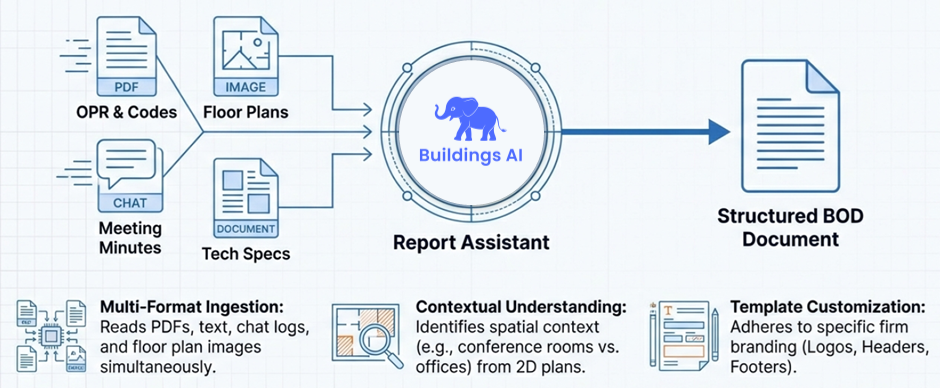
The system can even handle multi-format inputs like PDFs, Word files, text files, and floor plans to build a complete picture.
Watch the full webinar for more details:
Why Your Project Needs a Team of AI Agents, Not Just One Chatbot
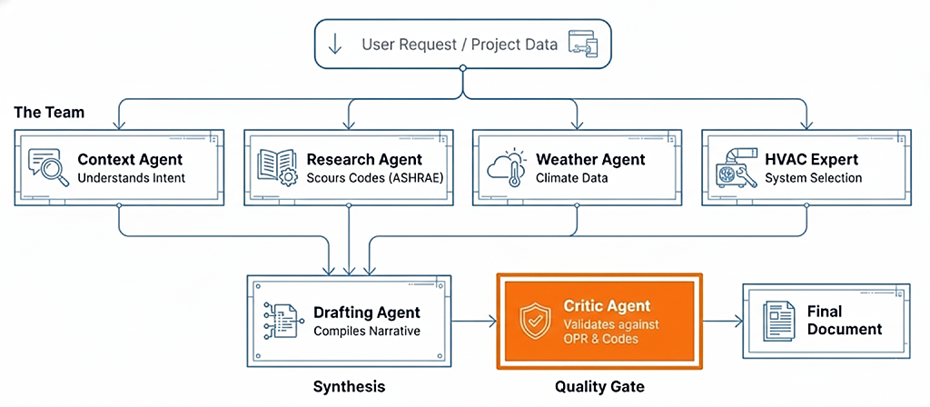
While general-purpose AI like ChatGPT is impressive, complex engineering tasks require a more specialized approach. The most effective systems use an agentic workflow—a team of specialized AI agents, each assigned a specific job, working in concert to produce a comprehensive result. This multi-agent approach divides the labour for greater accuracy and efficiency:
- Context Agent : Its primary job is to read all provided documents (OPRs, meeting notes, floor plans) to understand the core design intent.
- Research Agent : It takes the design intent and researches the relevant codes, standards, and regulations for the project's specific location and application.
- HVAC System Expert Agent : This agent specializes in comparing different HVAC systems, weighing their pros and cons based on the project's unique constraints.
- Drafting Agent : Once the research and analysis are complete, this agent assembles the final document in the user-requested format.
- Critic Agent(s) :Before the document is finalized, it's reviewed not by one, but by a team of critic agents. Each critic checks the draft from a different angle—one validates it against the original OPR, another checks for compliance with researched codes, and a third assesses it against domain-specific knowledge. This multi-faceted review process is what makes the agentic workflow so robust. It leads to more efficient and accurate outcomes with a much lower risk of errors and "hallucinations" that can plague general-purpose AI tools.
Broader Applications Across the Design Lifecycle
The Basis of Design is just one of the applications of this powerful agentic AI technology. Generative AI's potential extends beyond the pre-design phase. The same core principles can be applied to streamline workflows across the entire project lifecycle, from initial concept to final commissioning. The webinar outlined a vision for its application in subsequent stages:
- Schematic Design - System Selection : Analyzing technical brochures and floor plans to help select appropriately sized HVAC systems. Preliminary Load Calculations: Performing initial estimates based on building type, area, and climate zone.
- Design Development - Automated Data Entry : Extracting component properties from technical brochures and inputting them directly into heat load calculation software. Contract Documentation: Assisting in the creation of RFIs, Bill of Materials (BOM), and Bill of Quantities (BOQ).
- Construction Documentation - Anomaly Detection : Checking for conflicts between documents, such as a chiller's specified dimensions not fitting the allocated space on a floor plan. Rule Checking: Ensuring drawings and documents adhere to organizational standards.
- Commissioning - Design Validation : Comparing as-built performance against the goals set in the OPR and BOD. Performance Analysis: Analyzing sensor data to confirm that client requirements have been met.
Conclusion : A Smarter Partnership for a Better-Built World
Generative AI is rapidly evolving as an indispensable partner for the modern HVAC engineer. By taking over the tedious, data-intensive, and documentation-heavy aspects of the job, it allows human experts to focus their time and energy on what they do best: high-level strategic thinking, creative problem-solving, and innovative design.
Take the Next Step: Start Your Free Trial or Book a Demo
Buildings AI is not just a tool; it's a complete solution that redefines the building energy modeling workflow.
Join the growing number of architects, engineers, and energy consultants who are transforming their workflows with AI-powered solutions. Sign up for a free trial and revolutionize your design-to-simulation process!
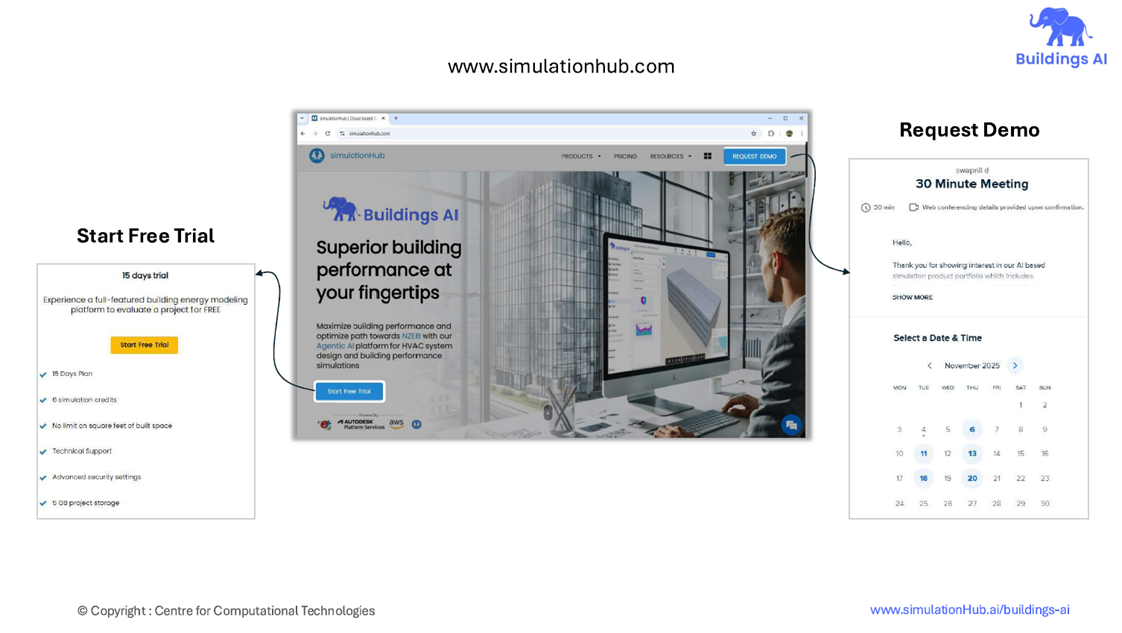
Start Trial :
Click Here
Schedule a Demo call :
Click Here
Know More :
Click Here
Comments
Recent posts