Written by Angirekula Venu
Monday, May 25, 2026
Beyond Metal: When Metal Fails, Fabric Prevails - The Shift Reshaping Commercial HVAC
By
Angirekula Venu
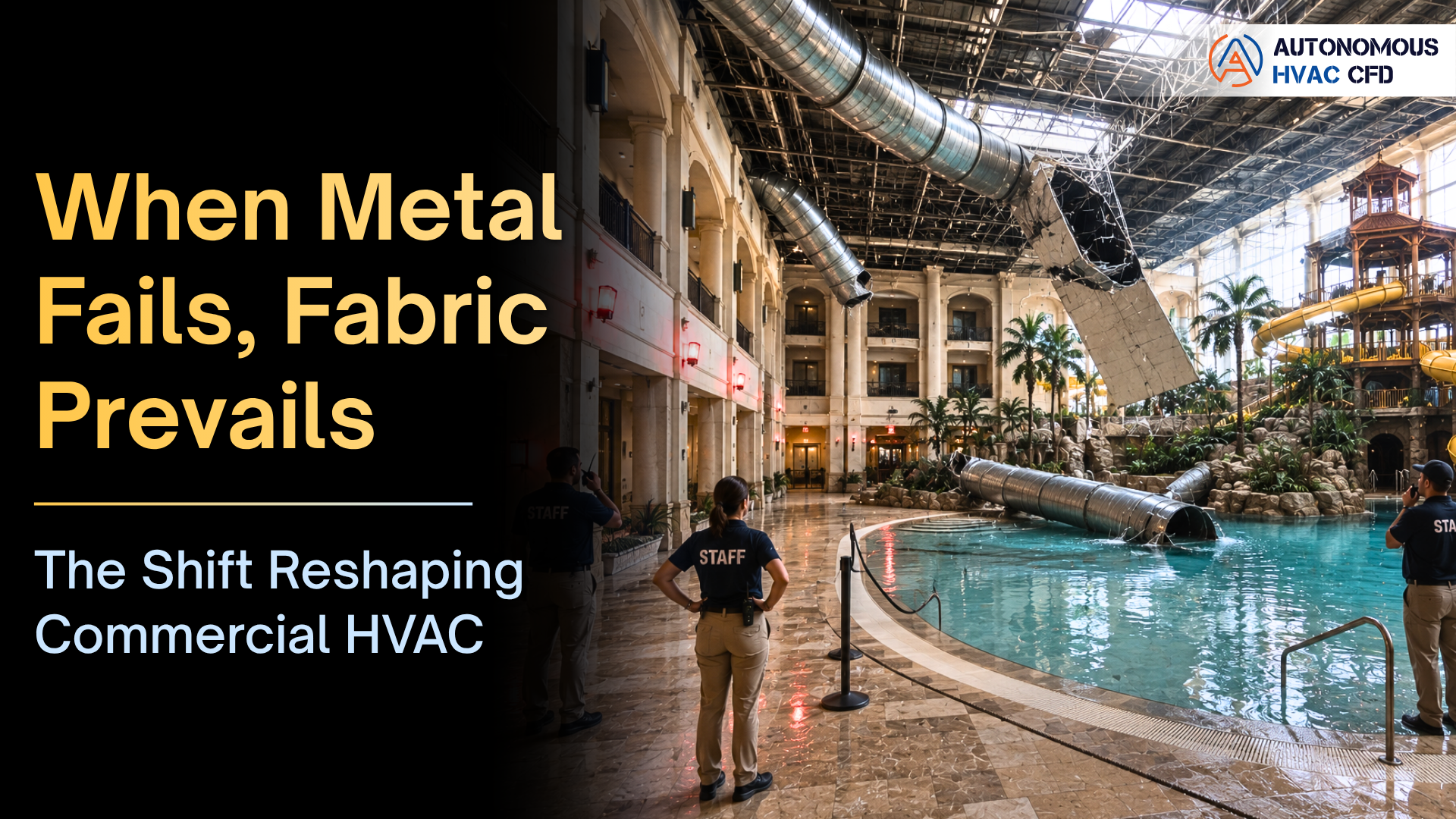

Chapter 1 - HVAC Ductwork Corrosion: Causes, Prevention, and Solutions
On May 6, 2023, thousands of pounds of spiral steel ductwork collapsed from the ceiling of the Gaylord Rockies Resort indoor pool, injuring six people — two critically — while up to 100 guests were in the water below. Investigation found hangers, cables, and clamps had corroded to structural failure in under five years, worsened by inadequate dehumidification and water accumulating inside the ducts. The resort replaced the system with lightweight fabric ducting.
The pattern is clear in the data: overall installation faults appear in 65% of systems, while refrigerant issues, duct leakage, airflow problems, and attic duct thermal losses all show up at significant rates across thousands of sampled homes and multi-site studies. These recurring failures mean that a large share of HVAC systems ultimately require repairs, often driven by avoidable issues in installation quality, airflow setup, and duct performance
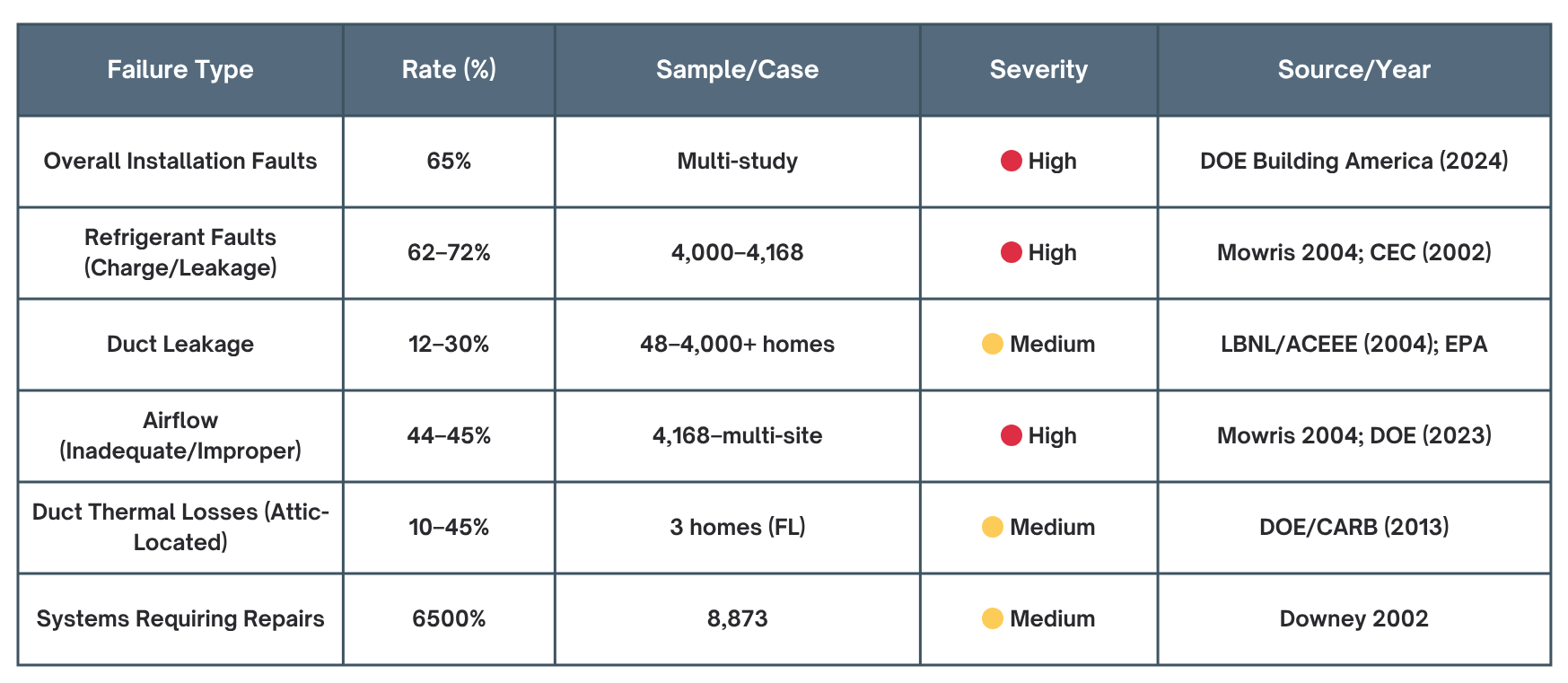
( Sources: [1] DOE Building America(2024), [2] Mowris 2004 (NREL); California CEC study, [3] LBNL/ACEEE (2004), [4] DOE Building America study(2023) )
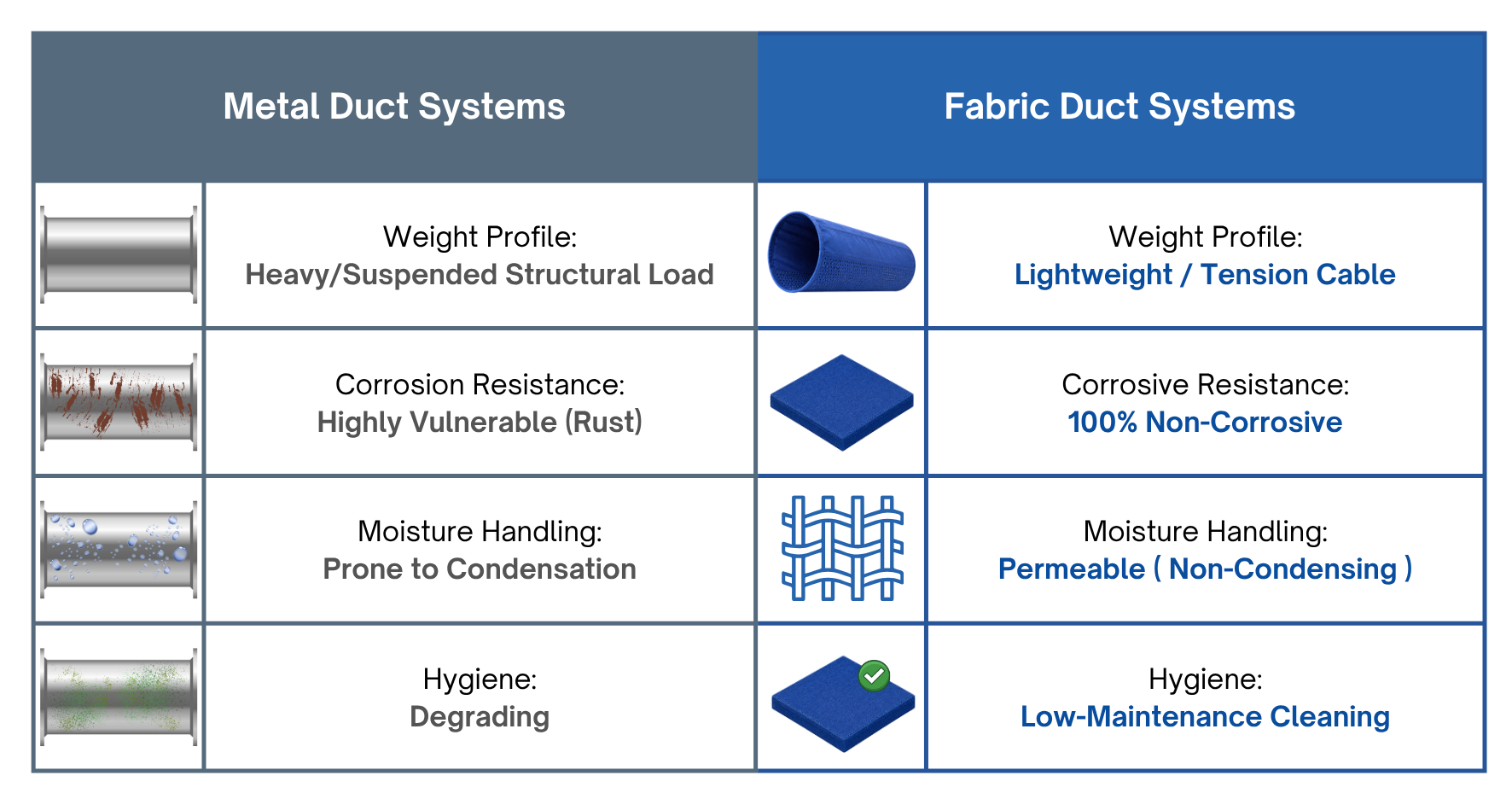
High-humidity spaces such as natatoriums, gyms, and aquatic facilities continuously expose metal ducts and support hangers to moisture and chemical corrosion - progressively weakening structural integrity until, as at Gaylord Rockies, the system reaches a point of no recovery. Fabric duct systems address this at the material level rather than the maintenance level: non-corrosive by nature, significantly lighter, and suspended on simple tension cables that eliminate the hanger assemblies most vulnerable to chloride attack. Permeable textile variants go further, allowing controlled airflow through the duct wall - preventing the condensation buildup that drives both corrosion and microbial growth from the outset.
Chapter 2 - The Missing Layer: Engineering Intelligence for Fabric Duct Design
As fabric duct adoption grows, so does the complexity of designing these systems accurately. Airflow distribution, pressure behavior, textile permeability, and air throw must all balance precisely - yet the workflows supporting them haven't kept pace.
Most fabric duct designs still rely on manual calculations, disconnected tools, and hand-drafted layouts. Throw dimensions are estimated rather than validated, and coordination between design, engineering, and fabrication happens across separate documents with no live feedback loop.
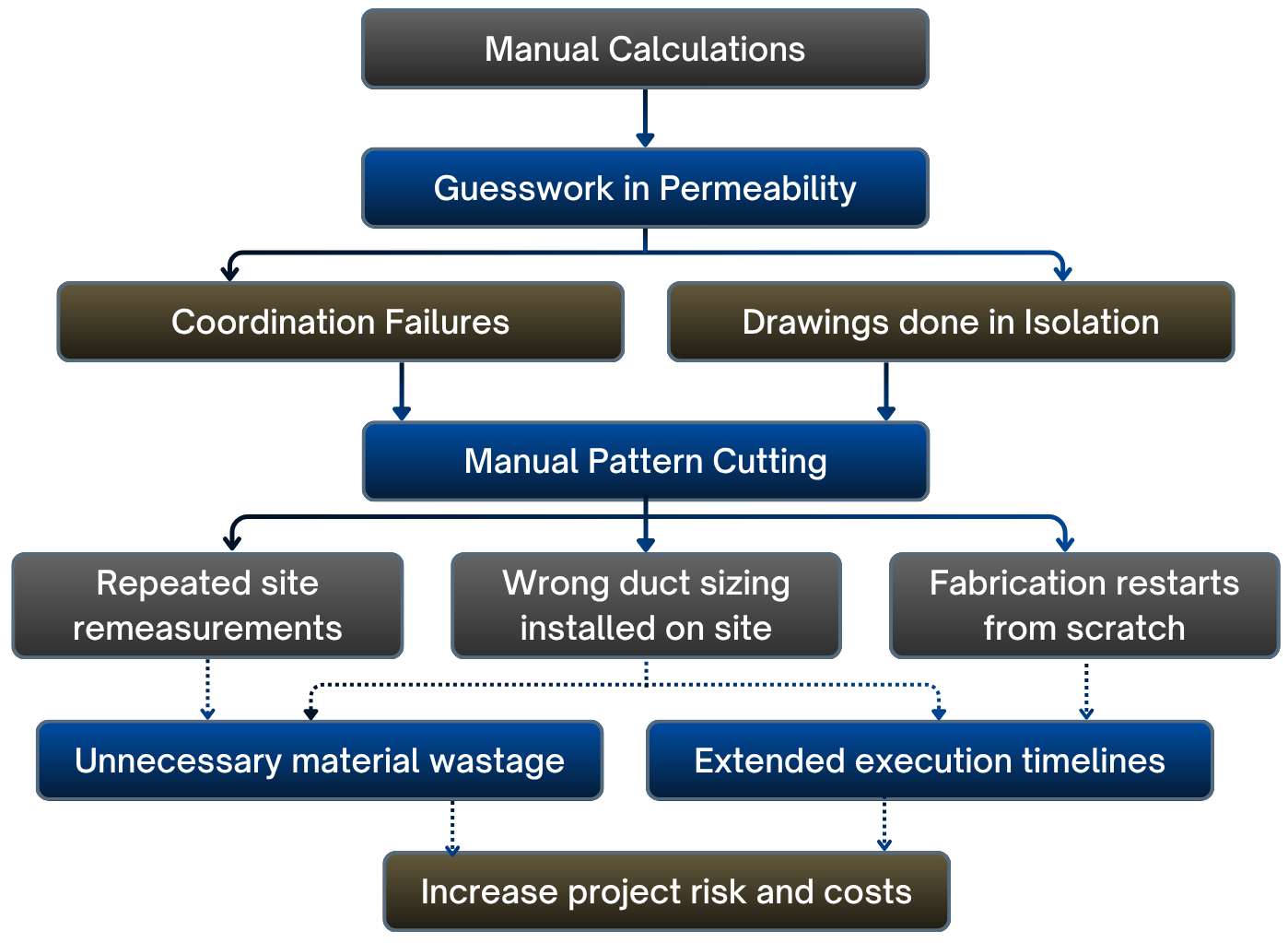
The consequences are predictable: material is over-specified to cover uncertainty, fabrication errors surface late in the process, execution timelines stretch beyond estimate, and bids priced to absorb that risk become uncompetitive. Without integrated validation, errors aren't caught at the design stage - they're discovered on site.
The AHC Fabric Duct Design Suite was built to close this gap - a cloud-based platform that integrates design engineering, airflow validation, and fabrication workflows into a single connected environment, purpose-built for textile HVAC duct manufacturers and consultants.
Chapter 3 - How AHC Fabric Duct Design Suite Improves Fabric Duct Delivery
The AHC Fabric Duct Design Suite simplifies the entire workflow from layout creation to manufacturing-ready outputs.
Designers can instantly generate accurate 3D duct geometry, improving visualization and project coordination. Integrated CFD-based analysis tools allow teams to evaluate airflow patterns, pressure distribution, velocity profiles, and air throw performance early in the design process.
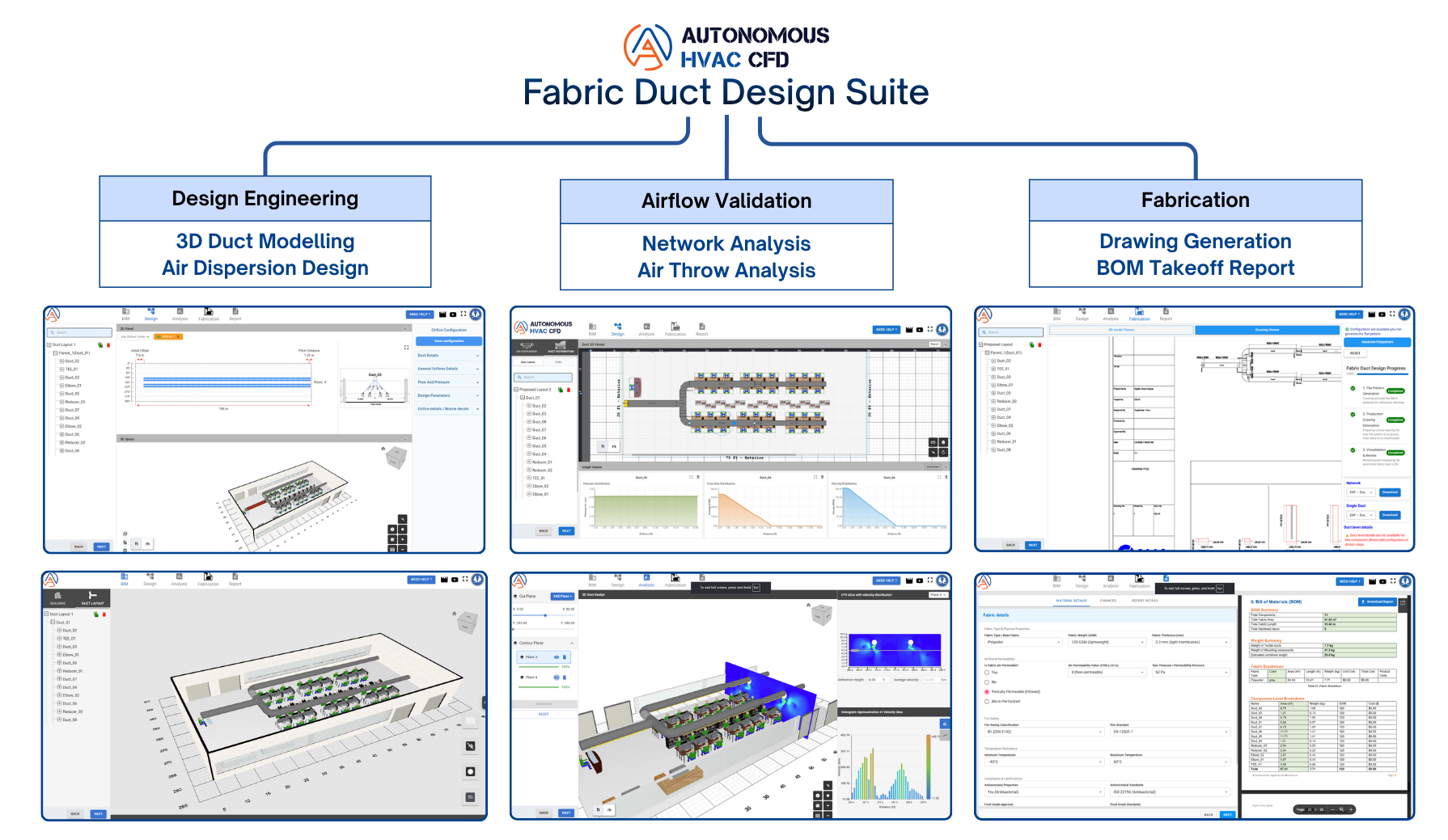
Once validated, the platform automatically generates flat patterns, production drawings, BOM takeoffs, and fabrication-ready outputs that directly support manufacturing and laser cutting workflows.
By reducing reliance on disconnected tools and manual calculations, the platform helps improve project consistency, reduce iterations, accelerate execution timelines, and minimize material wastage.
Chapter 4 - The Future of Textile HVAC Systems
The shift toward fabric duct systems reflects a broader transformation happening across HVAC design and manufacturing. Buildings today demand safer infrastructure, cleaner indoor air, faster project delivery, and more efficient workflows.
As textile HVAC systems become more mainstream, integrated platforms that combine airflow engineering with production-ready manufacturing will increasingly define the future of HVAC delivery.
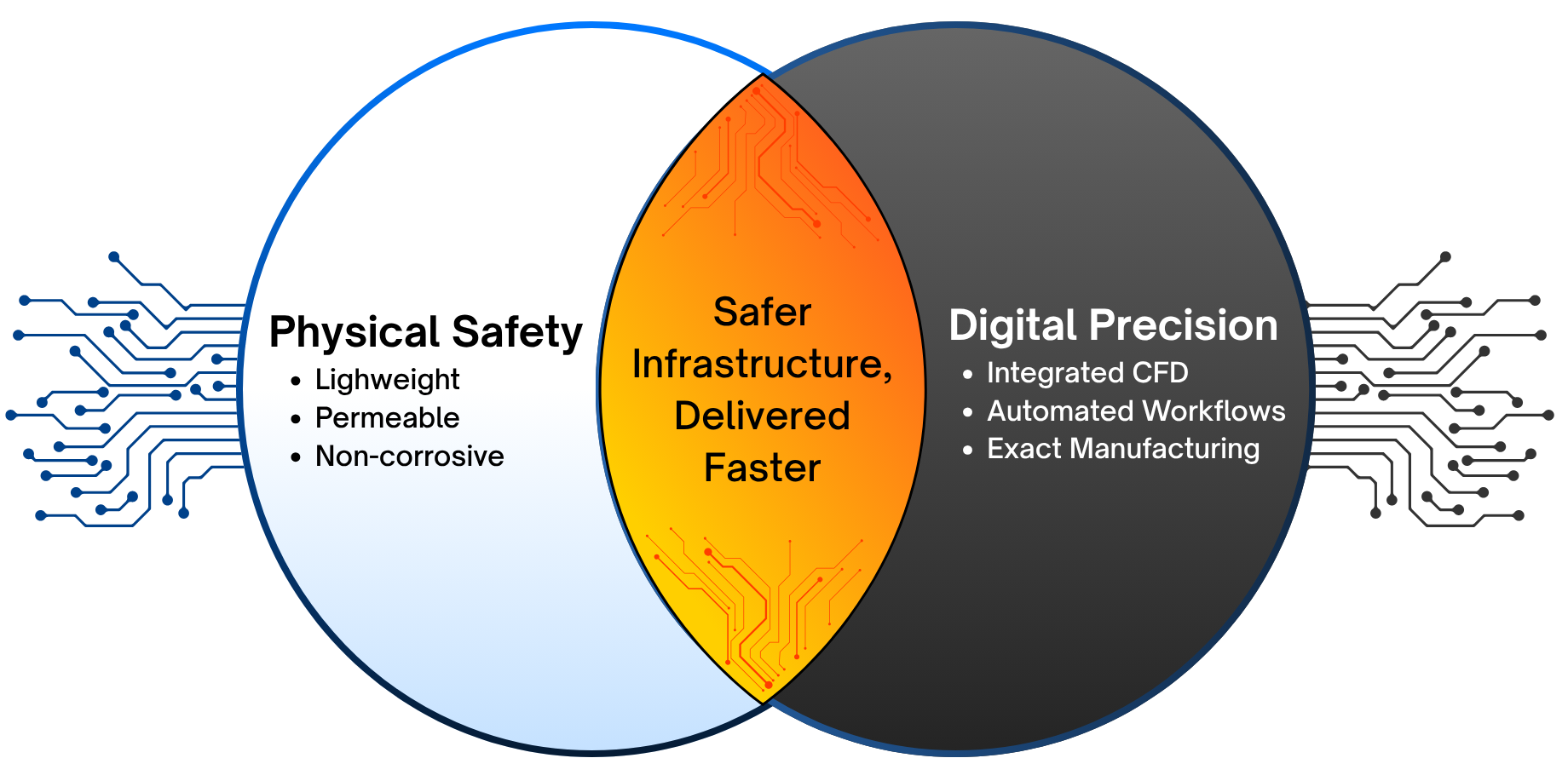
Discover how the AHC Fabric Duct Design Suite helps fabric duct manufacturers and HVAC designers accelerate projects with integrated airflow validation, automated modeling, and fabrication-ready workflows.
Explore the Fabric Duct Design Suite
Book a Free Demo
Comments
Recent posts