Trusted by
 ·
·
 ·
·
 ·
·
 ·
150+ more
·
150+ more
·
·
·
·
150+ more
Win contracts with performance data your competitors can't match — in
under 30 minutes.
Virtual flow loop testing for valve designers. Upload your CAD, get certified Cv, Kv, Cdt results and a ready-to-share PDF report — NO CFD EXPERTISE. NO HPC. No waiting days for results.
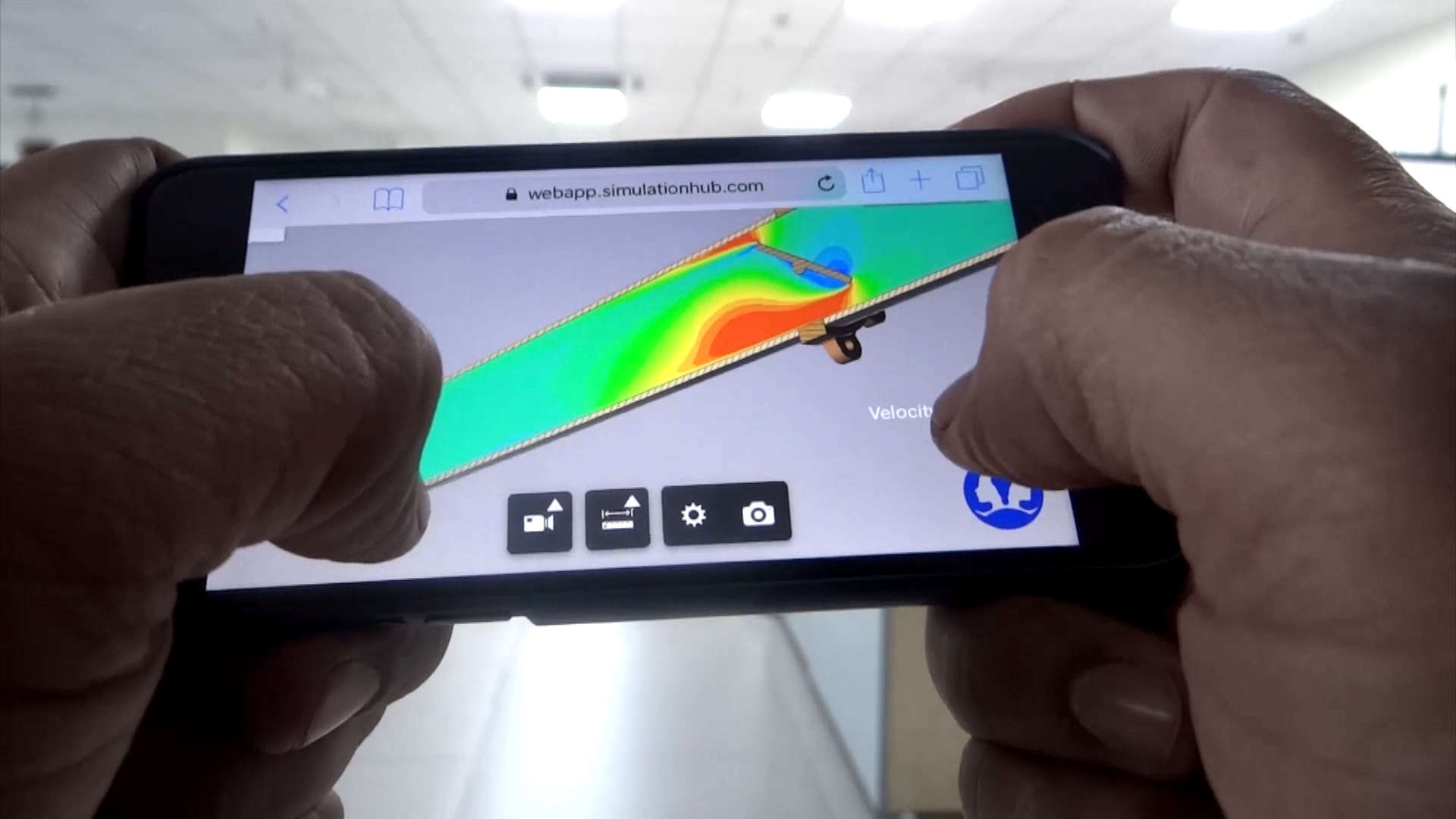
Watch a Quick Demo

CAD to performance report in under 3 minutes. No setup. No CFD knowledge needed.
The Problem
Your design cycle runs on weeks and months.
Your market doesn't wait that long.
Your market doesn't wait that long.
Getting accurate valve performance data — the Cv curves, cavitation indexes, and flow
coefficients your customers ask for — has always meant choosing between slow,
expensive, or dependent on someone else.
Physical flow loop testing takes 3–4 months per design iteration.
Before you get a single data point, you've manufactured a prototype and committed to a multi-month timeline. Every design change resets that clock. Your competitor launched last quarter while you were scheduling lab time.
$5K–$20K+ per valve testTraditional CFD requires expertise — and infrastructure — most teams can't justify.
Setting up a valve simulation correctly takes a specialist, expensive per-seat licences, and high-performance hardware. Result: a growing backlog keeping your best engineers waiting instead of designing.
$7K–$50K+/year in tools aloneOutsourcing CFD trades one problem for three: cost, timeline, and control.
Every project sent externally costs you delivery predictability, budget certainty, and design confidentiality. When a client needs performance data in 48 hours, "our vendor is backed up" is not a competitive answer.
Every project a new negotiation
The Solution
There's a faster way.
And your whole team can use it.
And your whole team can use it.
Every designer on your team can now validate their own valve design - no CFD specialist needed.
- What you provide
Your valve CAD in STP/STEP format. Flow direction. Opening conditions. That's the full input.
- What AVC returns
Cv, Kv, Cdt, cavitation index (σ), head loss coefficient, velocity contours, surface pressure, flow lines, multi-stage pressure drop - plus a complete PDF technical report.
- Time to result
Under 30 minutes per simulation. Compare: 3-7 days for traditional CFD and 3-4 months for physical flow loop testing.
Three Steps. Zero CFD Knowledge.
1
Upload your valve design
Any standard CAD file - STP/STEP from SolidWorks, CATIA, Creo, or Inventor. No CAD cleanup required. AVC's autonomous pre-processing handles geometry preparation. Just define your flow direction and opening conditions.
2
AVC does the rest
Simulation runs automatically. CAD cleanup, fluid volume extraction, mesh generation, and CFD solving execute on compute-optimized AWS infrastructure. Multiple opening conditions run in parallel. Close your browser and come back when it's done.
3
Download your performance report
Cv/Kv curves, cavitation data, 3D flow visualization - ready to share with your customer. Explore results interactively in your browser or download the full PDF CFD Technical Report for client delivery or certification submission.
Run your first simulation free - on your actual valve design.
Full feature access for 15 days. No credit card. No commitment.
Simulation Outputs
Every data point to design,
validate, and win clients.
validate, and win clients.
Same performance data as physical testing — validated against ANSI/ISA-75.02 and IEC 60534-2-3. Every output ready to put in front of your customer.
Cv / Kv Performance Curves
Gross and net flow coefficients across all opening conditions. Directly comparable with physical flow loop results.
Hydrodynamic Torque (Cdt)
Dynamic torque coefficient at every opening for accurate actuator sizing and reliable operation.
Cavitation Risk Assessment
Identify where pressure drops below vapor pressure. Prevent damage before you manufacture a single prototype.
3D Pressure & Velocity Contours
Interactive cut-plane contour plots and animated flow lines at every opening condition — in your browser, no software required.
Head Loss (K) & Sigma (σ)
Pressure recovery factor and cavitation index for complete valve sizing characterization per ANSI/ISA and IEC standards.
Ready-to-Share PDF Report
Auto-generated professional CFD Technical Report. Share with customers, publish on your website, or submit for certification — instantly.
Validated in Minutes. Trusted for Specifications
Show up to every bid
with proof. Not estimates.
with proof. Not estimates.
Independently validated performance data. Ready before your competitor finishes their lab booking.
AVC results are validated against physical test data from the Flow Control Research Institute (FCRI) and the Utah Water Research Laboratory (UWRL) - the same data your customers would get from a physical flow loop test.
Think of AVC reports as quality assurance for every valve you sell. You know it works - and you can prove it.
ANSI/ISA-75.01
Flow equations for sizing control valves
ANSI/ISA-75.02
Control valve capacity test procedures
IEC 60534-2-1
Flow capacity - sizing equations for fluid flow
IEC 60534-2-3
Flow capacity - test procedures
AWWA M49
Quarter-turn valves: head loss, torque, cavitation
ASME V&V 20
Verification & validation in CFD and heat transfer
| Criteria | Physical Flow Loop | Autonomous Valve CFD |
|---|---|---|
| Time per design | 2-6 weeks | < 30 minutes |
| CFD expertise | Lab / specialist required | None - fully autonomous |
| Annual cost | $50K+ lab & prototypes | Fraction - SaaS subscription |
| Design iterations | 1-2 per project | Unlimited, in parallel |
| Hardware | Test rig or HPC workstation | Any browser, any device |
| Standards | Lab or manual setup | ANSI/ISA + IEC automated |
| Report | Manual, days later | Auto-generated PDF, instant |
Already running any traditional CFD simulation software? AVC doesn't replace your existing tools - it scales simulation access to every designer on your team without adding specialist headcount or licence cost.
Talk to our enterprise team →
Standards & Technology
Built on recognized
standards & proven AI.
standards & proven AI.
Virtual flow loop tests per international standards. ML algorithms trained on 1,000+ valve simulations. Cloud infrastructure ensures zero queue times - results when you need them, not when a shared resource becomes available.
The autonomous CFD pipeline handles CAD cleanup, fluid volume extraction, meshing, solver convergence, and post-processing - all trained on valve-specific geometry. No general-purpose CFD knowledge required. Your designers work with valves, not simulations.
ANSI/ISA-75.02.01
Control Valve Capacity Test Procedures - same standard as physical flow loop testing.
IEC 60534-2-3
Industrial Process Control Valves - international flow capacity test procedures.
Machine Learning
AI flowrate prediction trained on 1,000+ simulations for faster solver convergence.
Cloud-Native SaaS
Browser-based, any device, zero installation - AWS infrastructure, zero queue times.
Customer Stories
Real results, from real
valve manufacturers.
valve manufacturers.
Two different problems. One platform. The same result: simulation that moves at the speed of engineering.
Bray International · Houston, USA · $1B Revenue
How Bray cut design cycle time by 90% - and put simulation power in every engineer's hands.
One of North America's largest valve manufacturers was constrained by physical flow loop testing (3-4 months per design), generic CFD tools with licence limits, and an overworked specialist team with a growing backlog. Since adopting AVC, design evaluation time dropped from 3 days to 2 hours, the user base scaled from 3 to 30 engineers across all global design centers, and over 1,200 valve designs have been simulated - enabling faster product launches and a significant reduction in physical prototyping costs.
"The platform's user-friendly interface and robust cloud-based simulation tools have empowered Bray's engineers to iterate and optimize valve designs rapidly, thereby reducing the need for expensive physical prototyping and testing."
GM Engineering · India · Industrial Valve Manufacturer
How GM Engineering accelerated valve design cycles and reduced reliance on physical testing.
GM Engineering was constrained by traditional validation methods. Physical flow loop testing and external simulation dependencies slowed design iterations and limited exploration - especially for large valves where test facility constraints made validation difficult. With Autonomous Valve CFD (AVC), their design team began running simulations independently. Design timelines reduced from weeks to hours, enabling faster iteration and better visibility into flow behavior. The team also validated DN2500 valves digitally - eliminating the need for impractical physical testing.
"Integrating Autonomous Valve CFD has greatly improved our design process, delivering value previously unattainable. Embracing such tools is essential for continuous business innovation, and as a CEO, I advocate their use to foster growth."
Deploying AVC across a design team? Ask us how teams like Bray scaled from 3 to 30 users - and what the enterprise onboarding process looks like.
Talk to enterprise sales
Simulation Gallery
If it flows through a valve, AVC has simulated it.
Whatever your customer needs - control valve, butterfly, check, globe,
ball - you can deliver validated performance data for it. Before your
competitor even books a test lab.
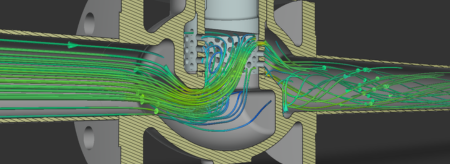
Globe + Cavitation Cage
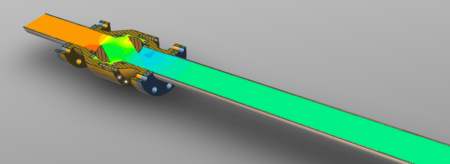
Segmented Ball Valve
Triple Offset Butterfly
Full Port Ball Valve
Swing Check Valve
Plug Valve
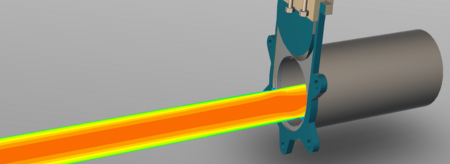
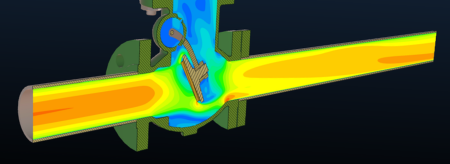
Segmented Ball Valve
Triple Offset Butterfly
Axial Flow Valve
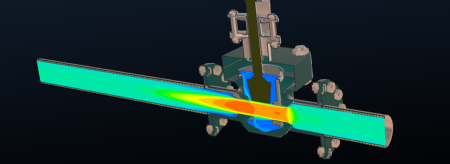
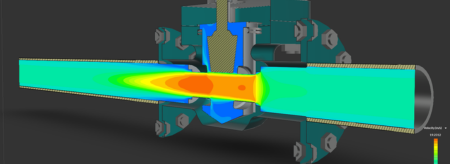
No sign-in required. Open any simulation, rotate the 3D model, switch between velocity contours and flow lines, and view performance curves at each opening condition.
Is AVC Right For You?
Tell me which situation
you're in.
you're in.
Your CFD team is a bottleneck, not a multiplier.
You have capable CFD engineers and twenty designers waiting for results. Licence limits prevent parallel runs. AVC puts simulation directly in every designer's hands - at a fraction of the per-seat cost. Zero additional CFD training required. Your specialists focus on the complex cases. AVC handles the high-volume ones.
Talk to enterprise sales →You need CFD. You can't afford to hire a team to run it.
Traditional simulation requires specialists to configure and interpret. AVC is built for engineers who understand valves, not meshing algorithms. ANSI/ISA and IEC-compliant results from day one - no training, no configuration. Respond to RFQs in days, not months.
Start free trial →You're paying a vendor for a capability you could own.
Every outsourced CFD project costs timeline control, budget certainty, and design confidentiality. AVC brings that capability in-house at a subscription cost typically below annual outsourcing spend. The next time a client asks for flow data in 48 hours, the answer is yes.
See pricing →Your competitors have performance data. Now you can too.
AVC gives smaller valve manufacturers access to the same simulation quality Fortune 500 OEMs rely on - at a price designed for companies growing into digital engineering. Give your customers the proof they need to specify your valve - not your competitor's.
Start free trial →
Subscription Plans
Start free. Scale as you grow.
Every plan gives you full-feature access - no stripped-down trial, no artificial limits
on valve types or outputs. Choose the plan that matches where your team is today.
Just Getting Started With Simulation
Free Trial
$0
The fastest way to validate AVC on your own valve design. Run real simulations on real geometry and see the results for yourself before committing.
What's Included
✓ Full app access - all valve types
✓ Cv, Kv, Cdt, σ performance data
✓ 3D flow visualization in browser
✓ PDF CFD Technical Report
✓ ANSI/ISA + IEC standards built-in
✓ No credit card required
Most Popular
Running Regular Design Workloads
Yearly Subscription
Per user / year
Built for valve design teams with a regular simulation workload. Uninterrupted access, priority compute, and more credits per cost than any trial plan.
Everything in Trial, Plus
✓ 2x simulation credits per cost
✓ Priority cloud compute - no queue
✓ Custom opening conditions (up to 18)
✓ Surface roughness modeling
✓ Dedicated support channel
✓ Cancel or upgrade anytime
Scaling Simulation Across a Team or Org
Enterprise
Custom pricing
Custom pricing
For organizations running AVC across multiple design teams, geographies, or product lines. Enterprise teams that start with a pilot team typically scale across all design centers within the first year.
Everything in Yearly, Plus
✓ Unlimited user accounts
✓ 2x simulation credits vs. yearly
✓ Project management & team workspace
✓ Dedicated account manager
✓ Onboarding & training sessions
✓ Custom SLA & security review
All plans include ANSI/ISA + IEC standards built-in, full simulation gallery access, and work on any device. No software installation required.
FAQ
Straight answers to the questions that stall most decisions.
Pick the question type that's on your mind right now.
Business Case · Investment · Time-to-Market · Scale
What's the business case for AVC over our current process?
Physical flow loop testing costs $5K–$20K+ per valve and takes 3–4 months. Traditional CFD requires $7K–$50K+/year in tools plus dedicated specialist headcount. AVC delivers equivalent validated results in under 30 minutes at a SaaS subscription cost — typically a fraction of current annual simulation spend. The ROI case is built from three numbers: current testing cost, current cycle time cost, and AVC subscription cost. Most teams recover the investment within the first quarter.
How does AVC affect time-to-market for new valve lines?
The ability to run multiple design iterations in parallel — rather than sequentially — means teams explore more design options in the same calendar time. Design evaluation cycles that previously took days now take hours. New product lines that required quarters for validation can be ready for launch significantly faster — without adding headcount or lab time.
Is the simulation data defensible with our enterprise customers?
Yes. AVC results are validated against physical lab data within ±5% deviation, following ASME V&V 20 — the international standard for verification and validation in CFD. Results meet ANSI/ISA-75.02 and IEC 60534 test procedure requirements — the same standards your customers reference in procurement specifications. The PDF report is structured to submit directly to clients or certification bodies.
Does AVC replace our existing CFD tools or specialist team?
No — and it's designed not to. AVC handles the high-volume routine simulations so your CFD specialists can focus on complex, non-standard analysis where their expertise is genuinely needed. Most teams run both in parallel: AVC for speed and scale across the design team, specialist tools for edge cases and novel geometries. The result is more total throughput with the same headcount.
What does enterprise rollout typically look like?
Enterprise plans include dedicated onboarding, training sessions, and an account manager. The typical rollout starts with a pilot — one power user or design team — then expands to additional teams and geographies. Unlimited user accounts mean no seat-licence friction as you scale. Teams that start with 3–5 users commonly expand to 20–30 within their first year.
Validation · CFD Methodology · Standards · Results
How accurate is AVC compared to physical lab testing?
AVC results are validated within ±5% of physical lab data from FCRI and UWRL — independent institutions used by valve OEMs worldwide. Validation follows ASME V&V 20, the same standard physical labs use. This means AVC reports can be presented to customers alongside — or instead of — flow loop certificates.
What CFD solver and mesh methodology does AVC use?
AVC runs a fully automated pipeline: CAD cleanup → fluid volume extraction → AI-assisted meshing → RANS CFD solve → post-processing. The ML model is trained on 1,000+ valve simulations and predicts flowrate to accelerate convergence. No manual mesh setup, no solver tuning — the pipeline is valve-geometry-aware by design.
Which valve types and performance coefficients does AVC support?
AVC supports globe, ball, butterfly, check, gate, plug, and specialty valves. Output coefficients include Cv, Kv, Cdt, σ (cavitation), FL, XT, and Fd — all per ANSI/ISA-75 and IEC 60534 definitions. Each simulation generates a full Cv vs. % opening curve, not just a single operating point.
Can I trust AVC results in customer-facing proposals?
Yes. The auto-generated PDF Technical Report includes simulation methodology, validation references, boundary conditions, and performance curves — structured to meet the expectations of procurement engineers. Several customers submit AVC reports directly to end-users as part of their product data packages.
Onboarding · Workflow · CAD · Support
What CAD formats does AVC accept?
AVC accepts STEP and IGES files — the standard neutral formats exported by SolidWorks, CATIA, Creo, NX, Inventor, and Fusion 360. You upload the valve body geometry; AVC handles fluid volume extraction, cleanup, and meshing automatically. No CAD preparation required beyond a standard assembly export.
How long does a simulation take from upload to results?
Most simulations complete in under 30 minutes from CAD upload to full performance report. Complex geometries or high opening-condition counts may take slightly longer. Yearly subscribers get priority compute — no queue, no waiting for shared cluster availability.
Do I need CFD knowledge to use AVC?
No. AVC is designed for valve design engineers, not CFD specialists. There is no meshing, no solver configuration, no post-processing — you upload geometry, set fluid conditions, and receive results. Most new users run their first simulation within 20 minutes of account creation, without any training.
What support is available during and after onboarding?
Trial users get access to documentation and email support. Yearly subscribers receive a dedicated support channel with guaranteed response times. Enterprise plans include a named account manager, structured onboarding sessions, and custom training for your team's valve types and workflows.
Sound Familiar?
Every day without validated performance data is a day your competitor gets ahead.
"We lost that bid because we couldn't provide performance data fast enough. They showed up with validated Cv curves. We showed up with estimates."
"Our customer is asking for cavitation guarantees and I'm guessing. We're spending 6 months testing a valve our competitor launched last quarter."
"We're paying $40K a year to a CFD consultant for results that take 3 weeks and we still don't control the timeline or the data."
ANSI/ISA-75
IEC 60534
ASME V&V 20
AWS-POWERED
FCRI VALIDATED
150+ MANUFACTURERS
40+ COUNTRIES
Your first simulation
is free.
is free.
Run your actual valve through AVC and see what performance data looks like when it comes back in 30 minutes — not 30 days.
✓ 15-day full access
✓ No credit card
✓ No installation
✓ Any device