Written by Maanas Sindkar
Wednesday, August 05, 2026
Evaluating Axial Flow Nozzle Check Valve Performance with Autonomous Valve CFD
By
Maanas Sindkar

Why Check Valve Selection Is More Than a Sizing Exercise
Check valves are used in pipelines to prevent reverse flow and protect upstream and downstream equipment. However, valve selection involves more than simply choosing a non-return device. The type of check valve, its motion characteristics, cracking pressure, response time, pressure drop, and stability can all strongly influence overall pipeline behaviour.
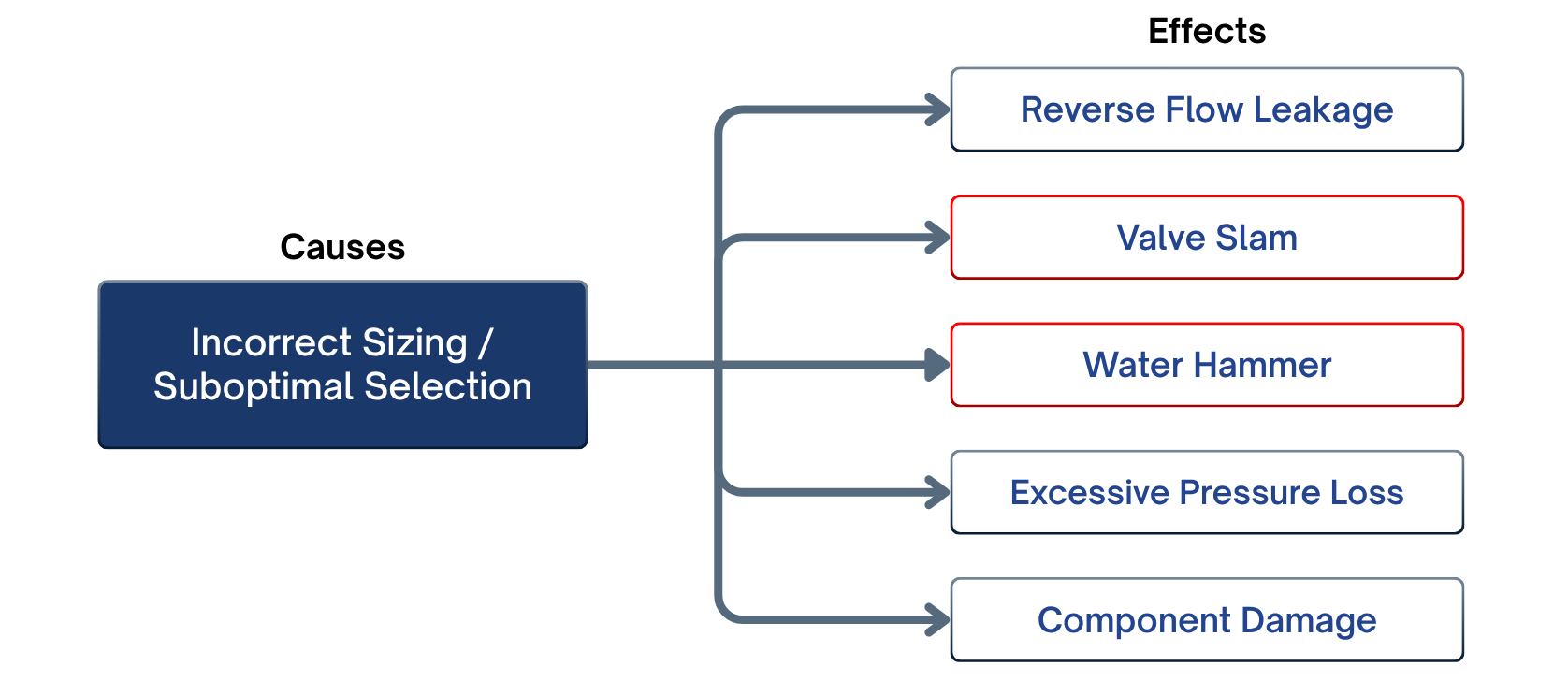
Incorrect sizing or selection can lead to reverse-flow leakage, valve slam, water hammer, excessive pressure loss, and damage to connected components. In critical service applications, such risks are unacceptable, making high-fidelity performance evaluation an important part of check valve selection and design.
One advanced and increasingly popular solution for such applications is the axial flow nozzle check valve.
Understanding Axial Flow Nozzle Check Valves
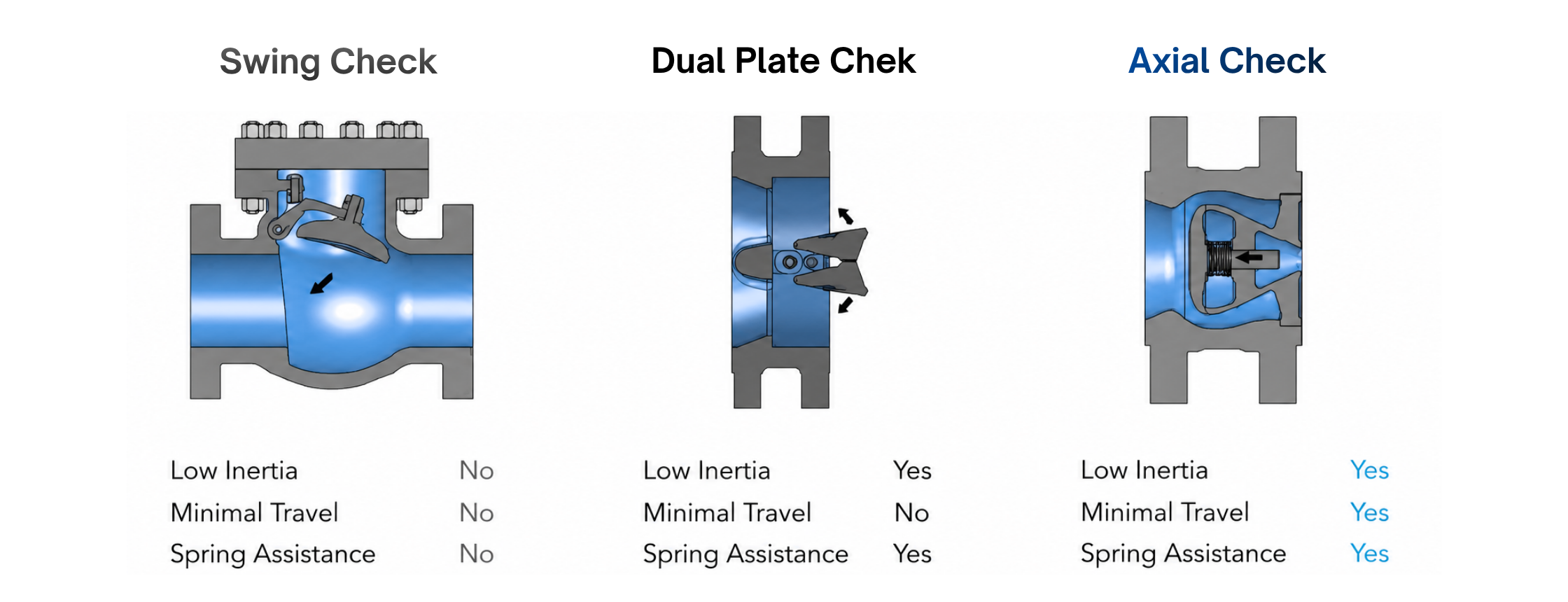
Axial flow nozzle check valves — also known as non-slam, silent, or axial flow check valves — are spring-assisted non-return valves designed to prevent reverse flow while maintaining a streamlined flow path. Flow passes through the valve along its axis, and the internal geometry often resembles a converging-diverging nozzle.
The disc is guided in a straight line and held closed by a spring. When forward flow begins, the disc moves axially to open the valve; when flow reduces or reverses, the spring assists rapid closure. Because the disc stroke is short and aligned with the flow direction, these valves respond quickly to flow changes, helping reduce valve slam and water hammer.
Key advantages include low pressure drop, fast closure, stable operation across a wide flow range, compact construction, suitability for vertical piping, and improved long-term energy efficiency. However, performance depends strongly on correct sizing and spring selection.
The Parameters That Actually Matter for AFCV Sizing
Selecting the correct AFCV depends on several factors. Some are relatively easy to determine, while others require sophisticated testing or simulation methods.
Parameters such as Cv, Kv, and pressure drop can often be estimated with acceptable accuracy by interpolating existing manufacturer or catalogue data. Simple steady-state CFD can evaluate the same parameters with greater accuracy for a given valve opening or operating condition.
However, end users often need answers to more complex questions: What is the minimum flow rate required to keep the valve open? How much does the valve open at a given flow rate? Under a specific process condition, does the trim remain stable or show fluttering instability? Does the valve close fast enough to prevent reverse flow and slam?
Determining these advanced parameters typically requires physical flow-loop testing with specialized procedures and instrumentation. Another option is to run high-fidelity simulations that accurately capture valve dynamics and transient flow effects. Both approaches demand significant time, cost, and engineering expertise, often adding months to the performance evaluation cycle.
This is where Autonomous Valve CFD can help
Where Autonomous Valve CFD Fits In
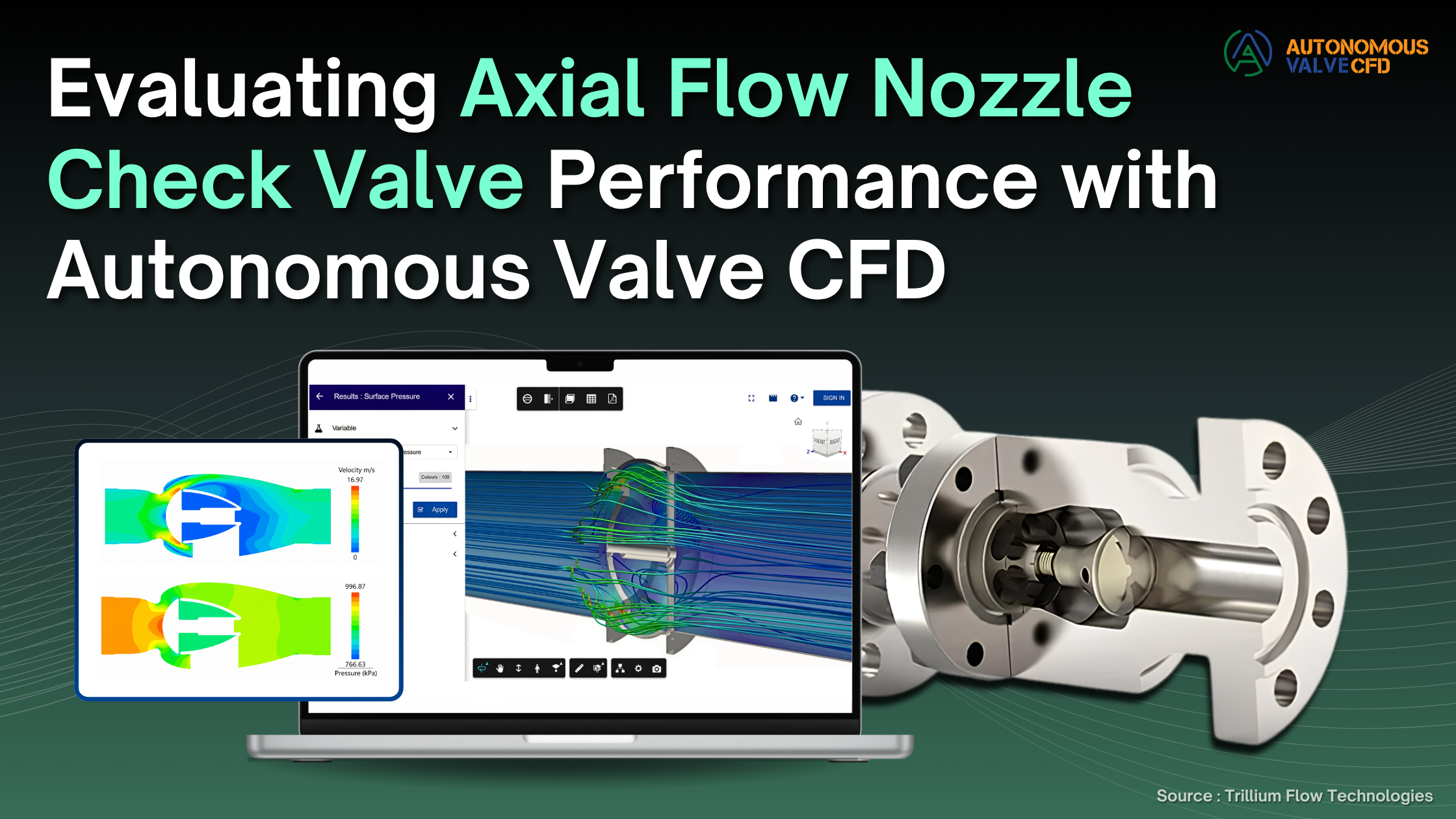
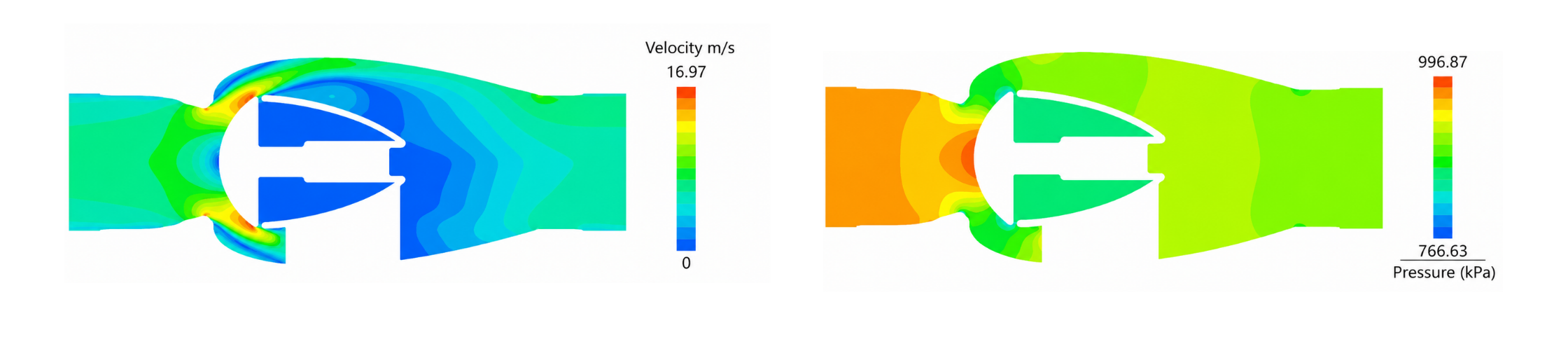
Autonomous Valve CFD helps accelerate AFCV performance evaluation by generating key flow-performance data across multiple valve openings and operating conditions. Parameters such as Cv, Kv, pressure drop, velocity distribution, and pressure recovery can be evaluated using automated CFD workflows, reducing dependence on repeated manual setup and physical testing for every design iteration.
Case Study: Predicting Opening Percentage and Stability with Autonomous Valve CFD
For axial flow nozzle check valves, AVC can also support evaluation beyond standard steady-state performance. By combining CFD-derived hydrodynamic forces with the valve's spring characteristics, the valve opening percentage and cracking behaviour can be estimated for a given process condition. This helps engineers understand whether the valve is likely to remain closed, partially open, or reach a stable operating position at the specified flow rate.
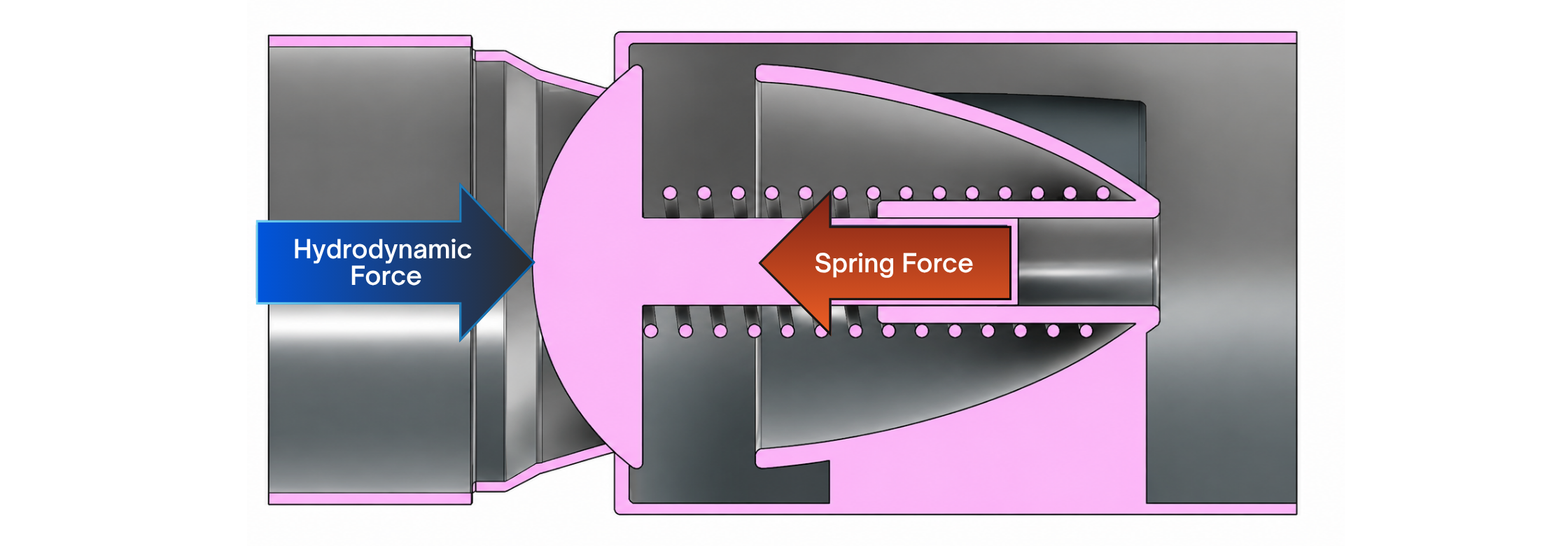
This plot shows the hydrodynamic force simulated in CFD. This force acts on the trim and drives it to open the valve, while the spring force, which increases with opening% (travel), drives the trim toward closing.
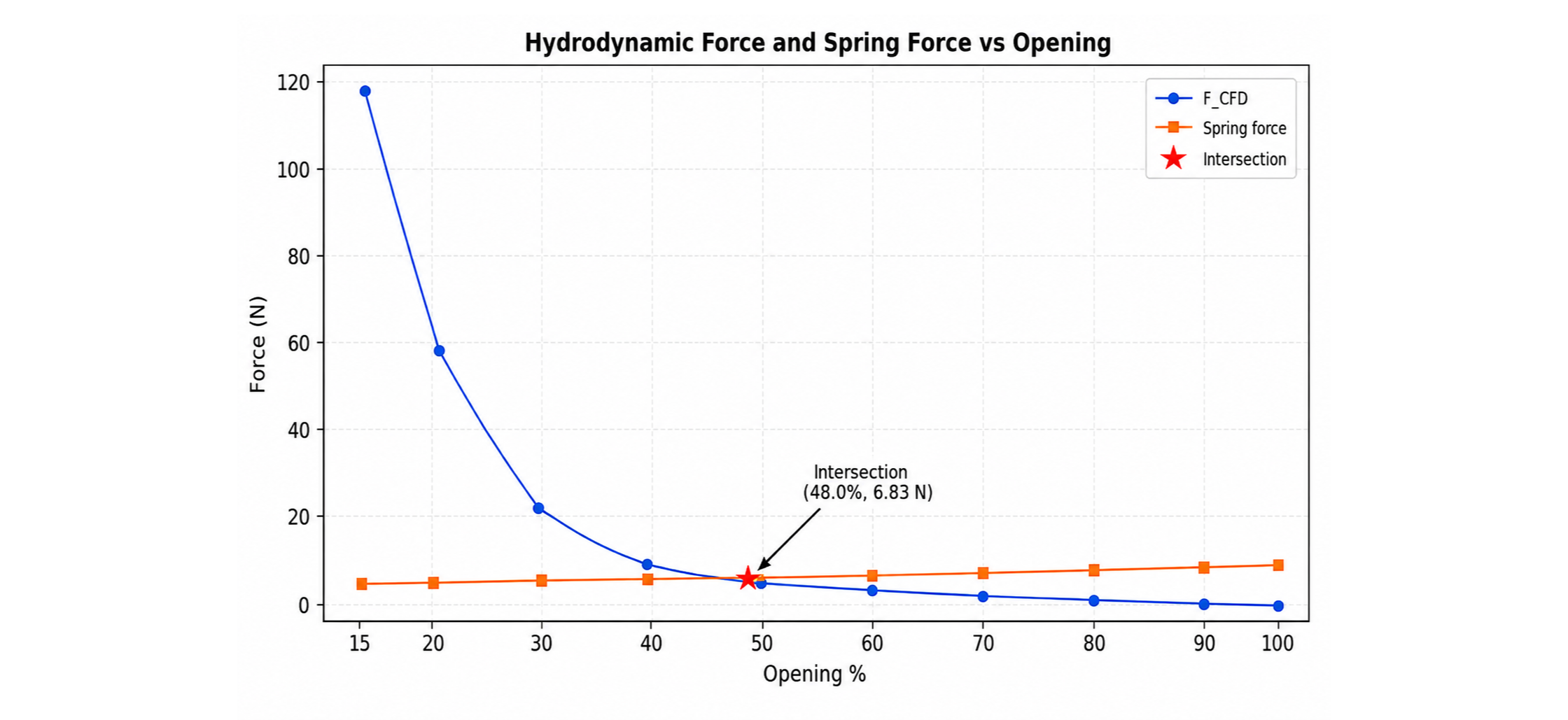
Hydrodynamic force on trim at a given process condition, derived from CFD, and resisting spring force, kx vs. Opening percentage. Intersection of F_CFD and kx graph gives % opening at that process condition.
When the hydrodynamic force is balanced by the spring force at a specific travel, the valve remains open to that travel under the given process conditions. This balance is represented in the plot as the intersection of the hydrodynamic force curve with the spring force curve. To obtain such information for a given valve under a given process condition, the following inputs are needed
- Valve specifications.
- AFCV spring specifications (pre-load, stiffness).
- Process conditions (flow rate, flow medium).
Additionally, for applications where transient behaviour is critical, CFD results can also be coupled with a 1-D valve motion model to study stability.
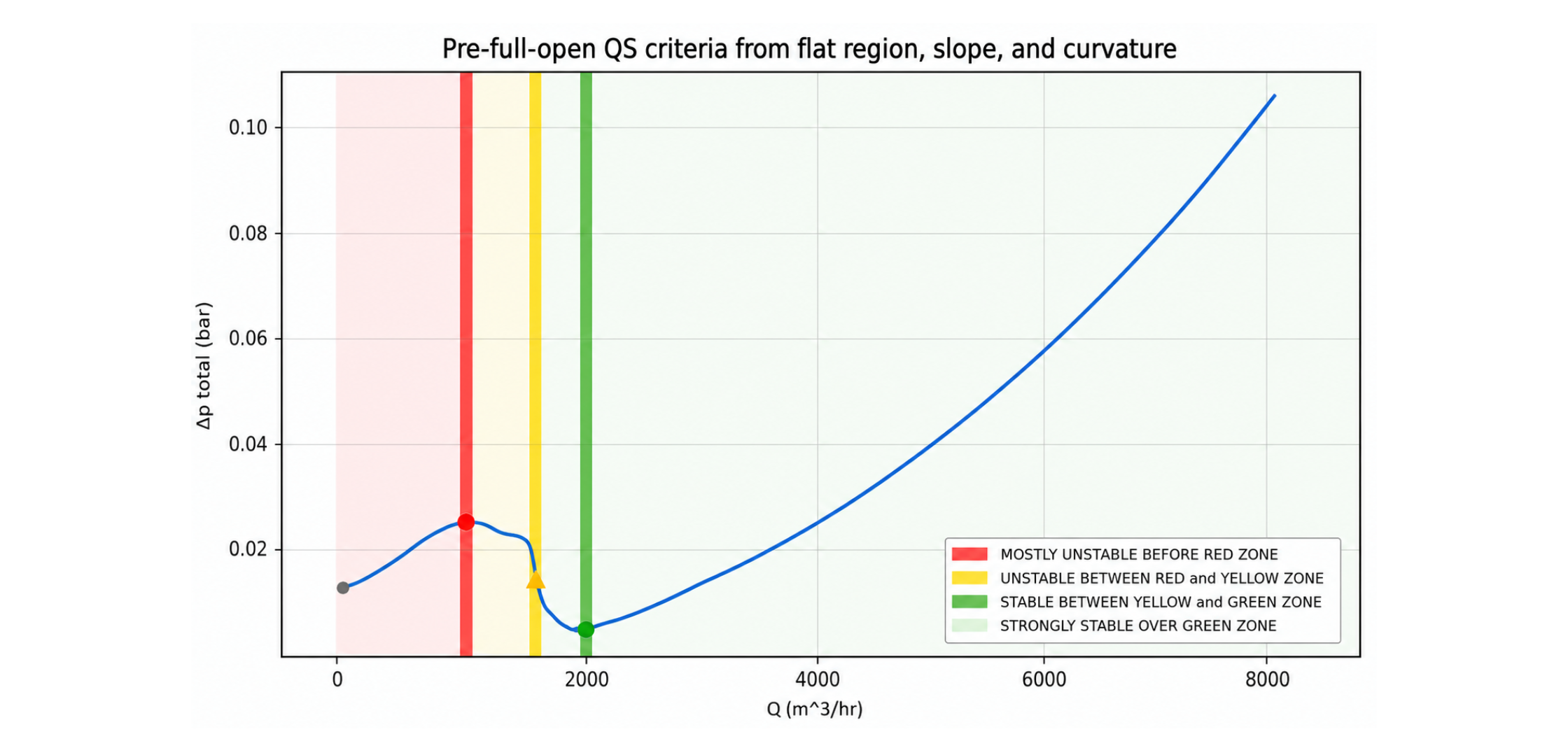
1D solver for AFCV. Shows stability regions at various flow rates.
This plot shows the behaviour of an AFCV across a variety of process conditions. A one-dimensional equation solver is used to generate this curve based on outputs from CFD and specifications from the valve manufacturer. It shows an unstable region where the trim undergoes oscillations or flutter across a range of flow rates. The stable region begins in 2000 m3/hr and above, where the valve trim does not show transient instability.
With this approach, the simulationHub team can help manufacturers evaluate AFCV performance earlier in the design cycle, compare design variations faster, and reduce the time and cost associated with physical testing.
Conclusion
Axial flow nozzle check valves are often selected for critical applications where fast response, low pressure drops, and non-slam operation are important. However, evaluating their real-world performance requires more than basic sizing calculations. Parameters such as opening percentage, cracking behaviour, transient response, and stability can strongly influence how the valve performs in an actual pipeline.
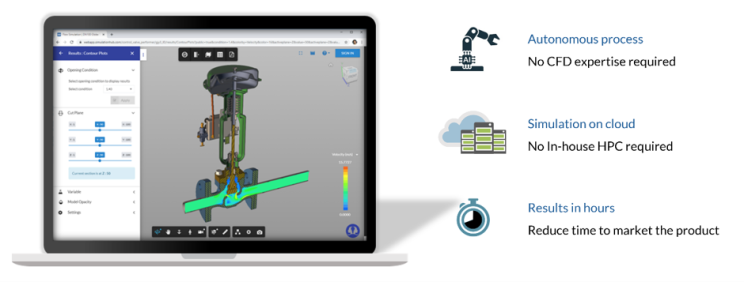
At SimulationHub, we help valve engineers bridge the gap between design intent and real-world performance. Autonomous Valve CFD (AVC) enables fast, high-accuracy evaluation of Cv, Kv, pressure drop, and flow behaviour, while also supporting advanced AFCV studies such as opening prediction, transient response, and 1-D/CFD-coupled dynamic analysis. Explore AVC or schedule a consultation with our experts to accelerate your valve development process.
Explore the Updated AVC Website
Book a Free Demo
Comments
Recent posts