Written by Akshay Dorle
Friday, July 17, 2026
Stop Water Hammer Before it starts & how to prove yours won’t with Autonomous Valve CFD.
By
Akshay Dorle
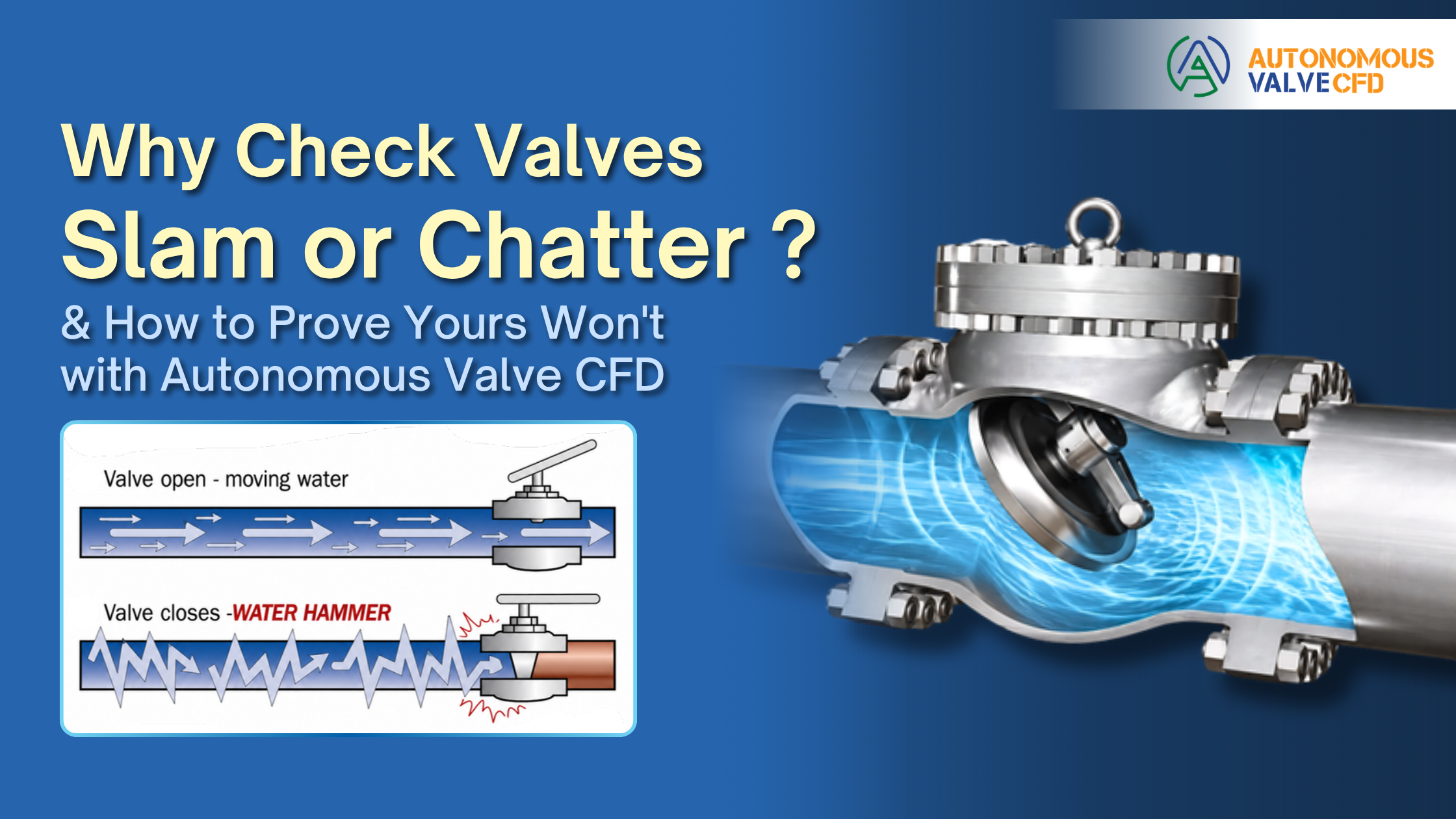

A valve that bangs or rattles isn't failing randomly. It's reacting to something specific - a closing speed mismatch, a sizing error, or both - and once you can name which one, fixing it stops being guesswork.
Two Reactions, Two Different Root Causes
Slam and chatter sound like the same problem from outside the pipework, but they come from opposite directions. Slam happens when the disc closes too slowly for how fast reverse flow is building behind it, so by the time it seats, there's real momentum behind the impact - one sharp bang, and a pressure spike that travels through the whole system. Chatter is the disc never settling at all: instead of closing once, it opens and closes repeatedly in quick succession, which sounds less like a bang and more like rattling.
Different as they sound, both run the same components - hinge pins, seats, springs - through repeated stress they weren't designed for. Slam tends to break things quickly and obviously. Chatter wears them out slowly and quietly, often until a strainer full of metal fragments is the first real evidence of anything wrong. Either way, the noise itself is the valve telling you something about how it's moving that doesn't match its design intent - not background plant noise to tune out.
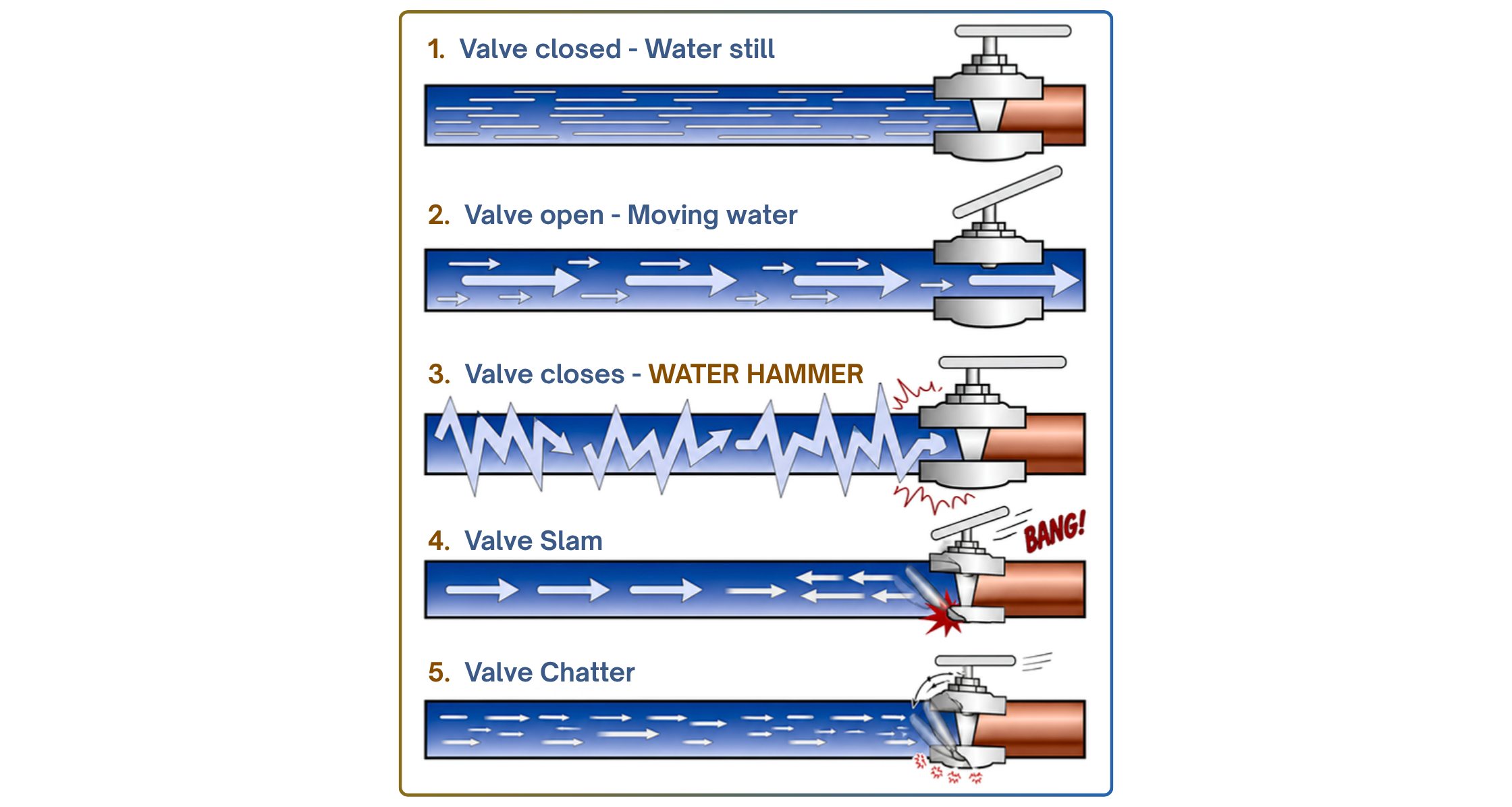
Source : Journal of The Institution of Engineers (India): Series C
What Triggers It, and Why It Gets Dangerous
Water hammer usually starts with a rapid change the system cannot absorb cleanly: a valve opened or closed too abruptly, a pump started or stopped instantly, water pushed across a sharp elevation gain, excessive pump head, high flow velocity, or a pipeline layout that gives pressure waves too much room to build. Poor construction practices make the same problem worse by adding weak points where shock loads can concentrate.
The risk is not just noise. A pressure wave can rise several times above normal working pressure, rupturing pipework, damaging valves and joints, or forcing a pump into reverse. In the worst cases, that means flooded pump rooms, damaged equipment, and real safety exposure for people nearby.

Pressure surge damage cases
What Drives It, and the Fast Fix
Slam tends to follow a sudden pump stop with nothing to slow the deceleration, a long discharge run that gives reverse flow room to gain speed, or a swing-style disc running at low velocity that never fully opens - and so slams shut from a partially open position rather than a fully open one. Chatter is almost always a sizing story: an oversized valve hovering near its seat instead of held open, pulsating flow from a reciprocating pump or compressor hitting the disc unevenly, or differential pressure too low to keep the disc seated open.
The fix follows directly from the cause:
- Size to actual flow range, not pipe diameter - oversizing is the single most common driver of chatter.
- Match valve type to real system conditions - a simple swing check for short, low-velocity, non-critical runs; a dual-plate design as the solid general-purpose choice once pipe length and velocity increase; a nozzle-style valve where pump trips are sudden and lines are long; spring-assisted designs for pulsating service.
- Install it properly - correct orientation for the valve type, flow direction matched to the body arrow, and several pipe diameters of straight run upstream so flow has settled before it reaches the disc.
Get those three rights, and most slam and chatter cases never get the chance to develop.
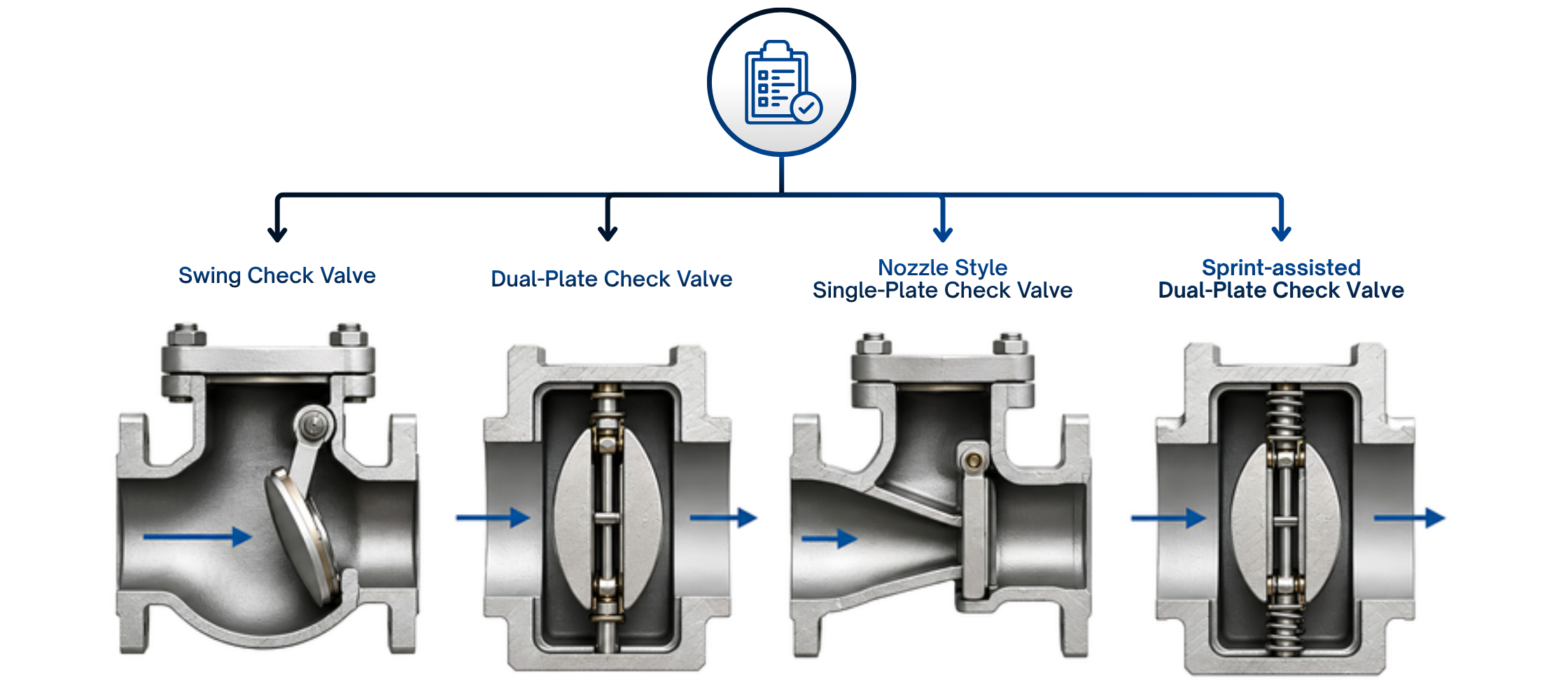
Proper check valve sizing type selection and installation
Proof From the Field: Measured Slam, Measured Water Hammer
In a 2017 Barcelona pump station refurbishment, engineers tripped the pumps on purpose and measured the resulting check valve slam and water hammer spike on two identical lines - one with a swing check valve, one with a nozzle check valve. The nozzle valve's faster, shorter closing stroke cut the slam-induced pressure spike by over 80% versus the swing check, and the measured data matched a computer surge model closely enough to trust simulation over physical testing going forward (Lozano Solé, Bosch Segarra & Walters, 2018, via pumps.org).
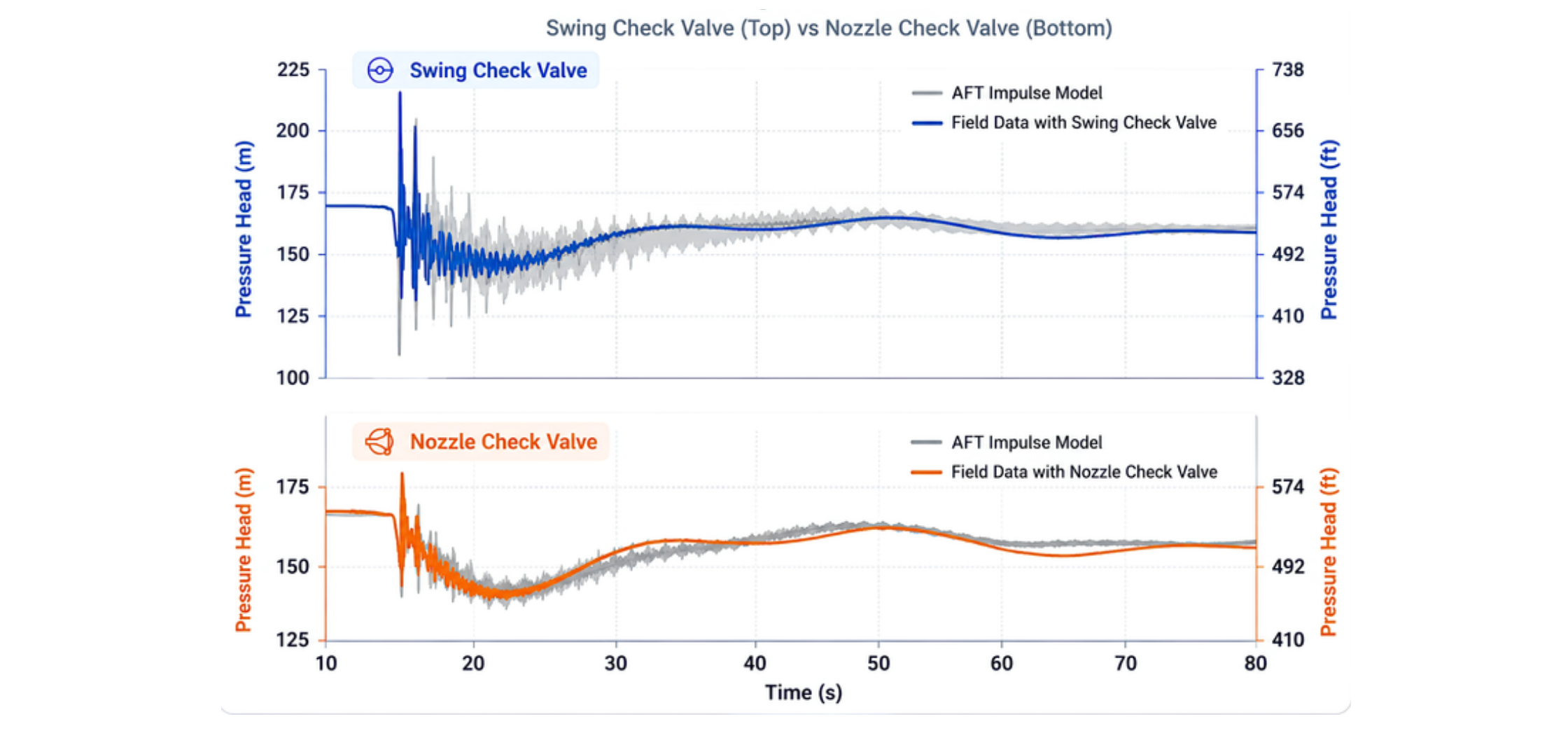
Swingcheck valve and nozzle check valve closure comparison
A wastewater pumping station study found the same slam reduction pattern comparing a swing check against a swing-flex design (ScienceDirect, 2025), and an offshore review timed valve closure against the water hammer pressure wave's travel time in the pipe to explain why some valves slam and others don't (Journal of The Institution of Engineers, India, 2023).
The formula behind every one of these slam events:
ΔP = ρ·a·ΔV.
Water in a steel pipe (wave speed ≈ 1,200 m/s), flow of 2 m/s stopped abruptly, gives a water hammer spike of roughly 2.4 MPa (350 psi) - the same range the field tests recorded. As a rule of thumb: a spike over 1.5x operating pressure plus vibration above 10 g at the valve marks a real slam event; under 1.25x with steady oscillation usually means something else (cavitation, loose supports) is the culprit, not the valve.
Confirming It Before It's Built
Here's where the selection logic above has historically run into a wall: knowing the right valve type is one thing, but confirming how a specific valve will actually behave in a specific system has meant either a physical flow loop test - accurate, but weeks of lead time and a built prototype for one data point - or a CFD study that needs a specialist, a license, and a place in someone's queue. Either path means finding out if the decision was right after it had to be made.
Autonomous Valve CFD (AVC) is built to close that gap. An engineer uploads the valve's CAD geometry in STP or STEP format along with the flow direction and opening conditions, and the platform runs the rest on its own - geometry cleanup, mesh generation, and CFD solving - without needing a CFD specialist involved. What comes back, typically inside thirty minutes, is the data that predicts slam and chatter risk:
- Cv/Kv flow coefficients across the full opening range
- Hydrodynamic torque coefficient (Cdt) for accurate actuator sizing
- Cavitation index (σ) flagging where pressure risk exists
- Pressure and velocity contours showing how the valve genuinely behaves under the conditions specified
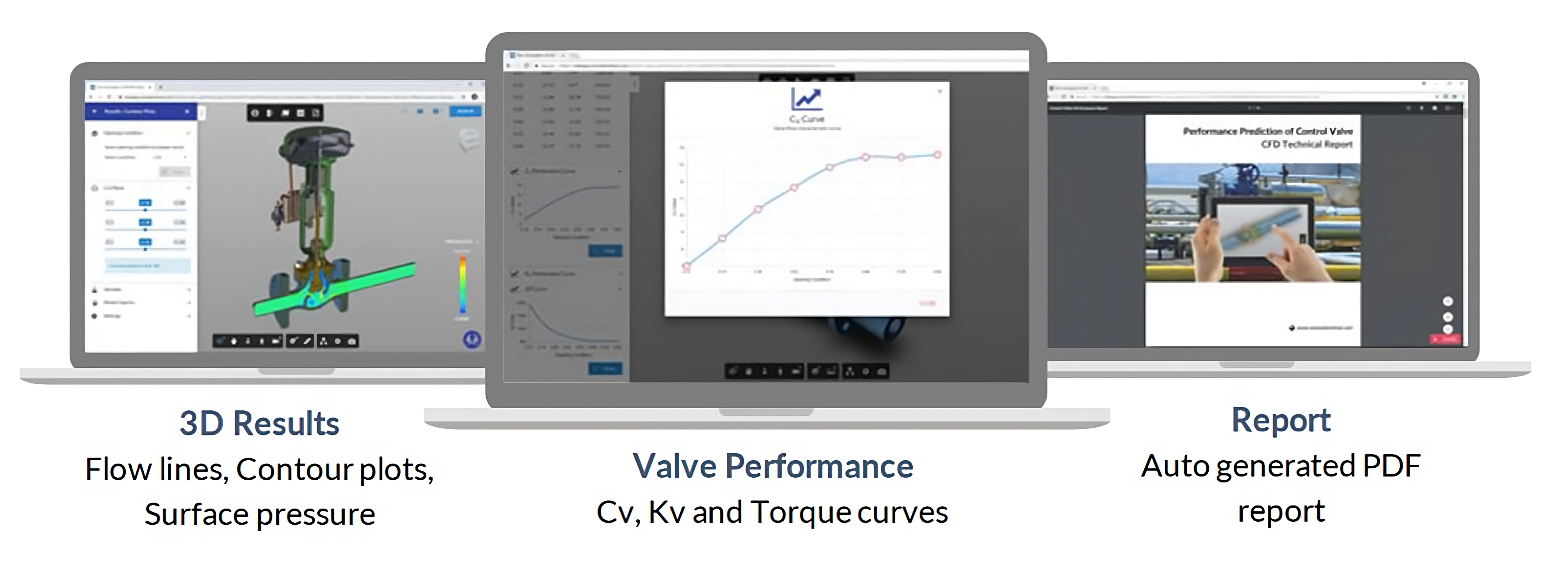
Results provided by Autonomous Valve CFD
All of it compiles into a single report benchmarked against ANSI/ISA-75.02 and IEC 60534-2-3. The practical shift is simple: instead of trusting that a selection should work, you get a result showing whether it does, for that exact valve, in that exact system, before a single part is machined.
The Takeaway
Slam and chatter aren't bad luck - they're diagnosable reactions to a valve that doesn't match its system, and most of the failure is preventable through correct sizing, selection, and installation. What used to take weeks of lab time or a specialist's open calendar slot to confirm can now be checked in about the time it takes to get coffee. The noise complaint in the maintenance log should be an exception, not the routine.
See It on Your Own Valve
The fastest way to know if a design will slam, chatter, or hold up under a pump trip is to run it - not assume it. Autonomous Valve CFD lets you upload your own valve geometry and get Cv/Kv curves, cavitation risk, and closing dynamics back in under thirty minutes; no CFD specialist required.
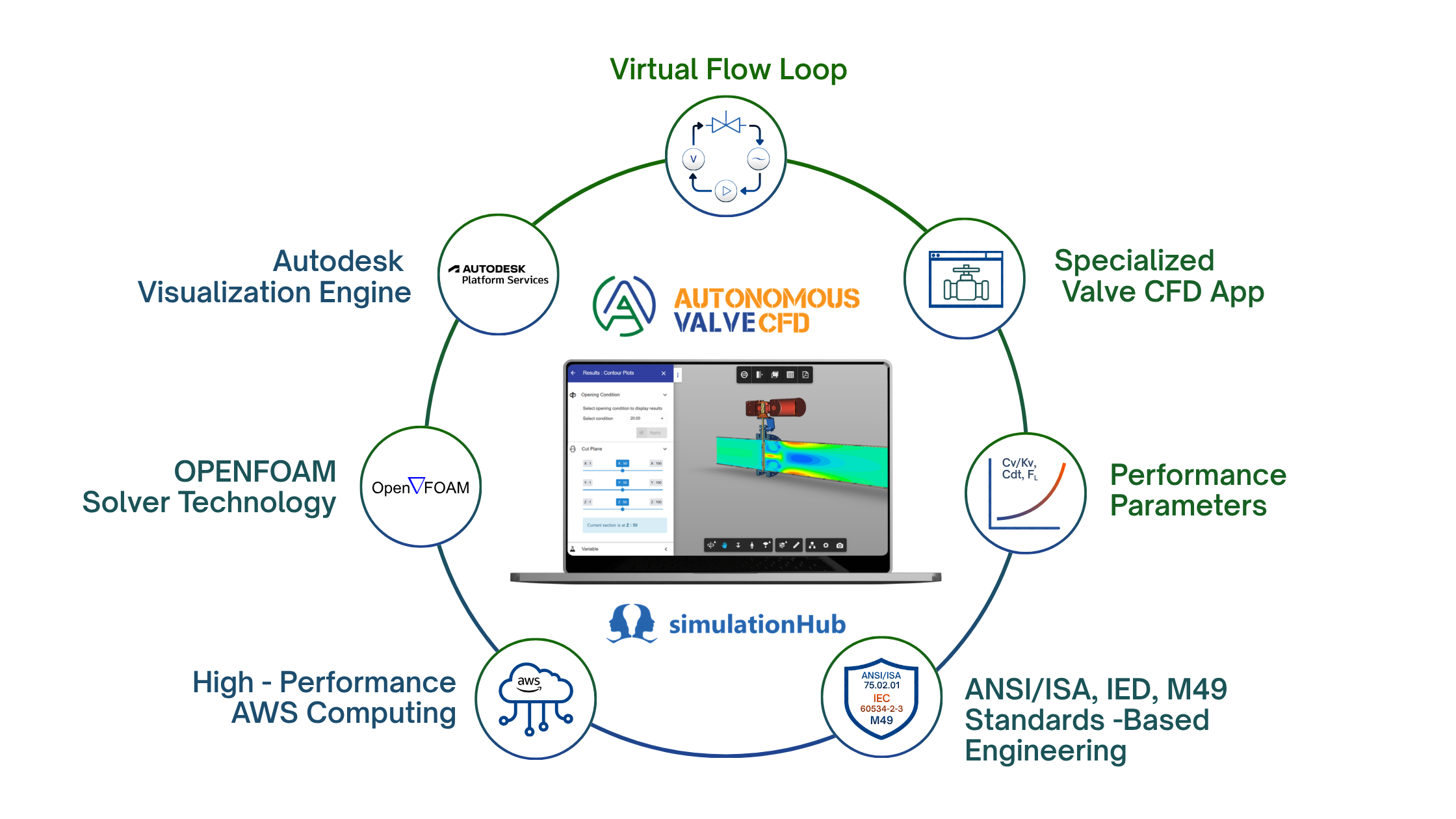
Autonomous Valve CFD (AVC) Key Features
If you're ready to go beyond handbook values, explore Autonomous Valve CFD (AVC) and see how it generates certified Cv, Kv, Cdt, and FL data directly from your CAD model - in under 30 minutes. Or schedule a guided walkthrough with our engineering team to see how AVC can fit into your valve design and validation workflow.
See What's New in AVC
Book a Free Demo
Comments
Recent posts