Written by Joel Mammen
Tuesday, April 21, 2026
Understanding and Mitigating Hydrodynamic Noise in Valves Using Autonomous Valve CFD
By
Joel Mammen
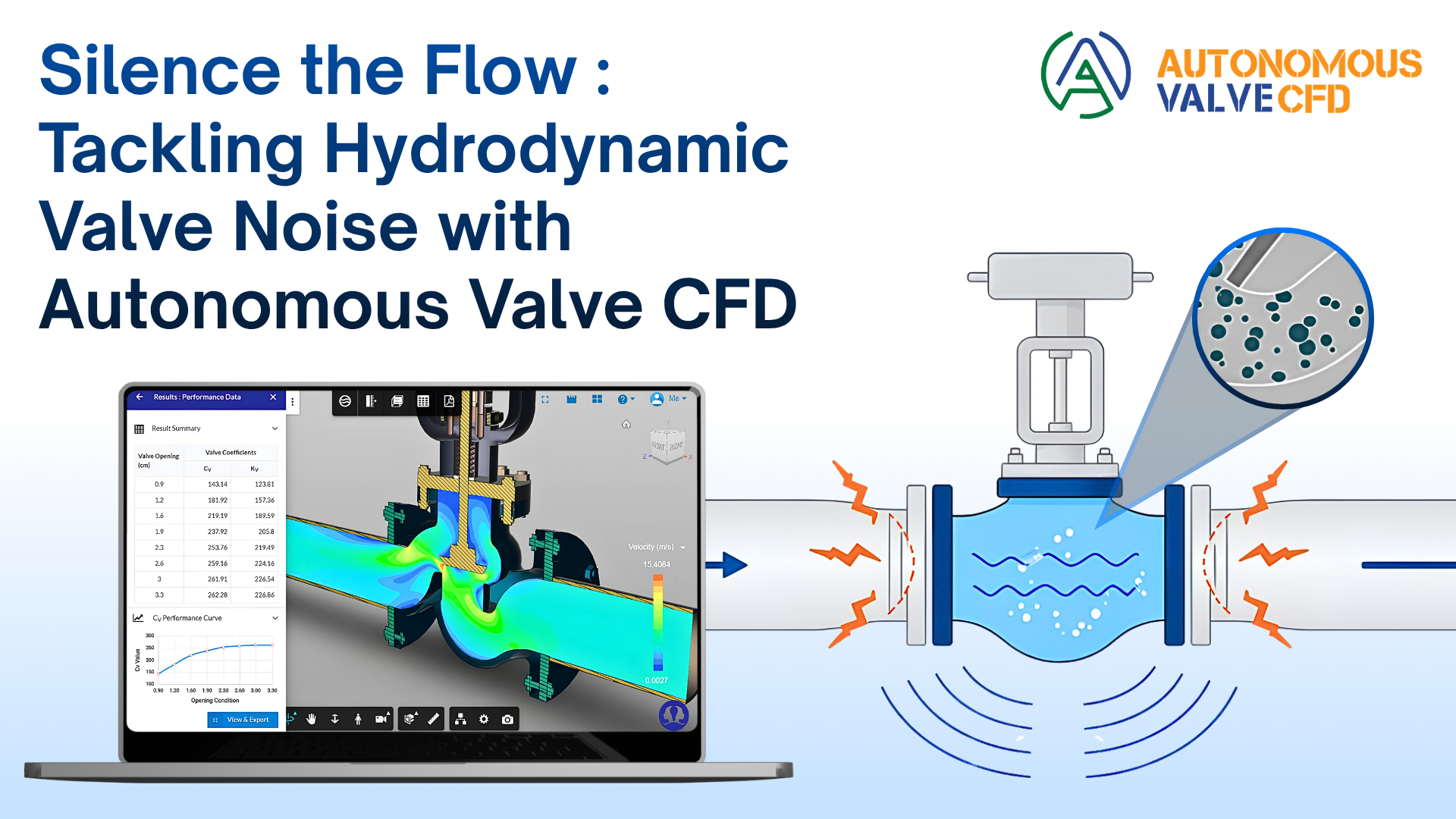

Industrial control valves now operate under higher flow rates and pressure drops as energy demand rises in water, power, chemical, and process industries. Pushed closer to their limits, valve noise generation has become unavoidable rather than incidental.
Why is noise in valves becoming an issue?
Valve noise is an unavoidable result of energy dissipation, as flow energy converted across control valves generates acoustic energy. With plants operating continuously at higher loads, valve - generated noise is now a critical design constraint.
Stricter safety regulations, higher maintenance costs, and growing reliability expectations make early valve noise control essential in modern plant design.
Consequences of noise generation and Why we care
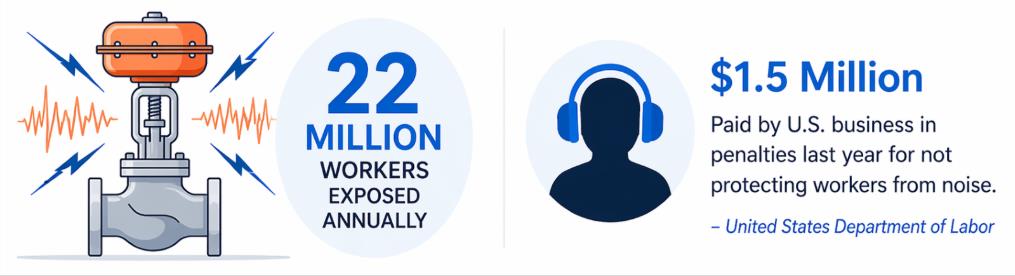
Valve noise is not just an environmental or comfort issue — it has direct technical and economic consequences. Excessive noise often indicates adverse flow conditions such as cavitation or flashing.
High valve noise can lead to:
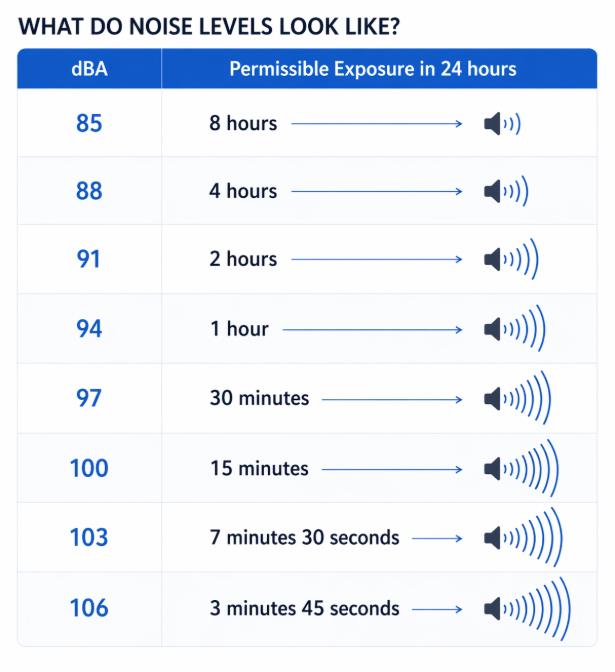
- Hearing damage to plant operators
- Excessive vibration and piping fatigue
- Accelerated erosion of valve trims
- Non - compliance with OSHA and international noise regulations
Types of noise generated in valves
Noise generation in control valves is commonly classified into three types:
- Mechanical noise – caused by vibration of valve components
- Aerodynamic noise – predominant in gas or vapor flows
- Hydrodynamic noise – predominant in liquid flow
Sources of hydrodynamic noise in valves
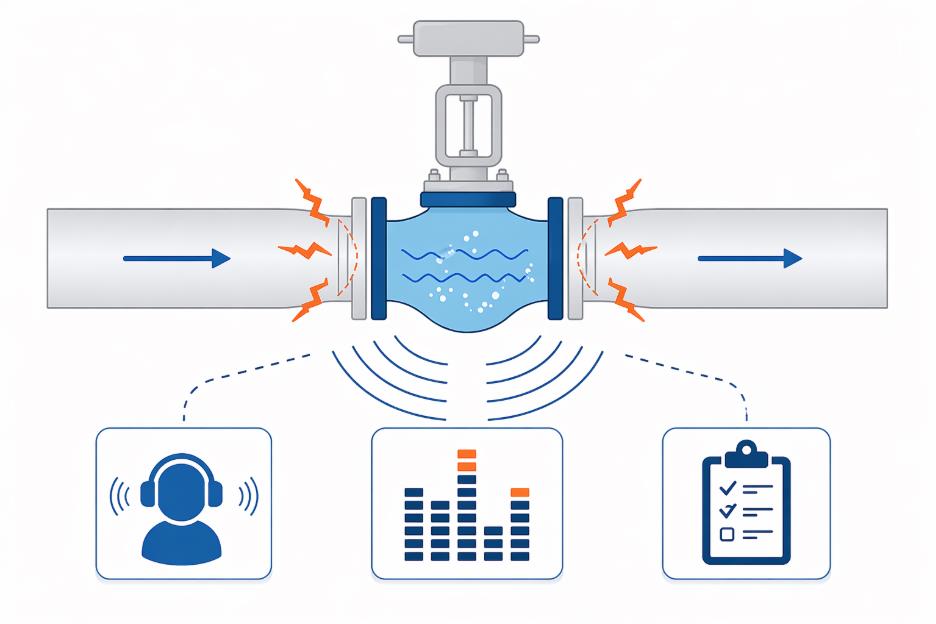
Hydrodynamic noise in valves primarily arises from the following mechanisms:
- Turbulent flow
- Cavitation
- Flashing
- Flow‑induced mechanical vibration
Methods to predict hydrodynamic noise in valves
Traditional hydrodynamic noise prediction methods rely on empirical correlations derived from experimental testing and standardized procedures.
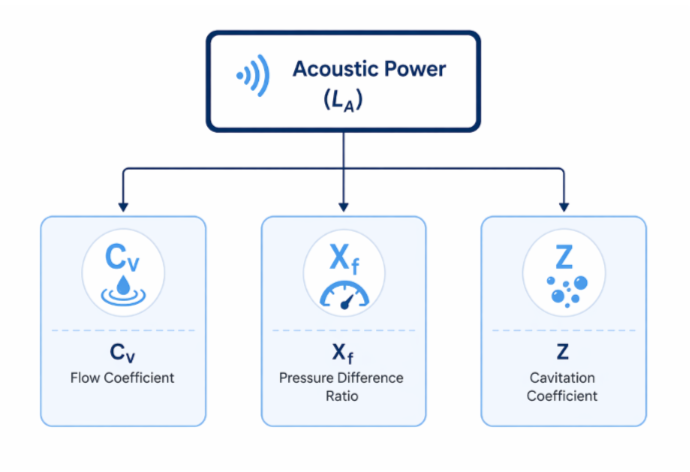
- VDMA 24422
The standard provides separate formulations for cavitating and non-cavitating flow conditions and is used to calculate the Acoustic Power (LA) using the following inputs:
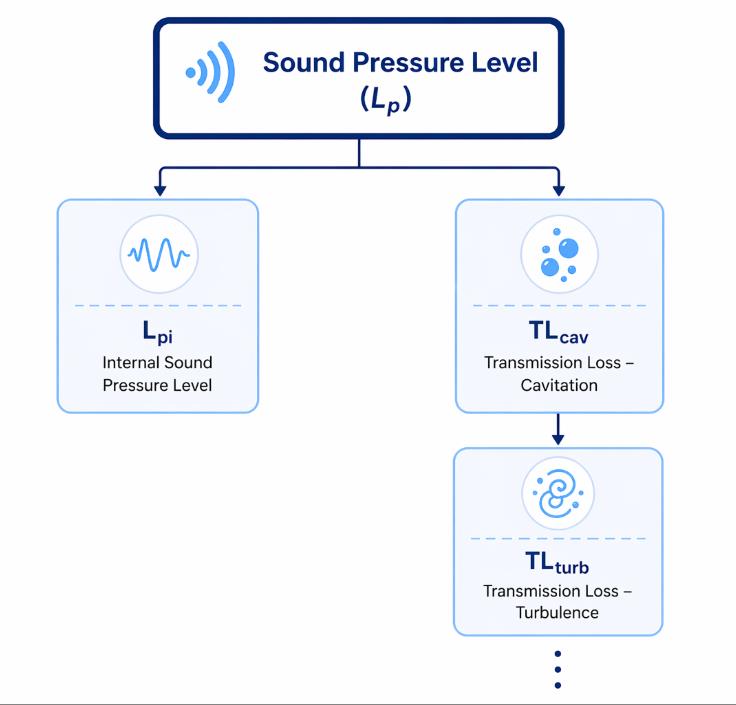
- IEC 60534-8-4
IEC 60534-8-4 predicts the external A-weighted sound pressure level, typically measured 1m downstream of the valve, using the following inputs:
While both methods are well established, they provide limited visibility into the actual noise generation mechanisms within the valve, offering little insight into which internal flow regions dominate acoustic emission.
Using CFD to predict hydrodynamic noise in valves
Computational Fluid Dynamics (CFD) offers a physics‑based approach to predicting hydrodynamic noise by resolving pressure, velocity, and turbulence fields within control valves. Unlike empirical methods, CFD enables direct correlation between noise generation and internal flow phenomena. Multiple acoustic modeling techniques can be coupled with CFD to estimate valve noise and identify dominant noise‑producing regions.
CFD-based acoustic modelling approaches
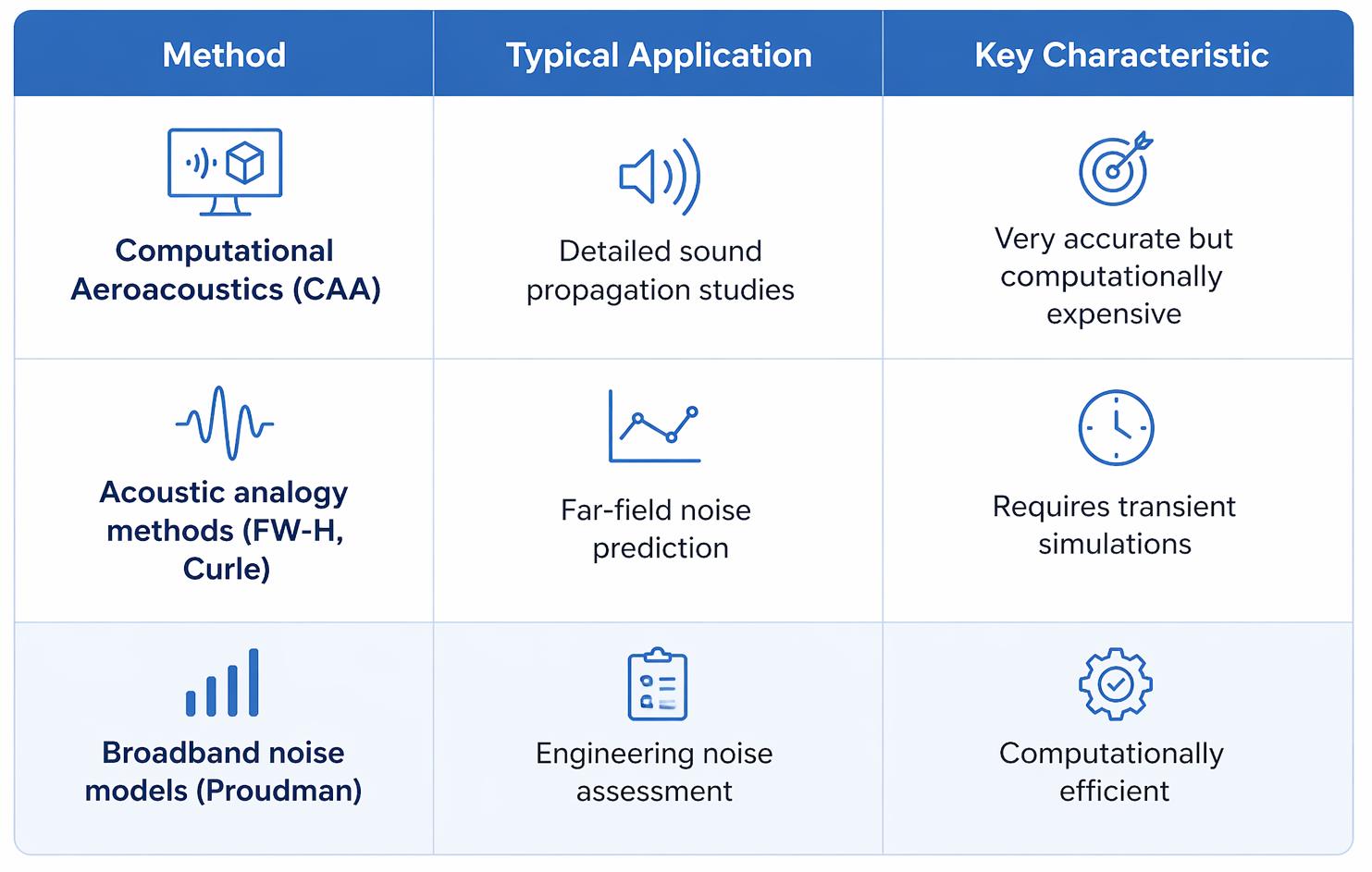
Broadly, CFD‑based acoustic prediction methods fall into three categories.
Integral acoustic analogy methods, such as the Ffowcs Williams–Hawkings (FW-H), Curle’s analogy and Lighthill’s acoustic analogy, compute sound pressure by integrating pressure fluctuations over source surfaces, while CAA methods resolve acoustic wave propagation explicitly. Though accurate, these methods require highly resolved transient simulations and significant computational resources
Proudman model – a practical approach for valve noise prediction
For engineering applications, broadband noise models strike an effective balance between prediction accuracy and computational efficiency. Among these, the Proudman model is widely used for estimating hydrodynamic noise in control valves.
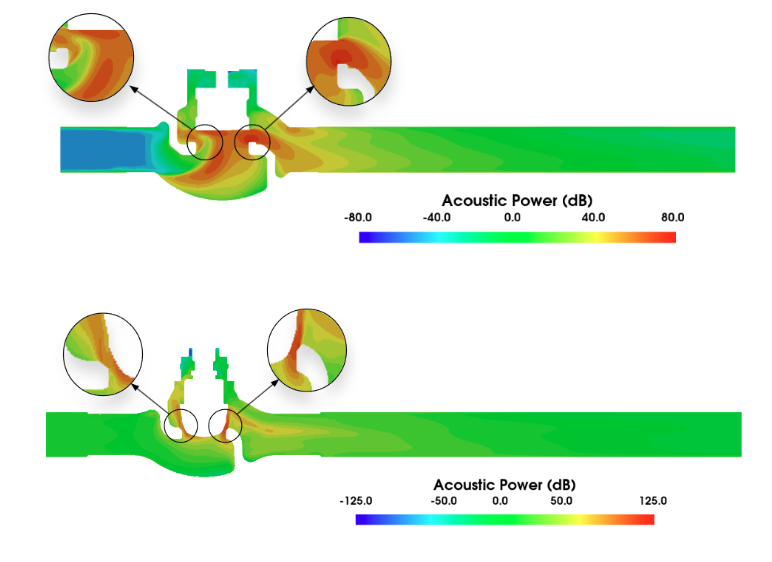
The Proudman model computes acoustic power directly from turbulence quantities, making it well suited for liquid service valves where noise is primarily turbulence‑driven—particularly near the vena contracta and cavitating regions. As a result, it effectively identifies zones of high noise generation within the valve.
Advancing Valve Design with Confidence
This CFD‑based approach enables engineers to visualize noise hot spots, compare operating conditions, and assess design modifications virtually, significantly reducing the need for early‑stage physical testing.
At simulationHub, we help valve engineers bridge the gap between design and real‑world performance. Our Autonomous Valve CFD (AVC) app is the industry benchmark for automated, high‑accuracy Cv, Kv, and Cdt curve generation. Beyond standard performance analysis, simulationHub also offers in‑house expertise for custom acoustic CFD studies, enabling valve designs optimized for maximum performance and minimum noise.
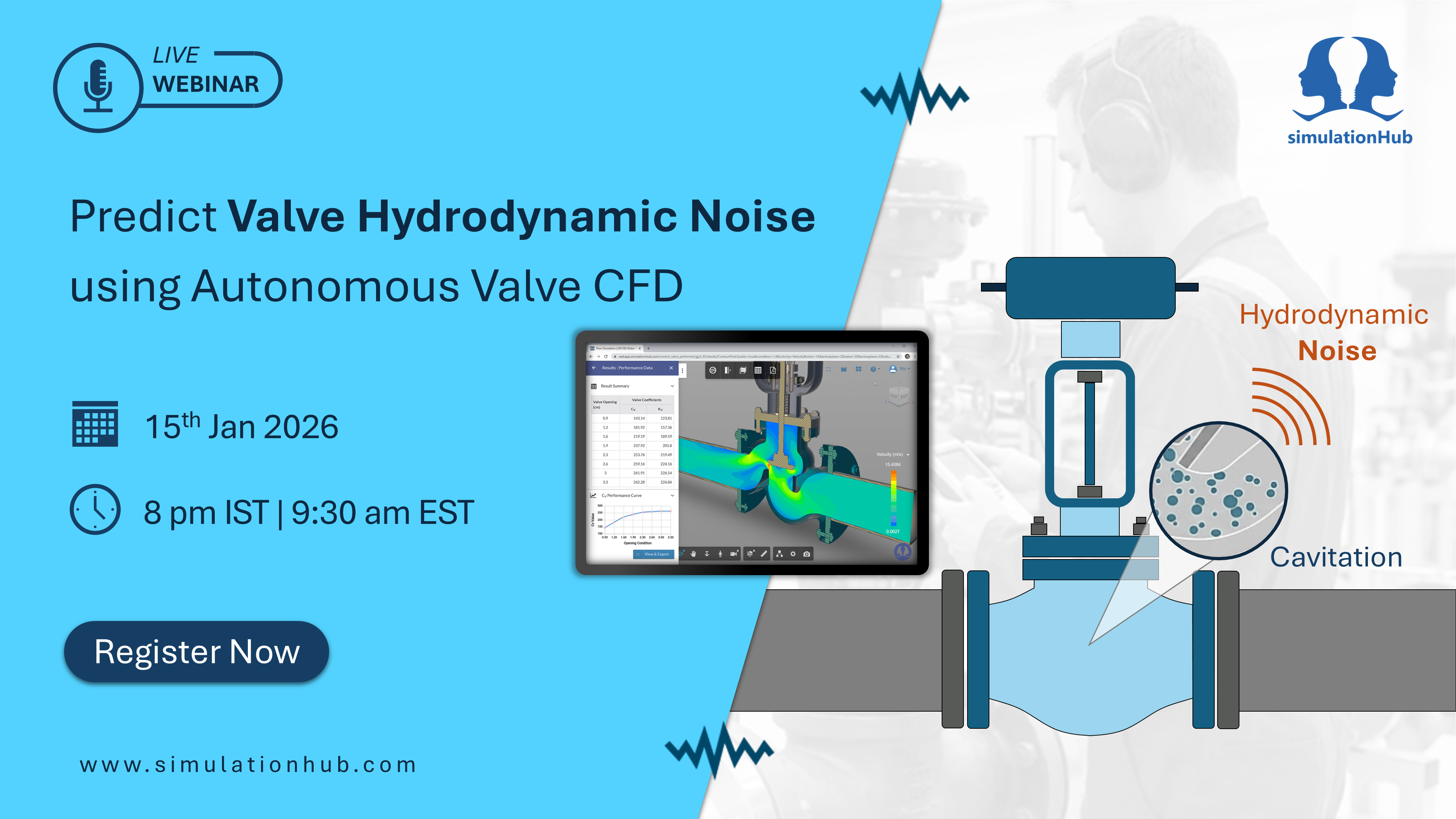
To explore this topic further, watch our webinar recording: Predict Valve Hydrodynamic Noise Using Autonomous Valve CFD.
Contact the simulationHub team to advance your valve designs with confidence.
Watch the Webinar Recording
Book a Free Demo
Comments
Recent posts