Written by Aaditya Ruiker
Tuesday, April 14, 2026
Detailed and Flexible HVAC Modeling Workflow in Buildings AI
By
Aaditya Ruikar
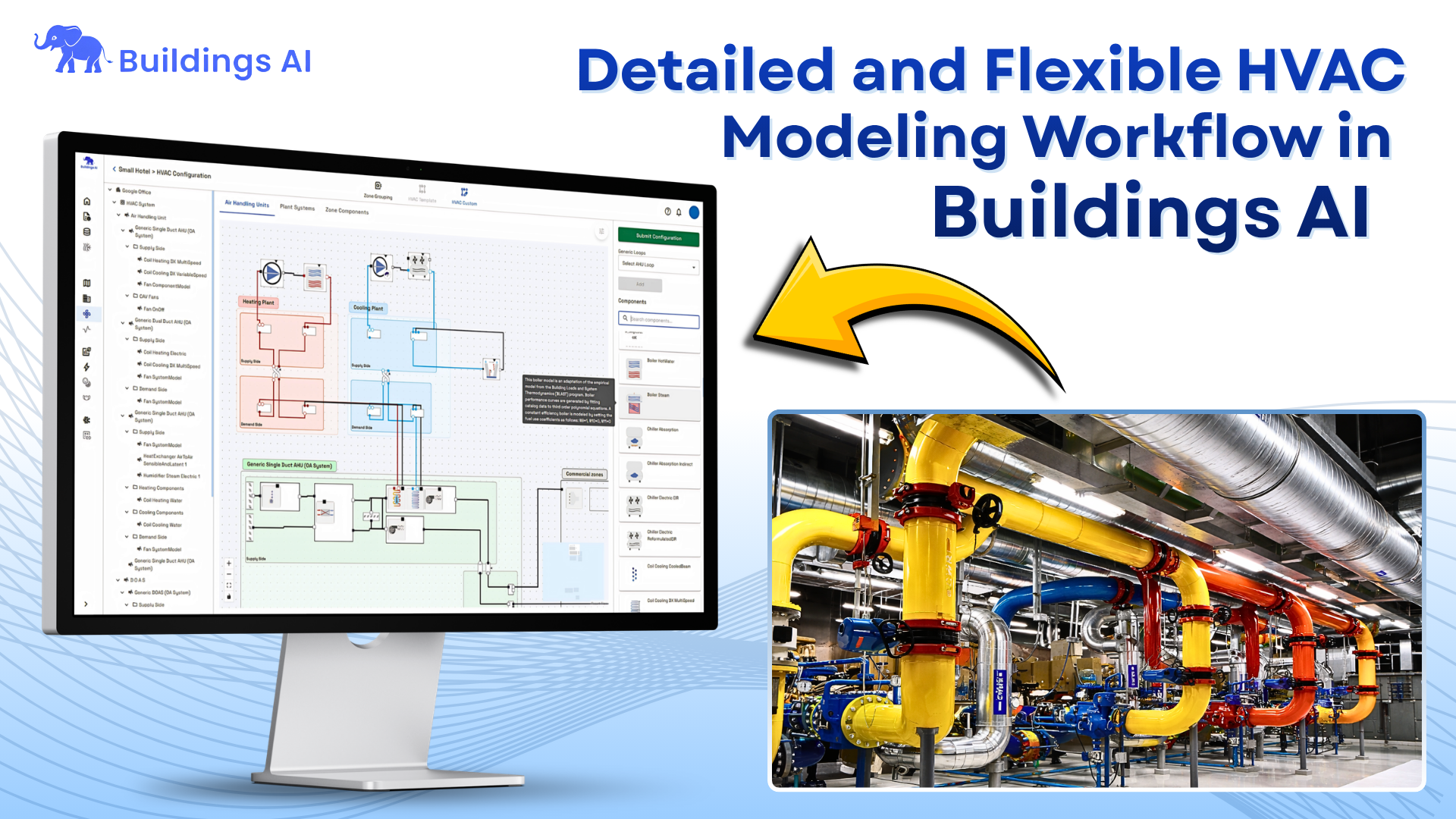

HVAC System Modeling Should Not Feel Outdated
In modern building design, HVAC systems directly impact energy performance, occupant comfort, and operational efficiency. Yet, modeling these systems often feels disconnected from how engineers actually work.
Traditional workflows are still tied to rigid system definitions, desktop-heavy tools, and interfaces that prioritize setup over usability. As systems become more diverse and projects need more nuanced, these limitations become harder to ignore. What engineers need today is not just more capability—but a better way to use it. Modern HVAC modeling should be visual, flexible, and aligned with real workflows.
The Problem with Conventional HVAC Workflows
Creating HVAC systems is challenging in itself; doing so efficiently and transparently makes it even more challenging. Many tools struggle beyond predefined structures. Templates help early on but lack flexibility, while fully custom setups become complex and hard to interpret. This creates a gap between speed and control.
As systems grow, understanding what has been modeled becomes difficult. Logic is often buried in layered inputs, making review and validation harder. Combined with repetitive setup and desktop-style interfaces, these workflows slow down decisions and reduce adaptability. The challenge is not just building systems—but building them in a way that stays clear, flexible, and efficient.
Introducing HVAC Canvas in Buildings AI
HVAC Canvas rethinks how HVAC systems are created and understood. Built within Buildings AI, it offers a visual environment to design, configure, and explore systems more intuitively.
Instead of relying only on static templates, it provides an interactive workspace where system logic can be shaped naturally. It supports both standard configurations and custom modeling needs across project stages. This is not just a system selector—it is a workspace combining flexibility and visual clarity in one workflow.
Go Beyond Templates with Flexible System Creation
While templates provide speed, real projects need flexibility. HVAC Canvas allows users to adapt and refine systems beyond predefined types.
This capability empowers users to move beyond fixed templates and build highly customized, bespoke HVAC systems that closely reflect real-world design intent. From standard setups to complex, project-specific configurations, the workflow supports a wide spectrum of system possibilities.
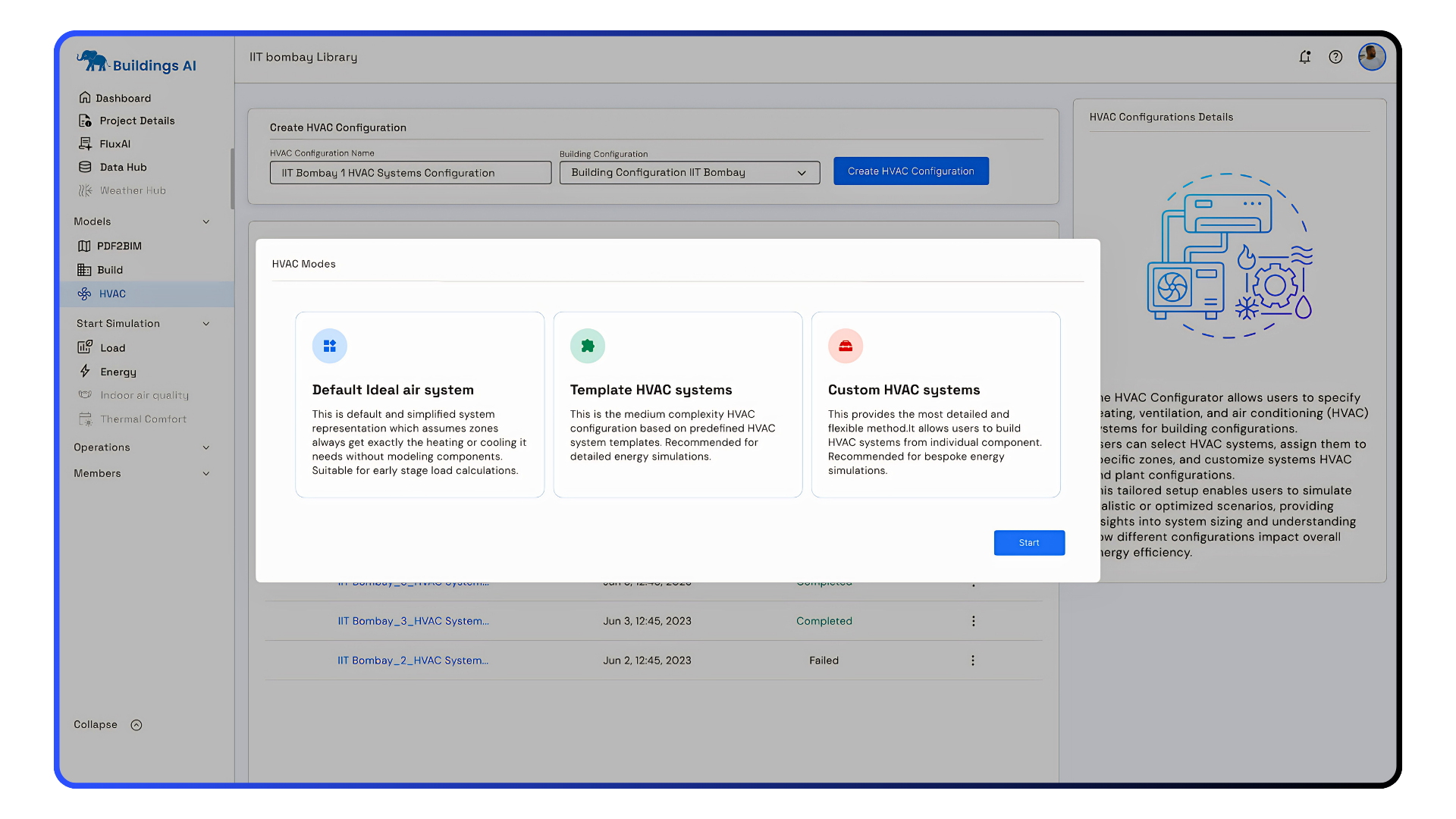
Start Fast with Templates
A strong starting point makes modeling efficient. HVAC Canvas includes templates inspired by ASHRAE-based configurations, allowing users to quickly set up common systems without starting from scratch.
This reduces setup time and improves consistency, especially for early-stage modeling and baseline creation. For users who prefer structure, templates provide a reliable and approachable foundation.
Visual Clarity and Easier Review
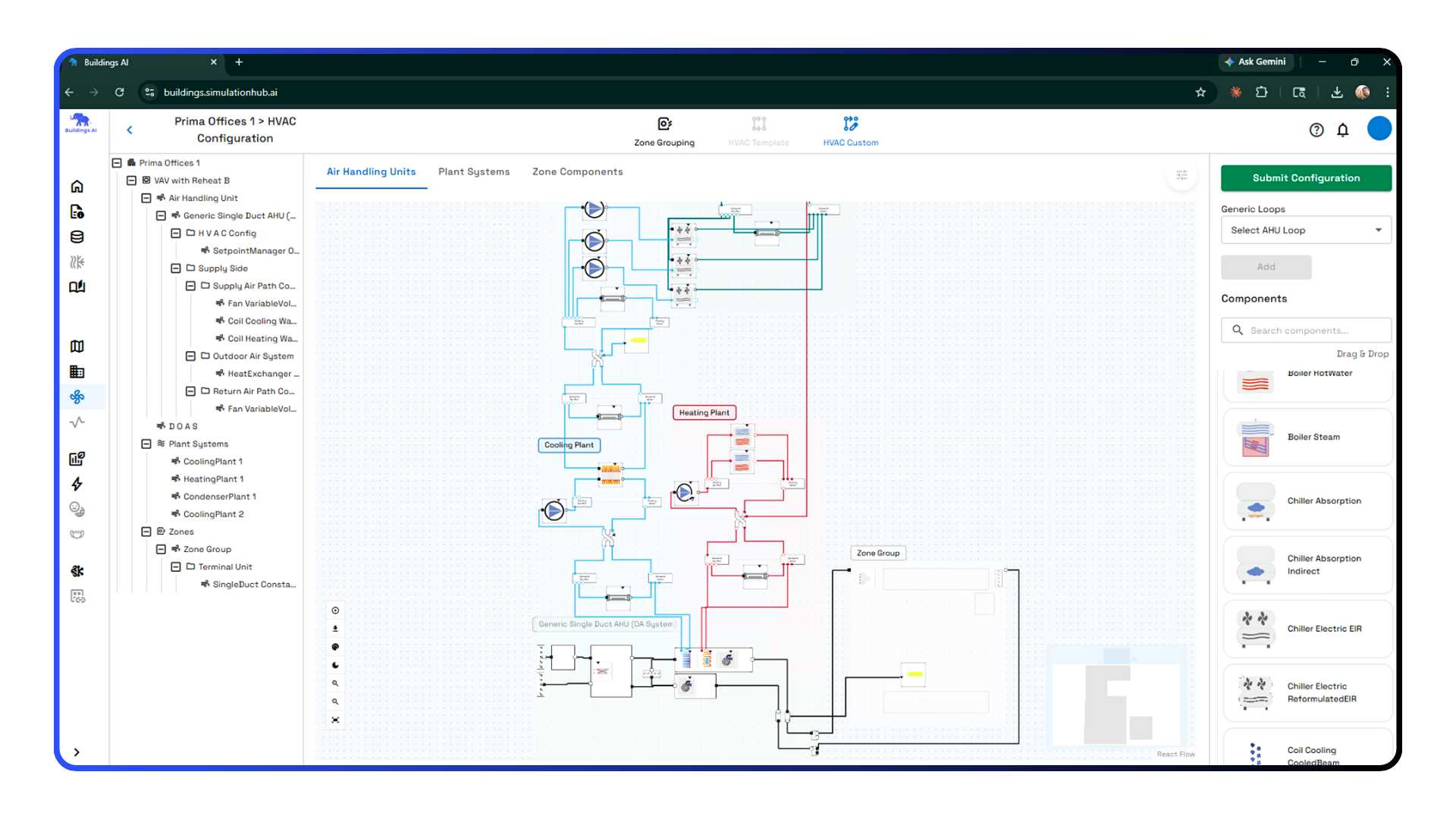
A major limitation of traditional workflows is poor visibility into system structure. HVAC Canvas introduces a visual approach where users can clearly see how components and system elements connect.
This replaces fragmented inputs with a more transparent view and improves system understanding, ease of review, and confidence in the model. For both creators and reviewers, a visual workflow reduces ambiguity and minimizes hidden errors. When systems are easier to see, they are easier to trust.
A Modern Web-Based Modeling Experience
Expectations from engineering tools are evolving. Teams now look for software that is intuitive, accessible, and aligned with modern workflows.
Desktop-first tools often introduce friction in usability and onboarding. As part of a web-based platform, HVAC Canvas reflects a more modern experience with a cleaner interface, reduced reliance on legacy patterns, and easier onboarding. The focus is not just functionality—but making modeling more accessible and efficient.
Expanding the Workflow with Component Libraries
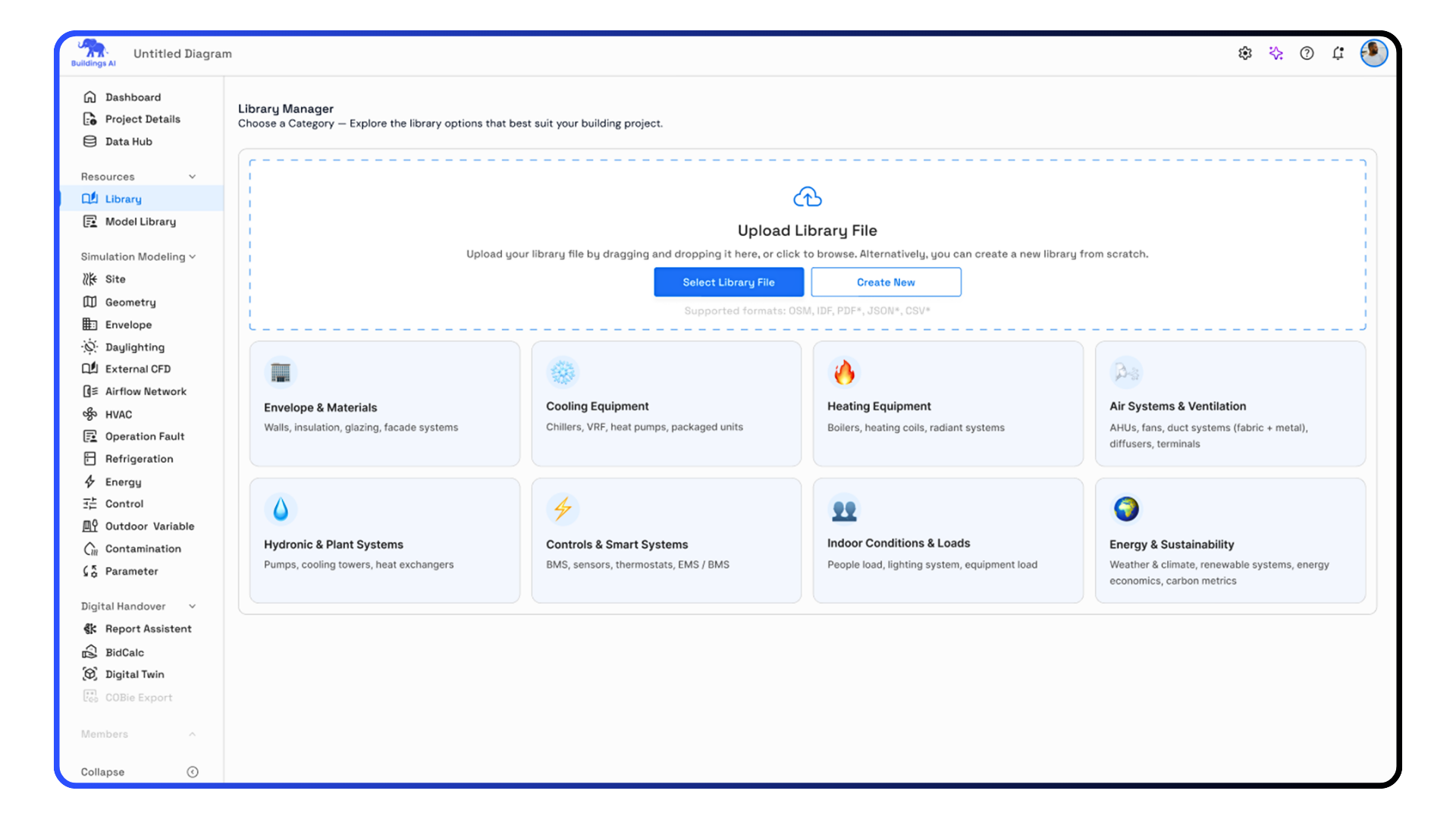
HVAC Canvas is strengthened by Buildings AI’s growing ecosystem. The platform includes expanding libraries for HVAC components, building elements, and internal loads.
These reduce repetitive input and improve consistency across projects. Instead of redefining components, users can rely on structured, reusable elements. Together, the canvas and libraries create a more scalable and complete modeling environment.
Why It Matters for Engineers and Modelers
HVAC Canvas goes beyond interface improvements—it directly enhances how teams work. For energy modelers, it enables faster setup and clearer system definitions. For mechanical engineers, it offers greater flexibility to shape systems around real project intent without rigid constraints.
The workflow also scales naturally. Teams can start with standard system foundations, bring in components and loads, and refine systems as needed. This makes HVAC Canvas suitable for both quick starting points and advanced customization—supporting different levels of modeling maturity within one environment.
A More Modern Foundation for HVAC Modeling
HVAC modeling is evolving toward more flexible and connected workflows. HVAC Canvas reflects this shift by combining structured templates, flexible system creation, and a visual interface within a modern web environment.
Supported by reusable libraries, it delivers a more transparent and adaptable modeling experience. As systems grow more complex, tools that balance usability with engineering depth become essential. HVAC Canvas in Buildings AI moves in that direction—bringing clarity, flexibility, and efficiency into a single workflow.
Join our webinar to explore a smarter, more flexible approach to HVAC system design with HVAC Canvas in Buildings AI—combining visual modeling, structured workflows, and engineering precision in one platform.

Comments
Recent posts