Written by Prathamesh Rathod
Sunday, February 15, 2026
Enter HVAC Hub: A Data-Driven Platform with OEM-Verified Data for HVAC System Selection
By
Prathamesh Rathod


The Hidden Cost of Traditional HVAC Selection
Despite working in highly technical environments, HVAC equipment selection still relies on fragmented and manual discovery. A catalogue browsing culture that is incompatible with the precision needed in modern AEC environments. This created real business consequences:
- Outdated information : Engineers lean on memory, legacy equipment, or obsolete spreadsheets lacking real-time performance data.
- Sales dependencies loops : Finding solutions involves repetitive calls and trade expos, and endless follow-ups.
- Manual submittals & data entry : Time-consuming and error prone.
This results in wasted billable hours. Missed high-performance solutions. Slower adoption of innovation. The industry must pivot from manual searches to a digital-first discovery model.
Enter the HVAC Hub: a data-driven selection platform that centralizes OEM-verified performance tables into a single engineering interface. Transitioning from vague "searching" to precise "matching" of system needs.
Visibility where it matters most
In AEC, timing drives the Spec-In Rate, designs lock at 50% CD, barring new OEMs without costly substitutions. Traditionally, this confines selections to familiar brands, sidelining innovative solutions. The HVAC Hub flips this dynamic by providing full visibility into all options during the flexible early design phase. Engineers can then prioritize technical performance creating advantages for both consultants and manufacturers.
- Traditional Approach : Limited to big-name brands, overlooking innovative options.
- Hub-Enabled Approach :: Comprehensive visibility from the outset, with decisions driven by performance metrics.
This performance-first shift highlights the Visibility Paradox: engineers can't specify superior, efficient solutions they're unaware of.
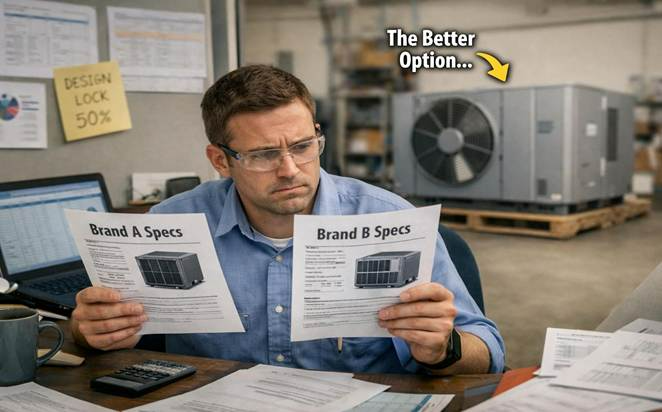
The Hub resolves this by foregrounding performance data, allowing smaller, innovative OEMs to compete on equal footing with industry leaders.
From system conditions to submittals
The Hub streamlines the workflow, bridging engineering requirements with professional deliverables and automating repetitive tasks to let engineers focus on optimization. The workflow is intentionally simple:
- Define system conditions : Input project-specific parameters
- Performance matching : Scan OEM-verified performance tables to identify the best equipment based on technical fit.
- Instant deliverable : Produce submittal-ready outputs using manufacturer-configured data.
Direct OEM integration ensures accurate, compliant specifications and reduces underperformance risks.
Expanding the Technical Ecosystem
The strength of a selection platform depends on the diversity and depth of its ecosystem. We are actively expanding HVAC Hub categories across airside, waterside, and energy recovery solutions. If you are an OEM ready to move beyond catalogue-driven sales, improve early-stage specification visibility, & compete on verified performance.
Let's Talk
Join simulationHub as OEM Partners
Comments
Recent posts