Written by Angirekula Venu
Sunday, June 21, 2026
Fabric Ducting Sets the Standard for Stadium HVAC at Major Sporting Events
By
Angirekula Venu
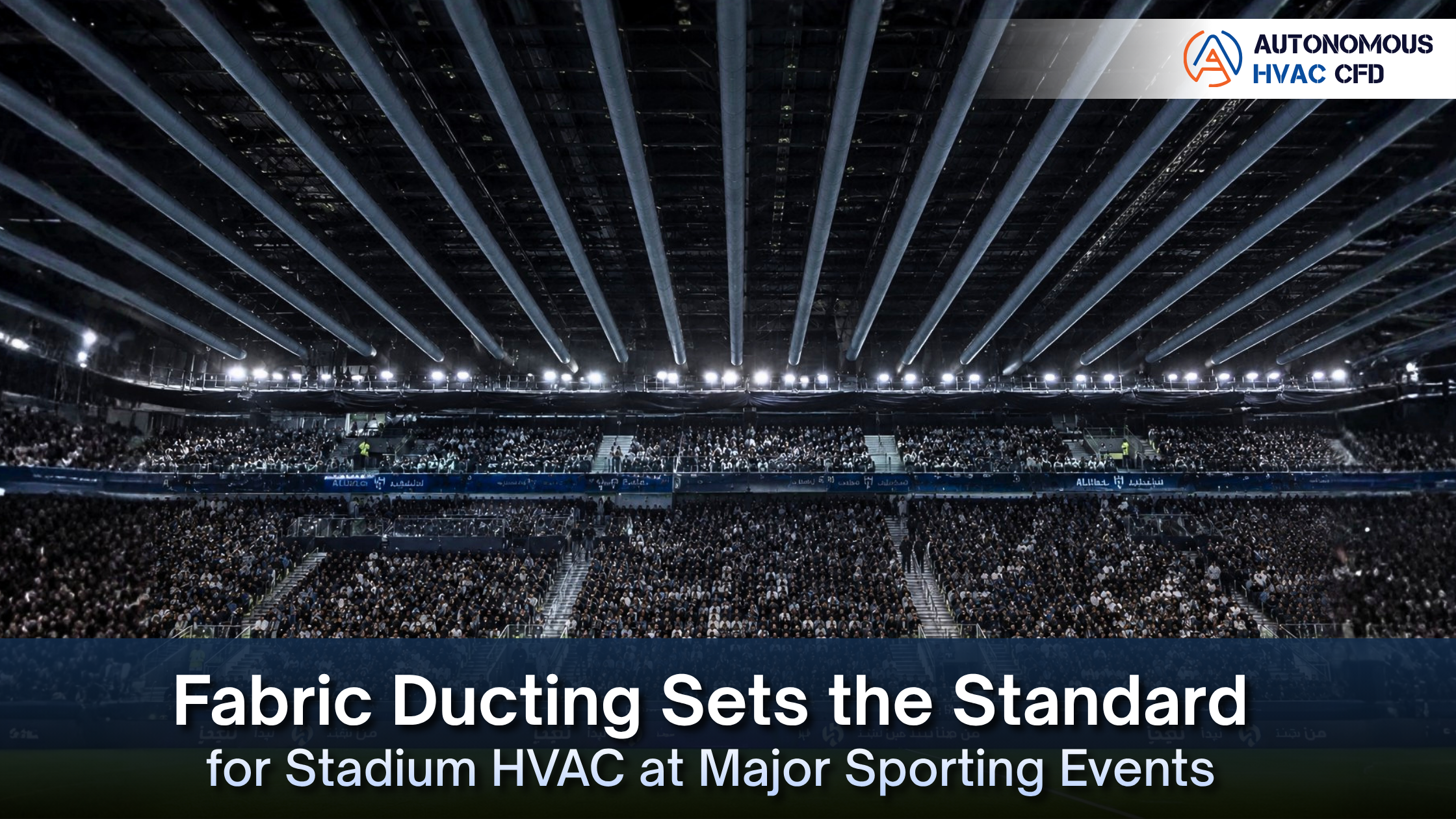

Sixteen stadiums. 104 matches. Several host cities pushing past 35°C/95°F in peak summer. As the 2026 FIFA World Cup approaches, a quieter engineering question sits behind every closed-roof match: how do you move conditioned air evenly across a 70,000-seat bowl without leaving half the crowd in a warm dead zone?
The answer increasingly isn't sheet metal. It's fabric.
Why Fabric Holds Up Where Metal Struggles
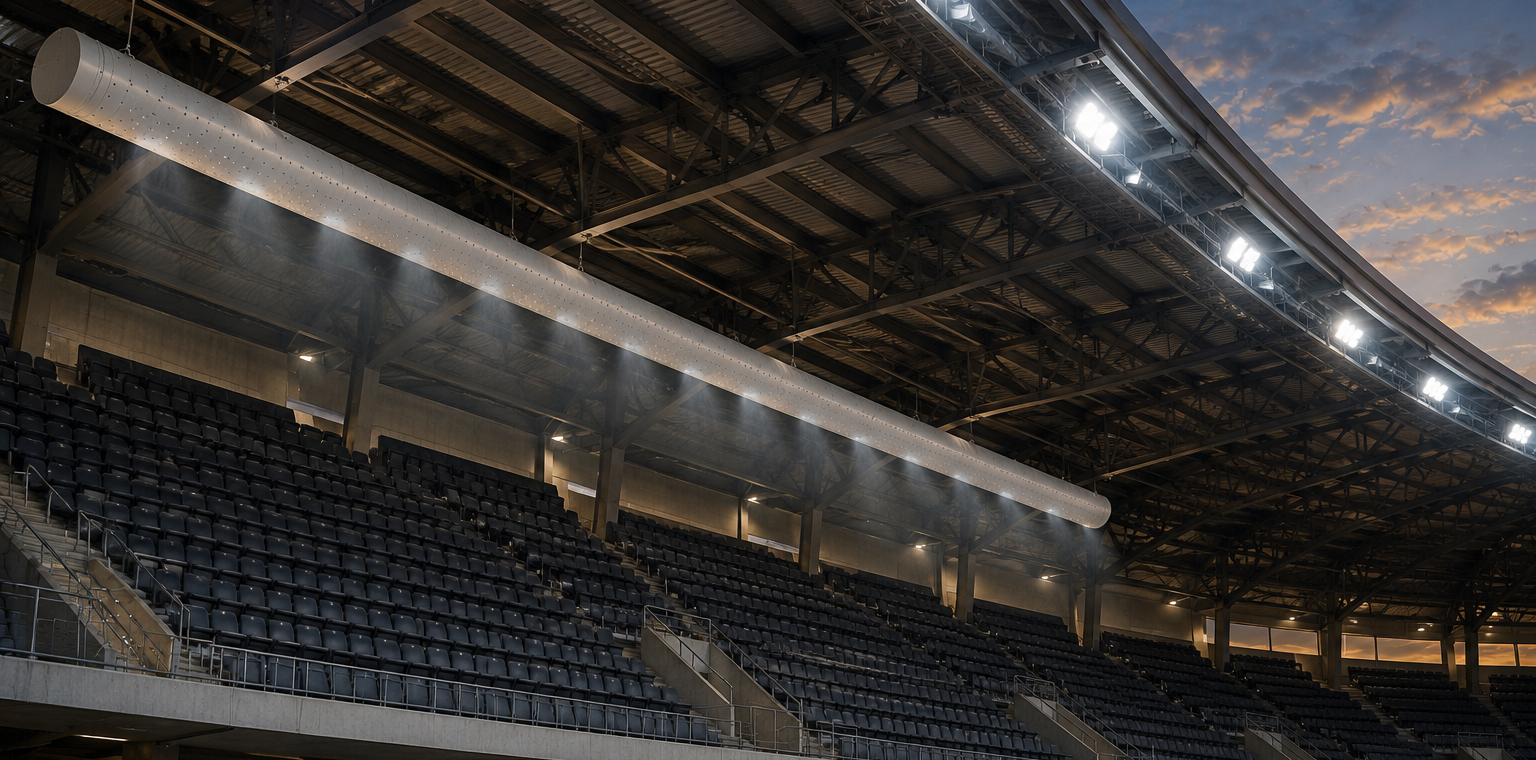
Large sports venues throw a specific combination of problems at an HVAC system: high ceilings, dense crowds, swings between empty and full occupancy, and - in some facilities - chlorine, humidity, or heavy equipment contact that wears down conventional ductwork over time. Fabric duct systems are built around exactly that combination:
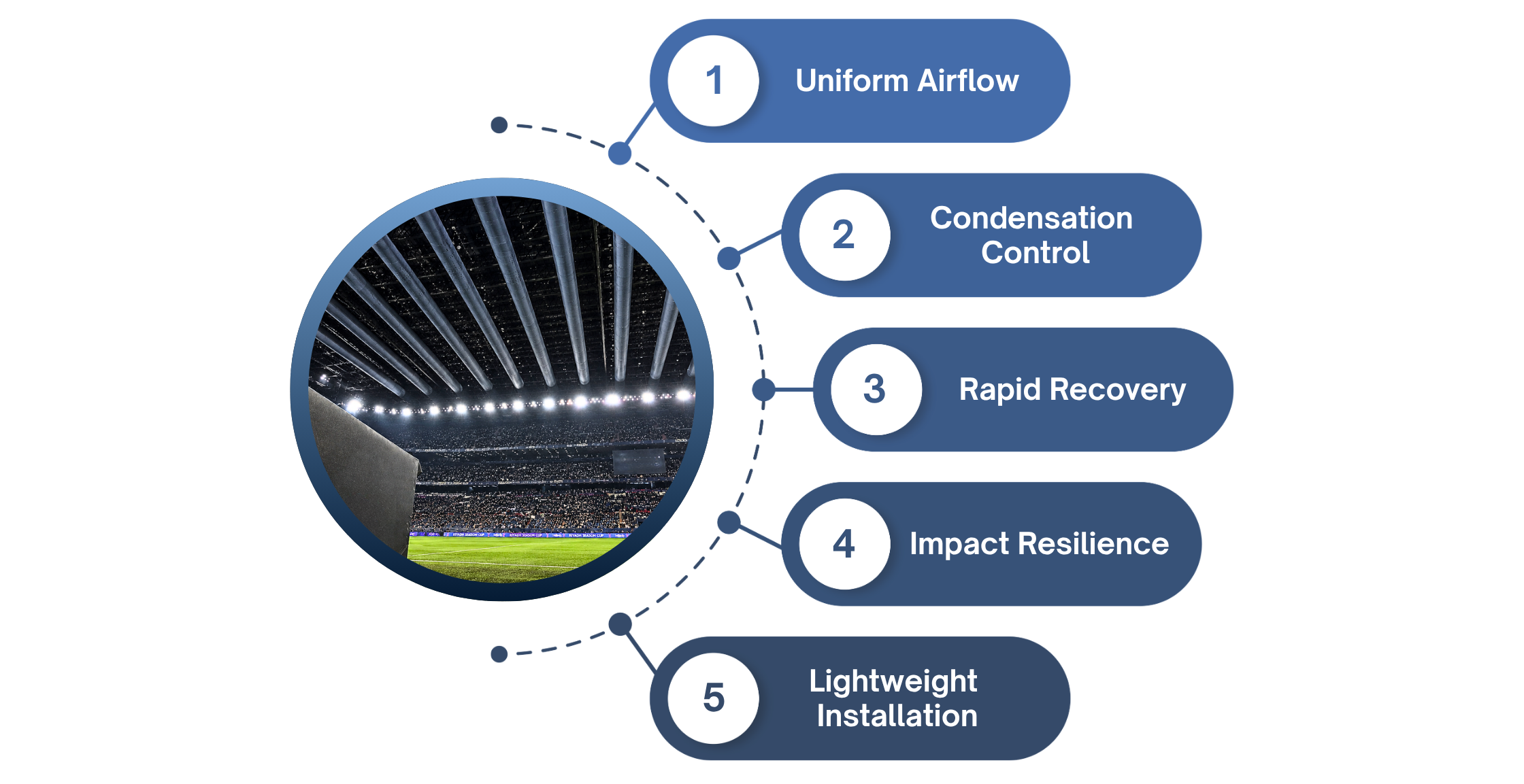
- Uniform Airflow: Continuous perforated release instead of a handful of fixed jets means the back row gets roughly the same airflow as the front, not whatever's left over after the nearest diffuser.
- Condensation Control: Air passes through the fabric surface itself, so moisture doesn't pool on the duct - a meaningful difference in humid concourses, natatoriums, or any venue where metal ductwork would eventually rust or sweat.
- Rapid Recovery: Lower static pressure lets air handling units hit target temperature faster, which matters when a venue must flip from an empty bowl to 70,000 occupants in a few hours.
- Impact Resilience: Fabric holds its shape after contact from equipment, rigging, or crowd activity, and can be taken down and laundered rather than replaced.
- Lightweight Installation: A fraction of the weight of equivalent metal runs, which simplifies rigging and shortens installation timelines on tight renovation schedules
In a stadium bowl specifically, this translates into real numbers: independent university testing has clocked fabric systems at roughly 24% better thermal efficiency than equivalent metal diffuser setups in comparable spaces - uniform velocity and temperature across the seating tiers, not just near the air handling unit.
Where Fabric Still Falls Short - Not the Material, the Process
Here's the part that doesn't show up in the sales pitch: fabric duct only performs as intended when the fabric material type and perforation design are selected correctly. Choose the wrong fabric material type for the airflow requirement—or the wrong airflow for the fabric material type, and vice versa—and the continuous-air-release advantage can turn into a continuous-error problem: drafts at the inlet, dead zones at the far end, and uneven comfort across the entire seating section.
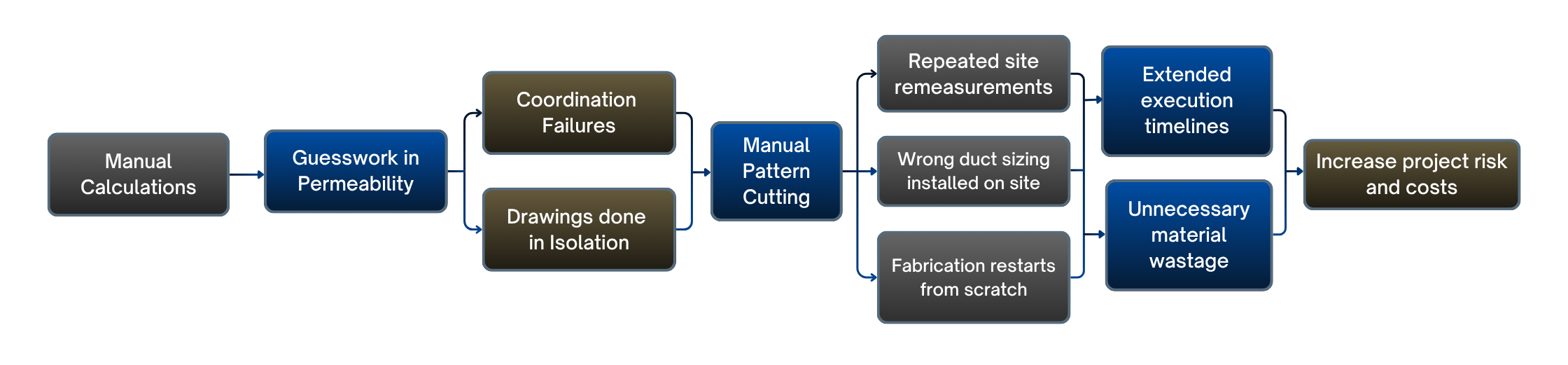
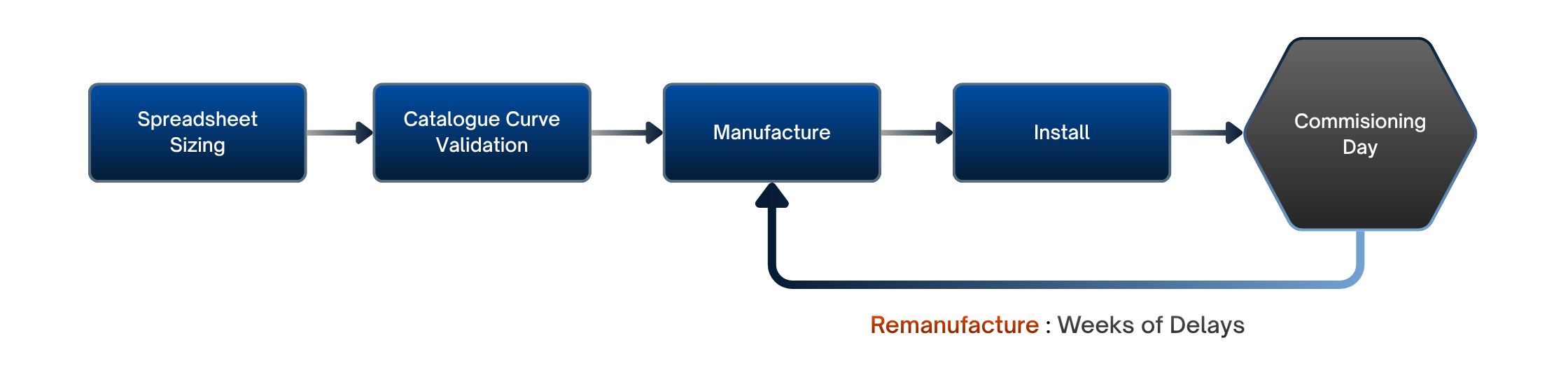
Most fabric duct projects still get sized in a spreadsheet, against a manufacturer's catalog curve, validated only for static pressure balance. None of that predicts how air actually disperses through a real 3D space. So, the dispersion behavior generally gets tested for the first time on the day the duct is inflated on site - after it's already been manufactured, shipped, and installed. If it's wrong, the fix is remanufacturing weeks of delay nobody has room for when the first match is already on the calendar.
Validating the Design Before It's Built
This is the gap simulation Hub's AHC Fabric Duct Design Suite is built to close - running the dispersion test in simulation, before fabrication, instead of on commissioning day.
The workflow is straightforward: lay out the actual space - geometry, occupancy, return air paths - in a 2D workspace, and the platform auto-generates a true-to-scale 3D model from it. Built-in CFD then simulates air dispersion across the full duct run, checking for the exact failure points that show up in the field: inlet draft, far-end stagnation, uneven velocity at seating level. Engineers can compare perforation patterns directly and lock in a validated design before anything gets cut. From there, the same geometry generates flat patterns, production drawings, and BOM takeoffs ready for fabrication - no re-translation between what was simulated and what gets manufactured.
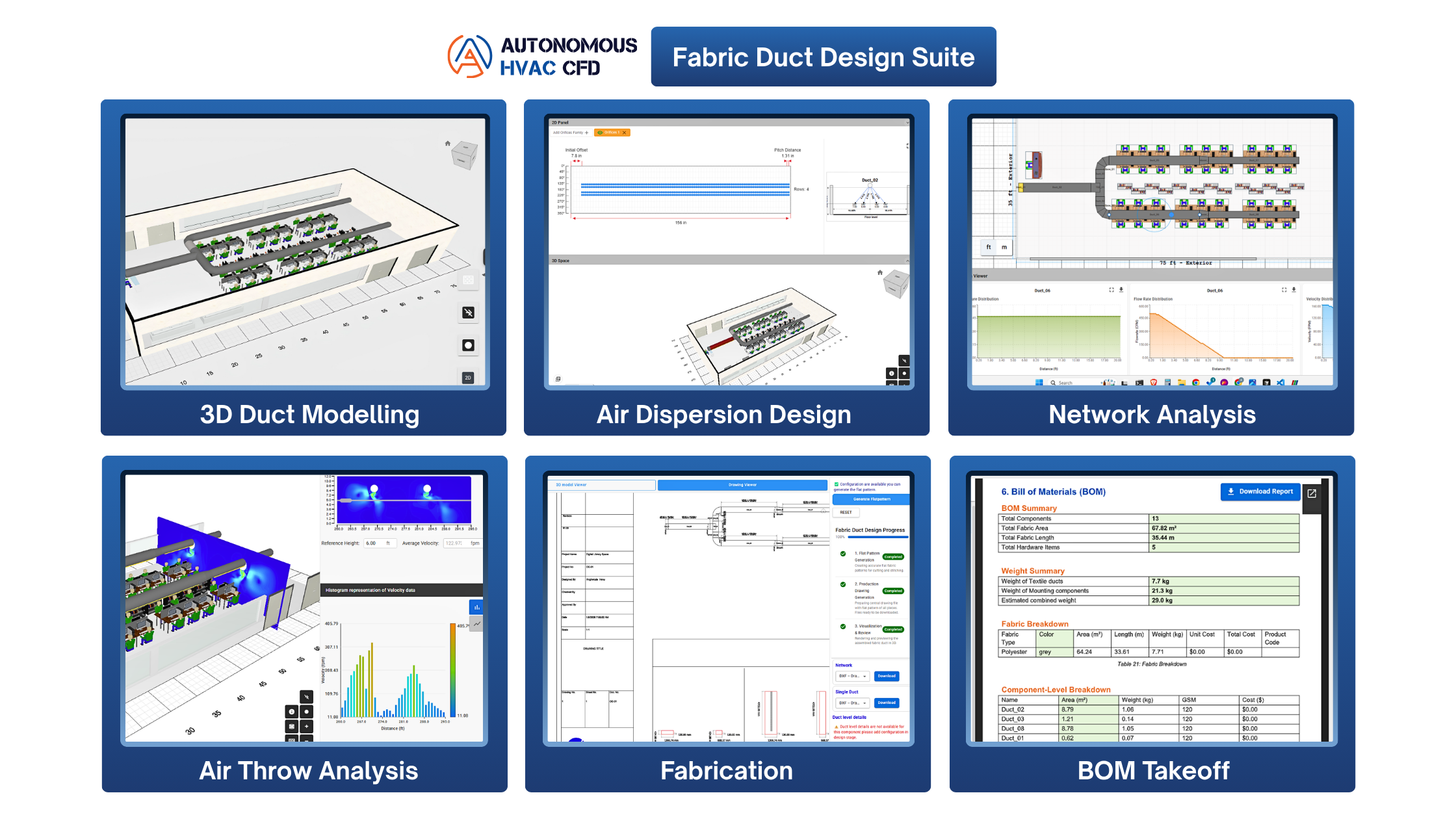
The result: the efficiency gains fabric duct is known for stopping being a best-case outcome on a good commissioning day, and starting being a predictable, engineered one - confirmed before the duct exists.
In stadium HVAC, fabric duct performance depends on more than material selection—it depends on validated airflow design. The AHC Fabric Duct Design Suite helps engineers simulate dispersion, optimize perforation patterns, and confirm comfort performance before fabrication. Learn more about advanced fabric duct simulation at simulationHub.
Explore the Fabric Duct Design Suite
Book a Free Demo
Comments
Recent posts