Written by Praveen Kumar
Monday, January 19, 2026
De-risking Fire Protection Valve Design Using Autonomous Valve CFD
By
Praveen Kumar
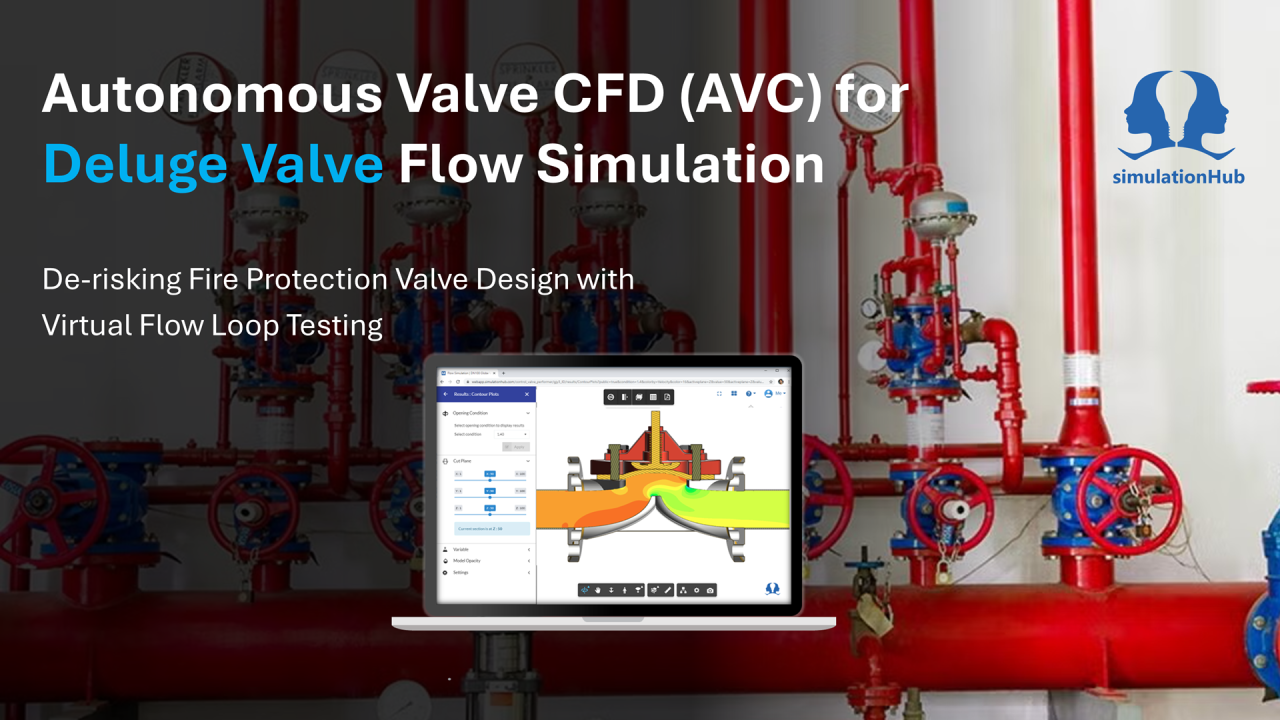

Deluge valves are the fail-safe components of industrial fire safety. This document outlines how Autonomous Valve CFD (AVC) strengthens UL/FM certification test readiness, lowers costs, and accelerates time-to-market.
Deluge Valves and Their Role in Fire Protection
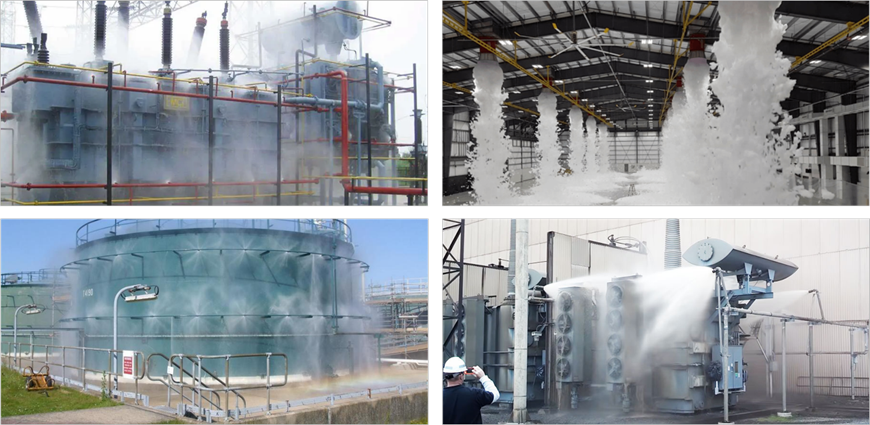
Deluge Valves are quick-acting, differential diaphragm-type valves designed specifically for critical fire protection systems. These play an important role in controlling water flow in deluge, pre-action, and foam-based fire protection systems. The main objective of the Deluge spray system is to provide the correct water volume and specific nozzle pressure in order to achieve correct spray distribution and droplet spectrum for firefighting. Deluge valves are crucial components in fire suppression systems, especially in high-risk areas such as chemical plants, aircraft hangars, and power stations.
Typical applications include:
- Water cannon for water or foam fire suppression at flammable material storage tanks
- Water curtain fire extinguishing systems for flammable materials storage tanks
- Fire sprinkler system piping
- Deck Integrated Fire Fighting System (DIFFS) for helipads
- For use in conjunction with fire monitor systems at flammable material storage facilities
Why Deluge Valves Demand Special Attention?
They operate by quickly releasing large volumes of water to suppress fire, making them essential in scenarios where rapid water discharge is required to control fire spread.
Unlike conventional control valves, deluge valves must:
- Open reliably and fully in a short, defined time window
- Operate under extreme velocities and high inlet pressures
- Valves must be able to withstand high inlet pressures 24/7 and remain drip-tight without leakage
- Meet stringent fire-safety certifications such as UL and FM
The High Cost of Certification Test Failure
Given the critical nature of these valves in fire safety, their design must meet stringent standards such as UL (Underwriters Laboratories) and FM certifications, which are widely recognized global benchmarks for fire protection products. Both FM Approval and UL certifications are essential for ensuring that deluge valves perform as required in critical fire safety applications.
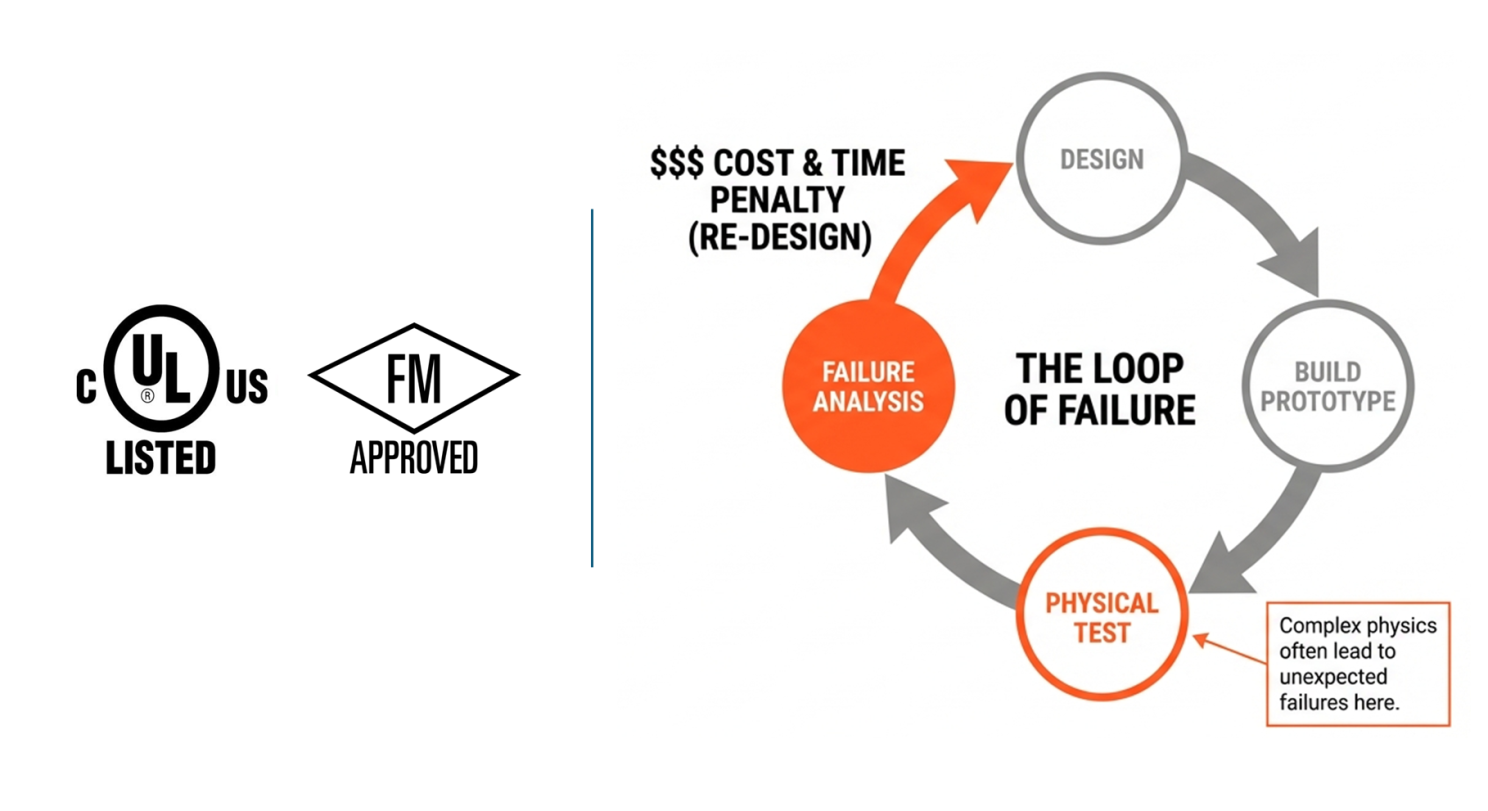
Achieving UL and FM approvals is essential for launching new deluge valve products in the market. However, these certifications are time-intensive and expensive. Any failure in these tests can result in additional iterations, which would add significant cost and time delay. Therefore, it’s crucial to ensure the design is flawless before sending it for approval. This is where simulationHub’s Autonomous Valve CFD (AVC) app comes into play.
Role of Autonomous Valve CFD in Deluge Valve Design
AVC enables virtual flow loop testing, allowing engineers to simulate real-world conditions and optimize valve designs before physical testing. By performing CFD simulations early in the design process, engineers can quickly assess multiple design variations, evaluate performance metrics like Cv, pressure drop, and cavitation index, and make informed decisions—all without the need for costly physical prototypes for every design iteration.
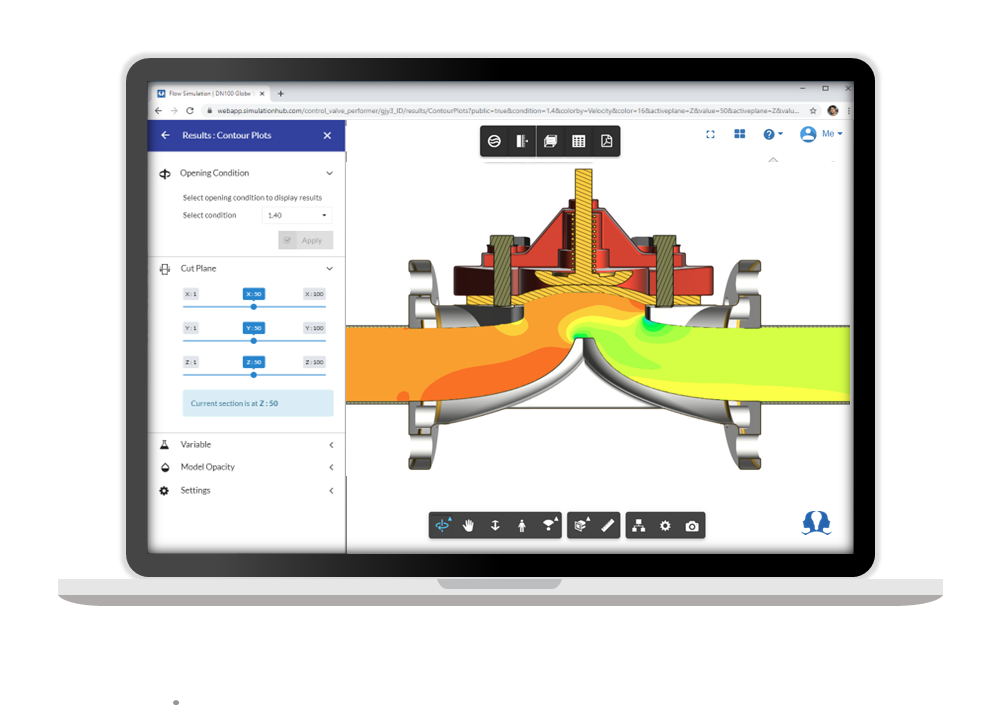
This simulation-first approach means that valve manufacturers can confidently verify and optimize their valve design, eliminating the risk of unexpected failures during tests, ensuring faster approval and achieving quicker time-to-market—all while maintaining the highest performance and compliance standards.
Business Impact for Deluge Valve Manufacturers
By adopting Autonomous Valve CFD AVC for deluge valve flow simulation, manufacturers can:
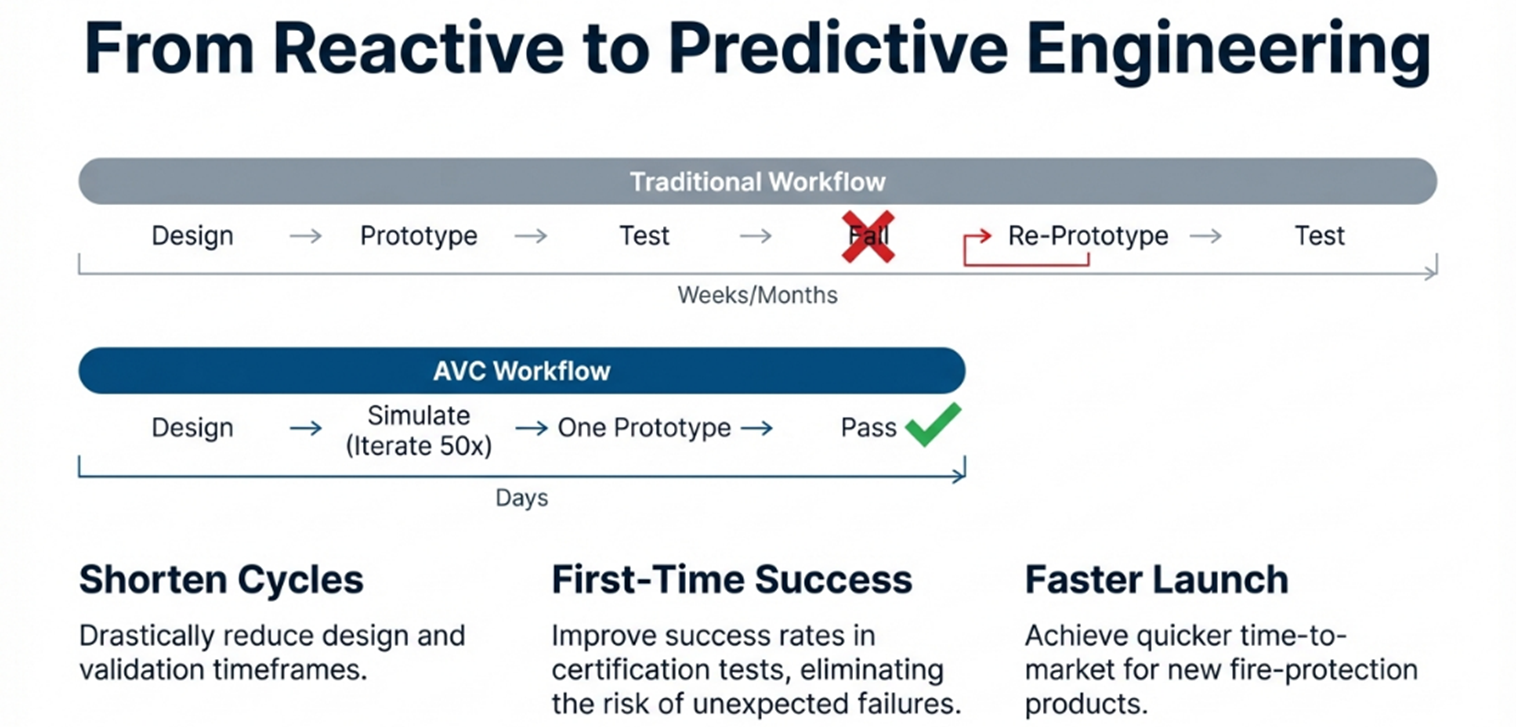
- Shorten design and validation cycles
- Improve first-time success rates in certification tests
- Launch new fire-protection products faster
Most importantly, AVC helps ensure that critical fire-safety components perform exactly as intended when it matters most.
Closing Note
Deluge valves operate at the front line of fire protection, where performance, reliability, and compliance are non-negotiable. Autonomous Valve CFD enables manufacturers to virtually test, validate, and optimize deluge valve designs under realistic flow conditions—well before physical testing and certification.
By shifting validation upstream in the design process, AVC transforms deluge valve development from a reactive, test-heavy workflow into a predictive, simulation-driven engineering process, reducing risk while maintaining the highest safety standards.
Schedule a call with our product expert to discuss your valve design verification requirements:
Schedule a Call
Comments
Recent posts