
Blog
Tag
#Buildings AI
Posts from the simulationHub team tagged Buildings AI.
24 posts · page 2 of 2
Topics

Meet SimulationHub at ACREX India 2026: Showcasing Buildings AI and the AHC Fabric Duct Design Suite
Visit SimulationHub at ACREX India 2026 to explore Buildings AI and the new AHC Fabric Duct Design Suite. Discover how simulation-driven intelligence is accelerating HVAC design and building performance modeling. Mar 2, 2026 · Praveen Kumar Read the post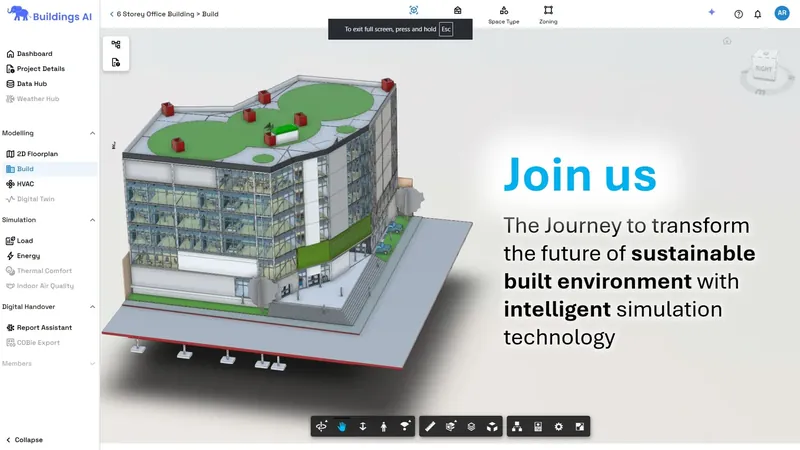
Join Buildings AI Journey of Shaping the Future of Built Environments with Intelligent Simulation Technology
Discover Buildings AI — a cloud-based whole building performance platform combining EnergyPlus simulation, AI-powered insights, and intelligent HVAC design to accelerate sustainable building workflows. Feb 19, 2026 · Aaditya Ruikar Read the post
Enter HVAC Hub: A Data-Driven Platform with OEM-Verified Data for HVAC System Selection
Discover HVAC Hub - Streamline HVAC selection, improve decision accuracy, and move from manual searching to intelligent, efficient system design workflows. Feb 15, 2026 · Prathamesh Rathod Read the post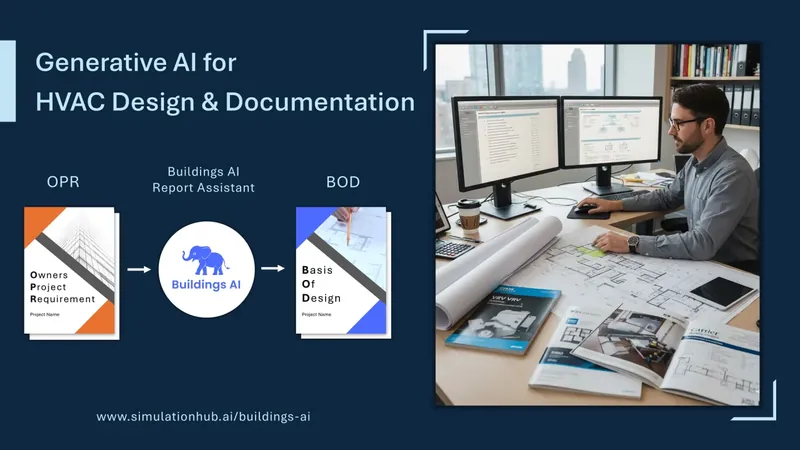
Generative AI for HVAC Design & Documentation in Modern Engineering Workflows
Explore key insights from a webinar on Generative AI in HVAC design and documentation. Learn how AI-driven approaches are transforming workflows, improving efficiency, and enabling smarter decision-making across modern building design processes. Jan 29, 2026 · Aaditya Ruikar Read the post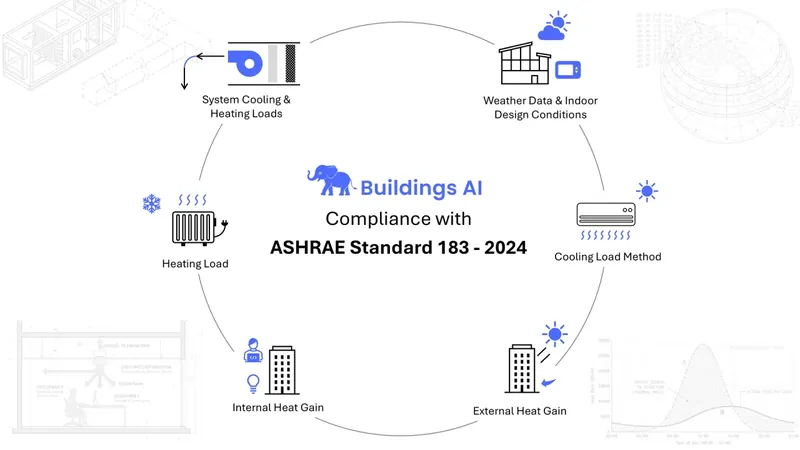
Buildings AI – Compliance with ASHRAE Standard 183 - 2024 for Smarter Building Performance
This article presents Buildings AI compliance with ANSI/ASHRAE/ACCA Standard 183-2024, Peak Cooling and Heating Load Calculations in Buildings Except Low-Rise Residential Buildings. Jan 27, 2026 · Praveen Kumar Read the post
Beyond Manual Redrawing: A Smarter Way to Convert Floorplan PDFs with Buildings AI
Explore the challenges of manual PDF to BIM conversion and how AI-powered PDF2BIM reduces geometry setup time by 90% and enables 10x faster Building Energy Modeling workflows. Dec 16, 2025 · Praveen Kumar Read the post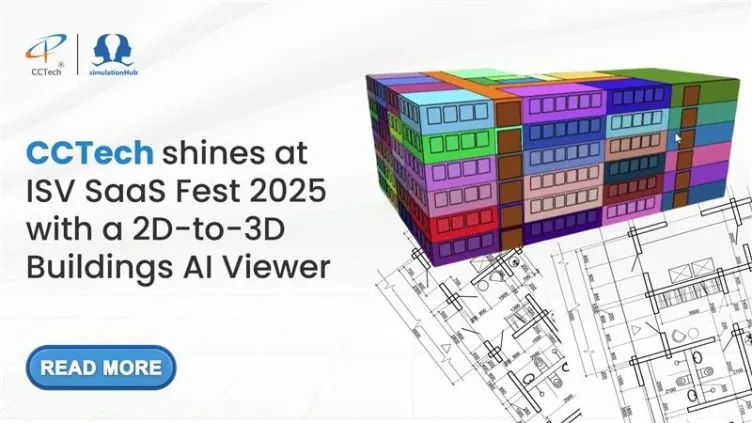
CCTech's simulationHub team shines at ISV SaaS Fest 2025 with a 2D-to-3D Buildings AI Viewer
CCTech celebrates a major achievement as the simulationHub team secures the Second Position at ISV SaaS Fest 2025—an innovation-driven event hosted by AWS and Comprinno. This article showcases how our 2D-to-3D Buildings AI Viewer was engineered using cloud-native, AI-assisted workflows to dramatically accelerate building model generation. From instant geometry creation to scalable AWS integration, the solution demonstrates how CCTech is shaping the future of building energy modeling through intelligent automation and rapid prototyping. Nov 24, 2025 · Praveen Kumar Read the post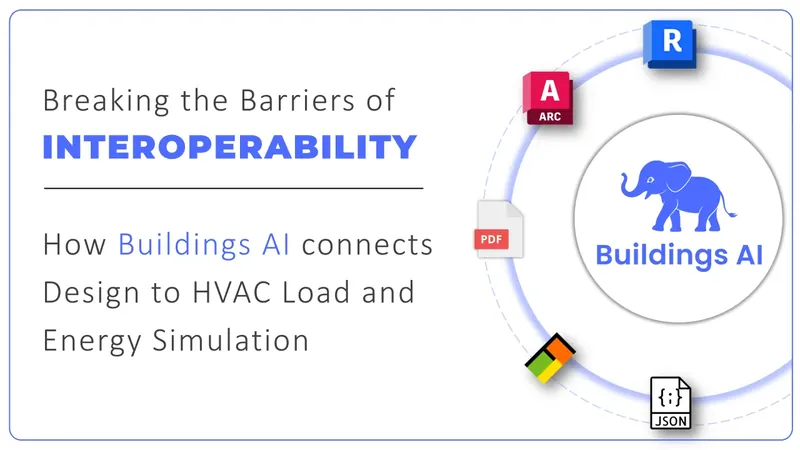
Breaking the Barriers of Interoperability: How Buildings AI Connects Design to HVAC Load and Energy Simulation
Buildings AI eliminates long-standing interoperability challenges by unifying design files from Revit, AutoCAD, PDFs, and FloorSpaceJS into accurate, simulation-ready building energy models. Through AI-driven automation, PDF2BIM, and seamless BIM integration, it streamlines geometry preparation, reduces errors, and accelerates HVAC load and energy simulation workflows for architects and engineers. Nov 13, 2025 · Praveen Kumar Read the post
Successful Launch of Buildings AI
Successful Launch of Buildings AI Sep 1, 2025 · Praveen Kumar Read the post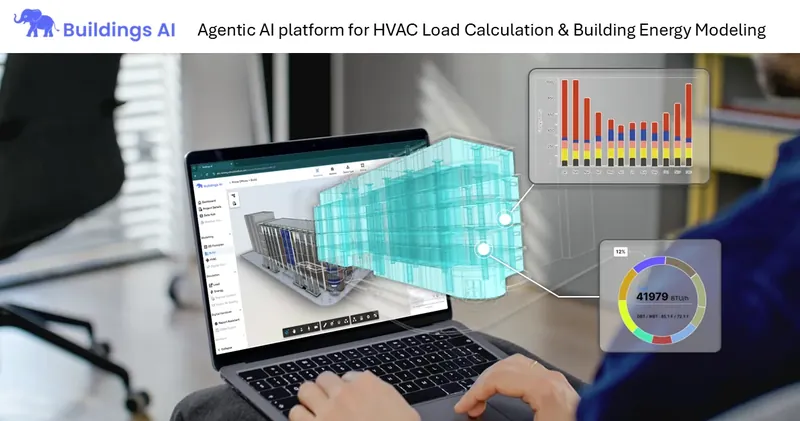
CCTech announces the launch of Buildings AI, a cloud-based building energy modeling platform powered by AI & EnergyPlus
CCTech announces the launch of Buildings AI, a cloud-based building energy modeling platform powered by AI & EnergyPlus Aug 26, 2025 · Swapnil Dindorkar Read the post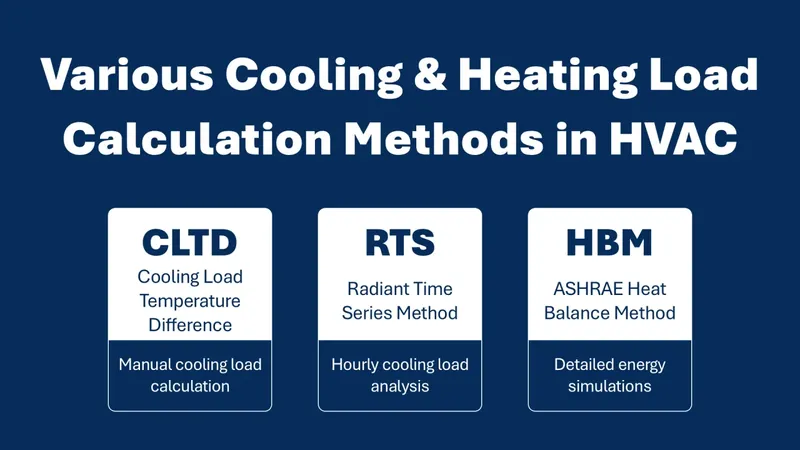
A Deep Dive into Cooling and Heating Load Calculation Methods in HVAC: CLTD, RTS, and ASHRAE Heat Balance
Accurate cooling and heating load estimation is the foundation of energy-efficient HVAC system design. Over the years, ASHRAE has developed and refined various methods for heat load calculations. Each method offers a unique balance between accuracy, complexity, and computational effort. Apr 10, 2025 · Rohit Chavan Read the post